
On the way out of the Francios Peron National park we visited an old historic wool farm which had the old shearing sheds and grounds for visitors to visit. the land is all now owned by the national parks but was a large wool farm for many generations. Whilst walking around Holly spotted a snake. This was the first snake that we have seen on our trip so far it was a baby so we were on the look out for the mummy snake. The old homestead has a hot pool with springs from the artesian basin but this was closed for maintenance. There were photos of ladies swimming at the pool in the 1940s.

an old wool press

old wool bales
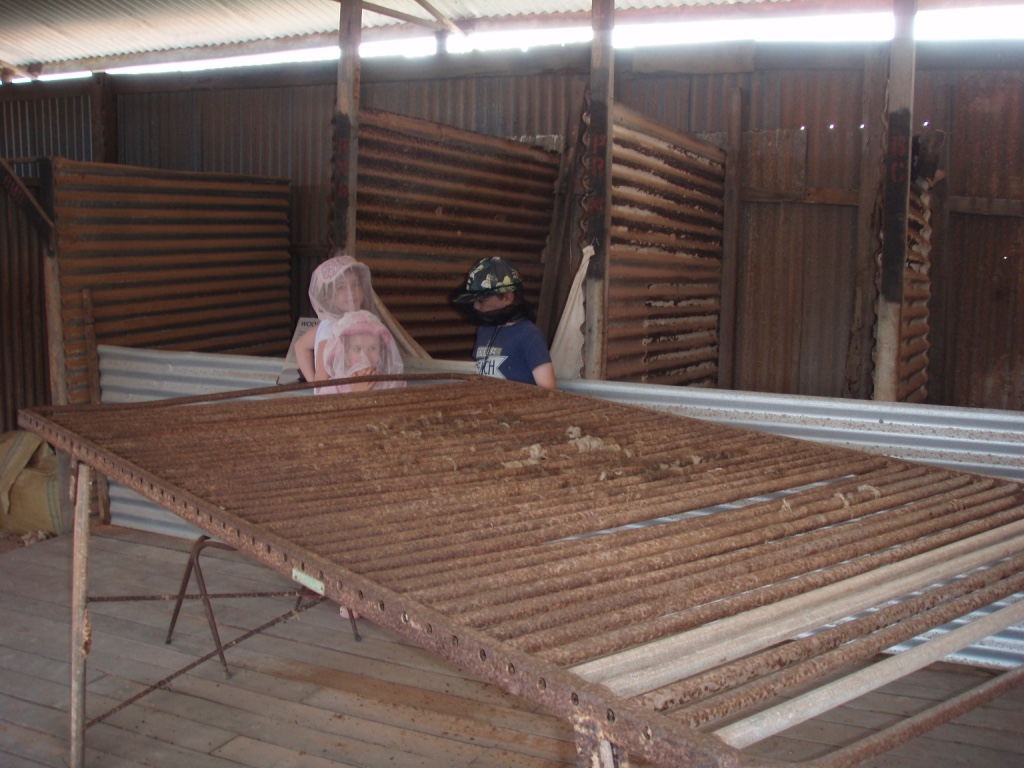
the old wool classing table
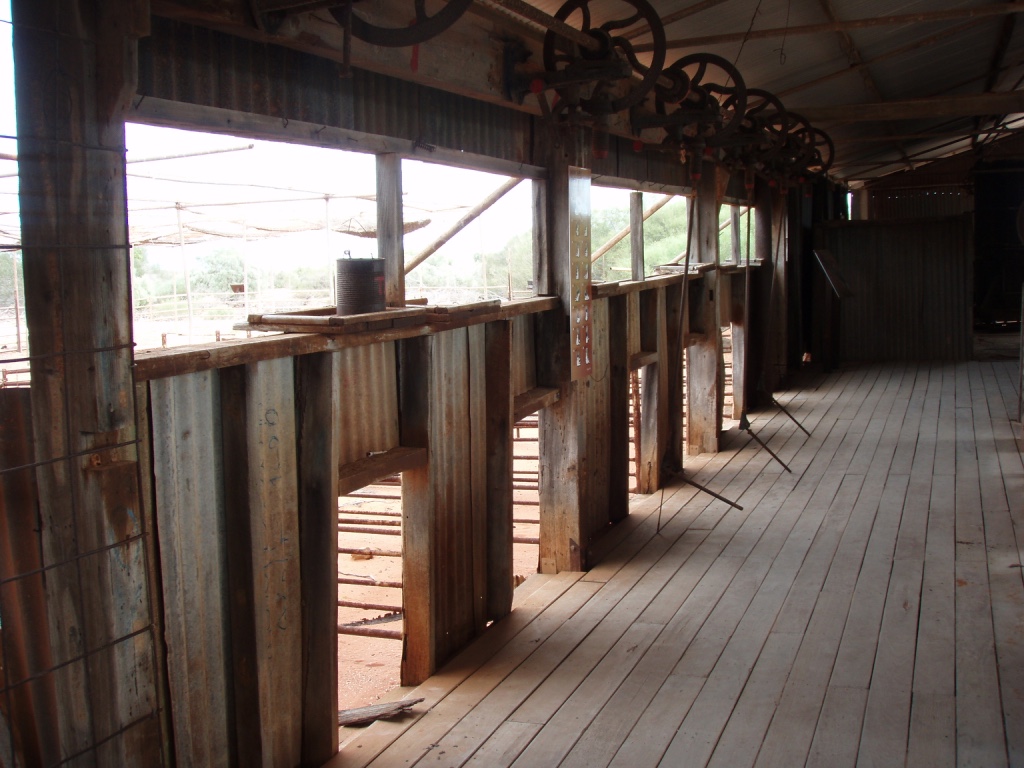
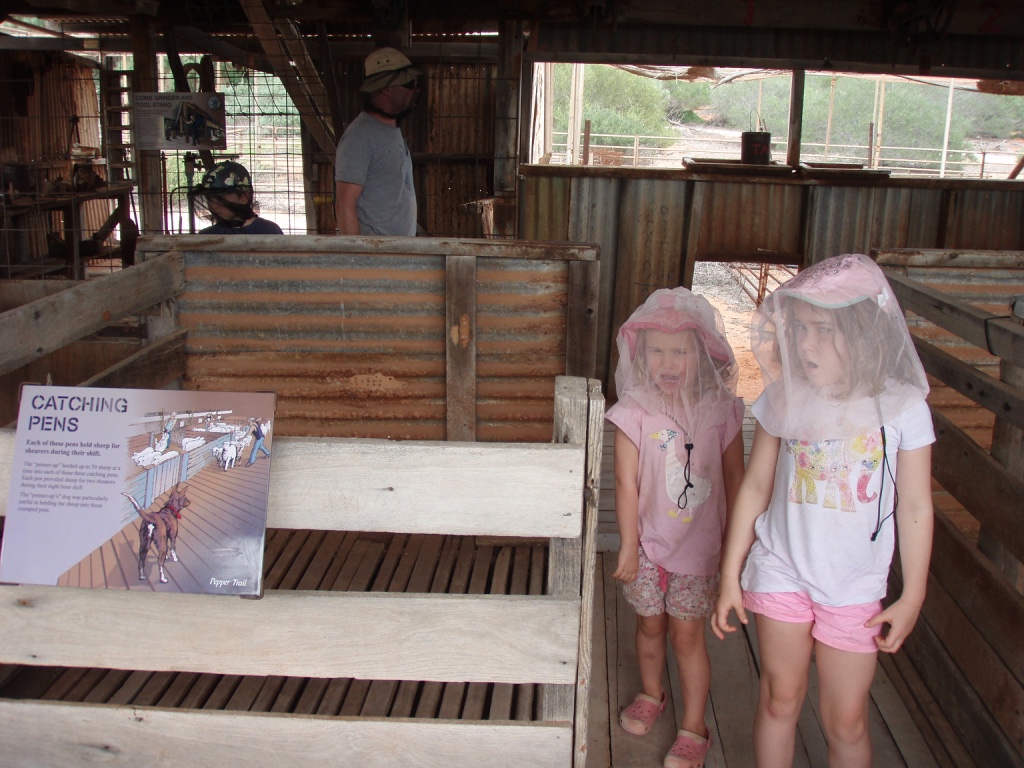
Inside the wool sheds – catching pens…here are a couple of lambs!

Next we headed into Denham for fresh bread a lunch stop. We stopped to look at the old Pearlers restaurant as suggested by our friend Tim. The restaurant was closed but the old building was made from amazing shelly rock. By chance we saw Tim at the front of his house only a couple of doors up the road. Tim had built the restaurant in 1977 and he and his wife ran the restaurant for many years. Tim again regaled us with stories and had the children listening intently, Tim showed us around his home that he also built back in the early 1980s it was an amazing home filled with treasure and a lifetime of stories. We were enjoying the stories and ended up spending almost two hours at his home.

The old pearlers restaurant building.

Inside the restaurant
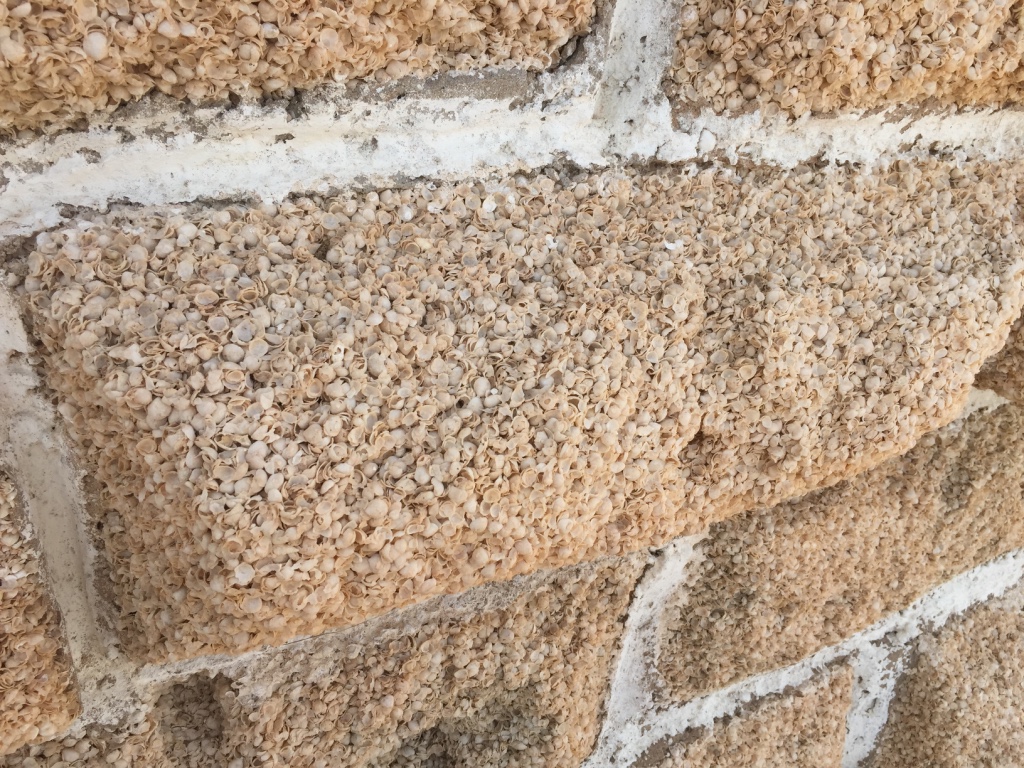
Bricks made from shell rock
Tim suggested we visit Hamelin Pool and camp here as this is the location of the historic shell rock quarry and the telegraph station.
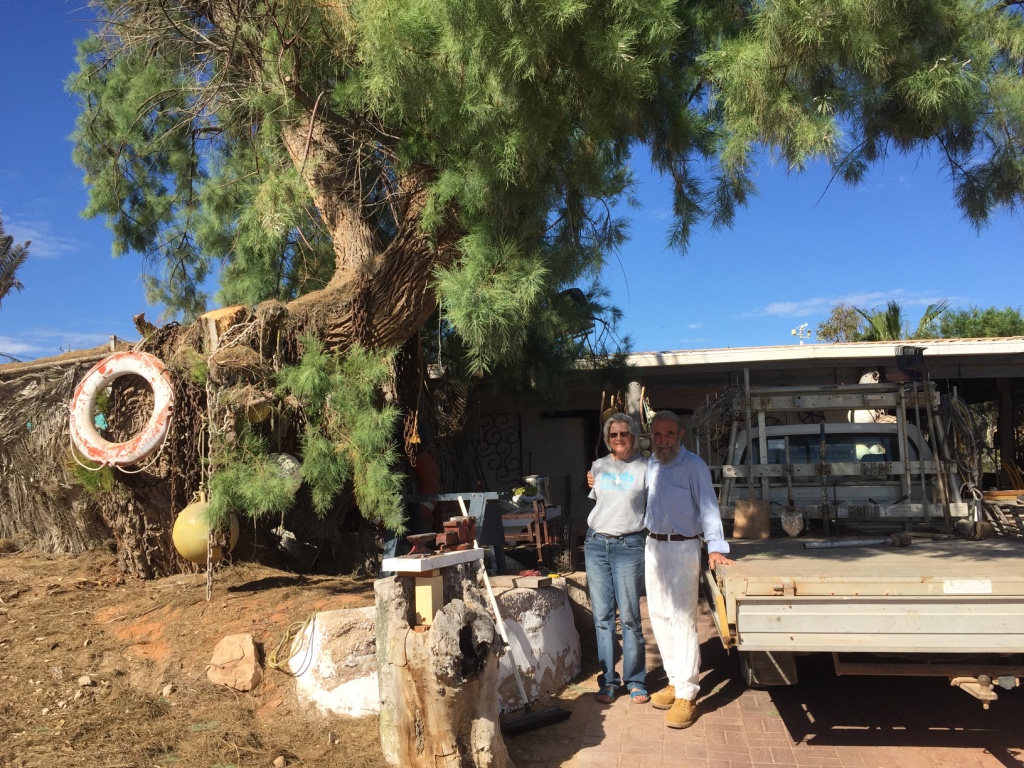
Tim and his wife Maggie outside their home that Tim built.

Tim had some shell rock that he cut off for the children

Tims ute tool box – very unique.
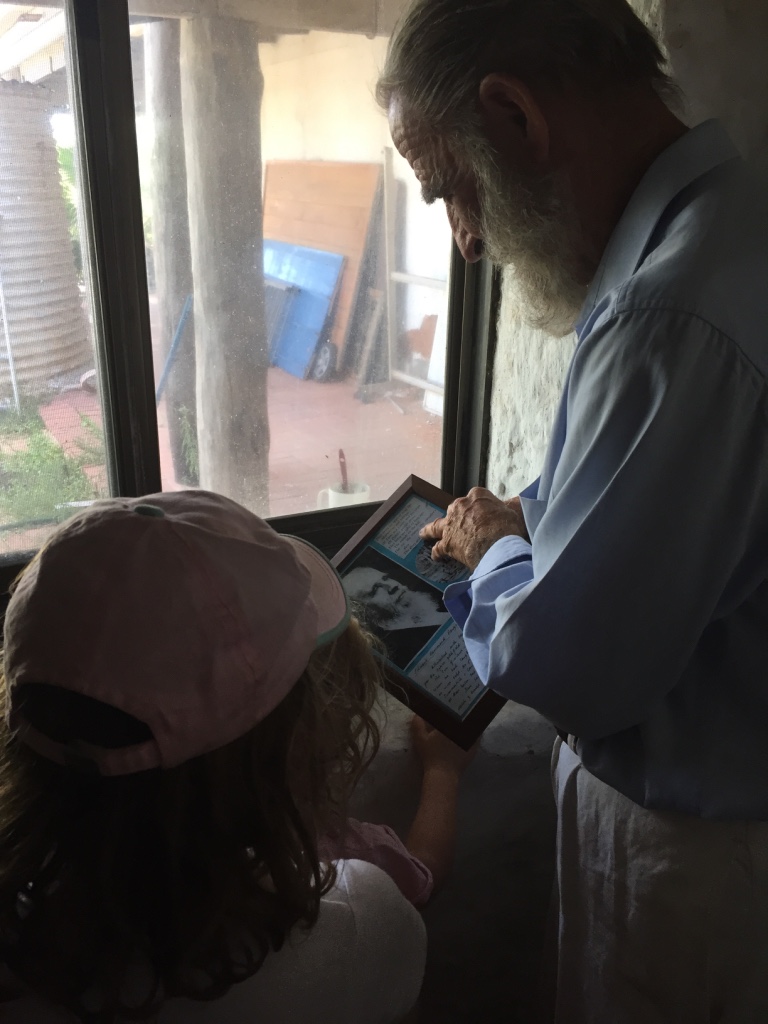
Tim telling stories to the children

Inside Tims house he presented us with his book.
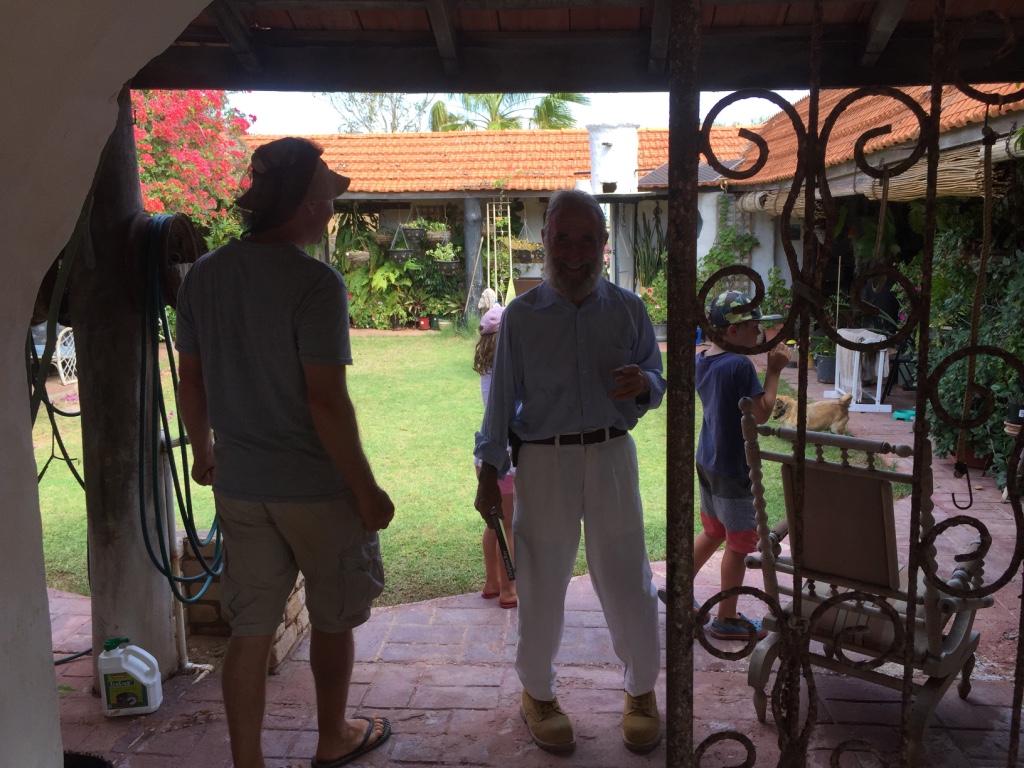
The Spanish style court yard.

Tim house.

Aaron and holly watching the sharks
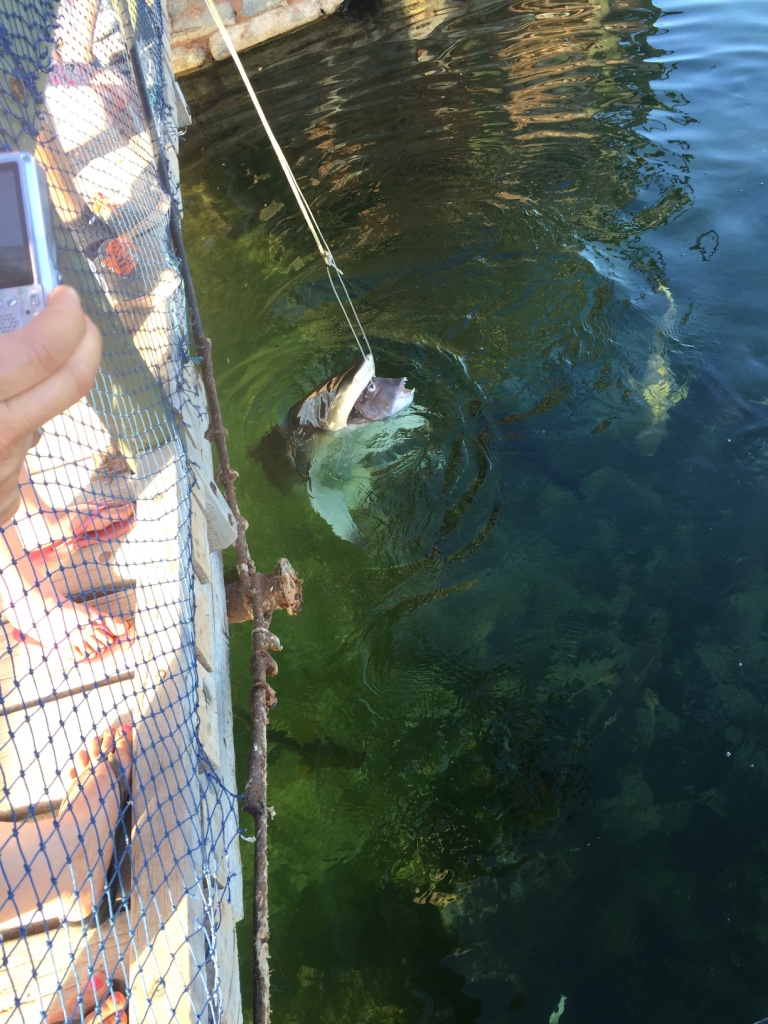
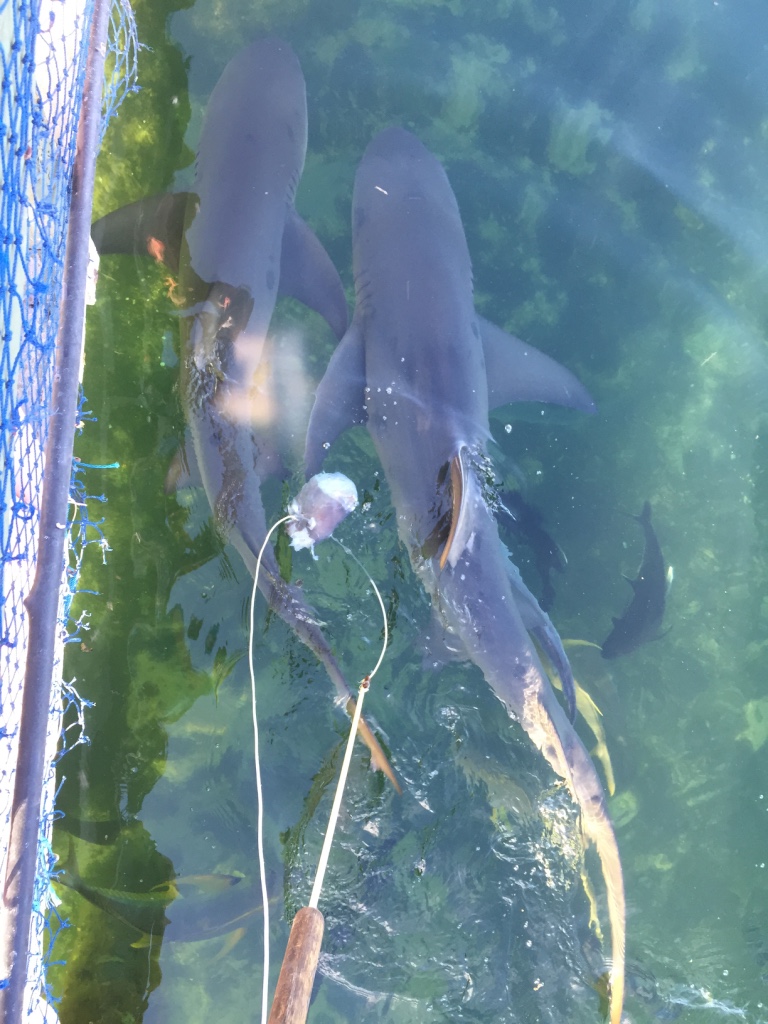

watch your finger Bianca turtles can bite.


Shark at the aquarium


The shark jumped for his afternoon tea

This Turtle was at the park for recuperation after loosing a fin.

Bianca Loved the Turtles

There were lots of tropical fish too.
We called into the Ocean Park aquarium – this was excellent – we had a tour guide who was a marine biologist and he gave a very informative talk about each of the various breed of fish, rays, turtles and sharks at the aquarium. It was a great experience to hear all about the fish and sharks we hope to see whilst snorkeling in and around the Ningaloo Reef over the next few weeks.

Turtle smiles
Shark at the aquarium
On the way to Hamelin Pool we visited Shelly Beach an amazing beach made out of millions I should say billions of tiny little shells. The shells are approximately 10metres deep and still more washing onto shore. They are from the very salty pool which is the perfect environment for these small cockles and they breed in masses apparently 1000 per square metre. We arrived at Shelly Beach for the sunset which was amazing.
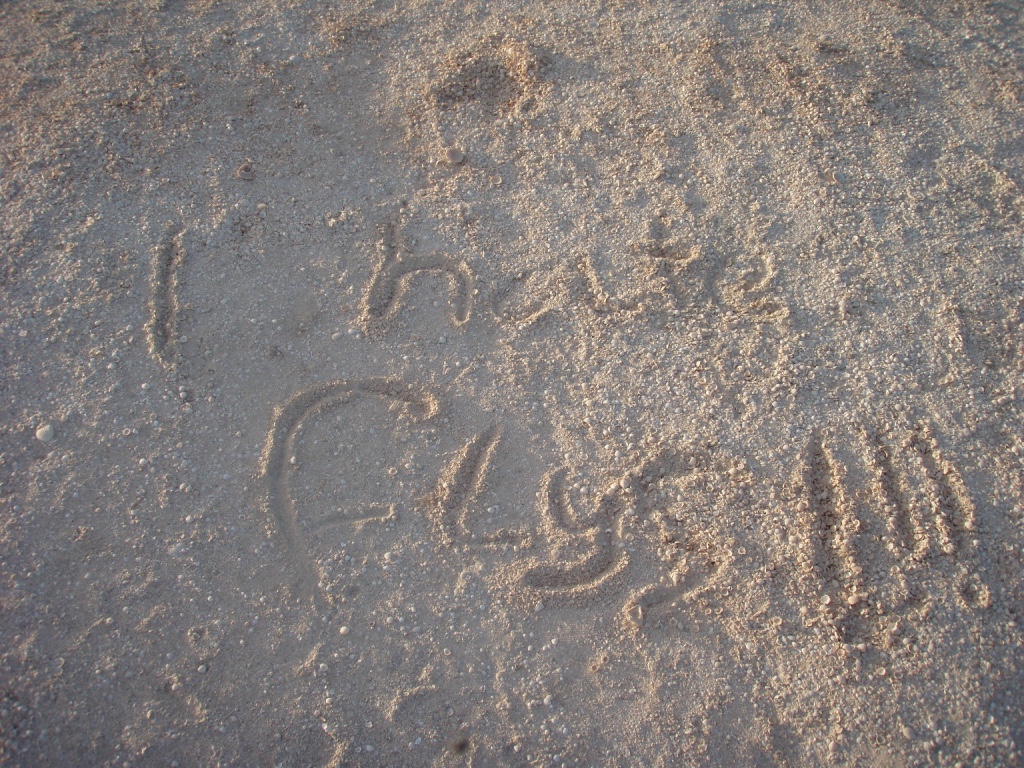
Someone had written this in the shells on the beach
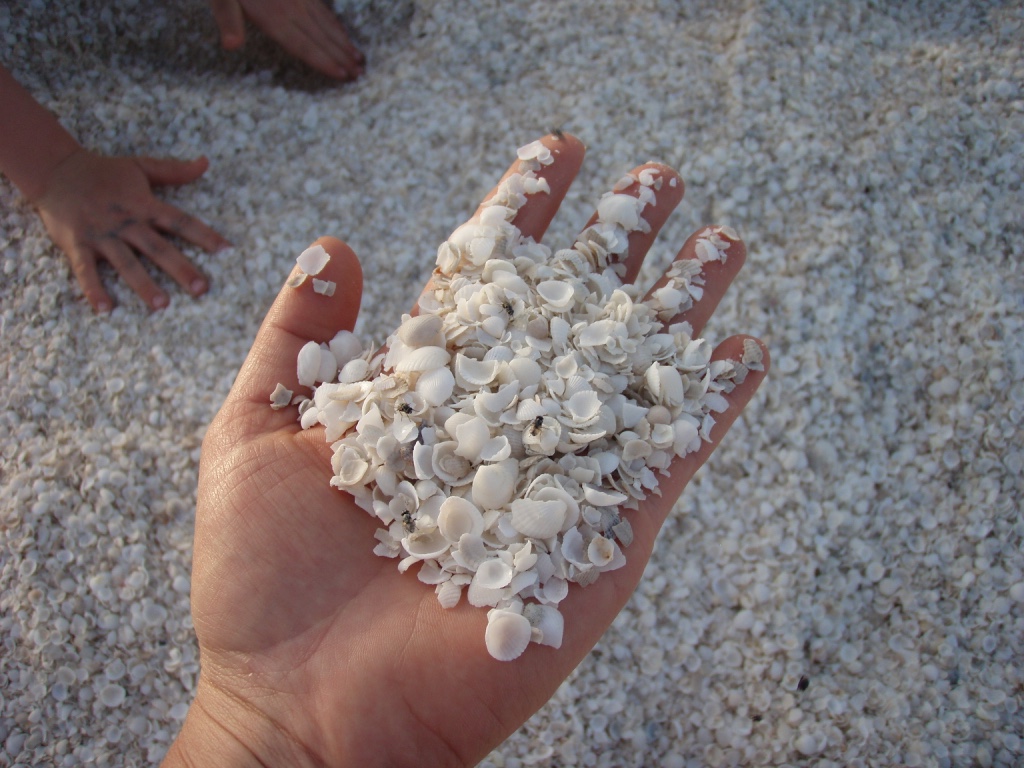
The shells
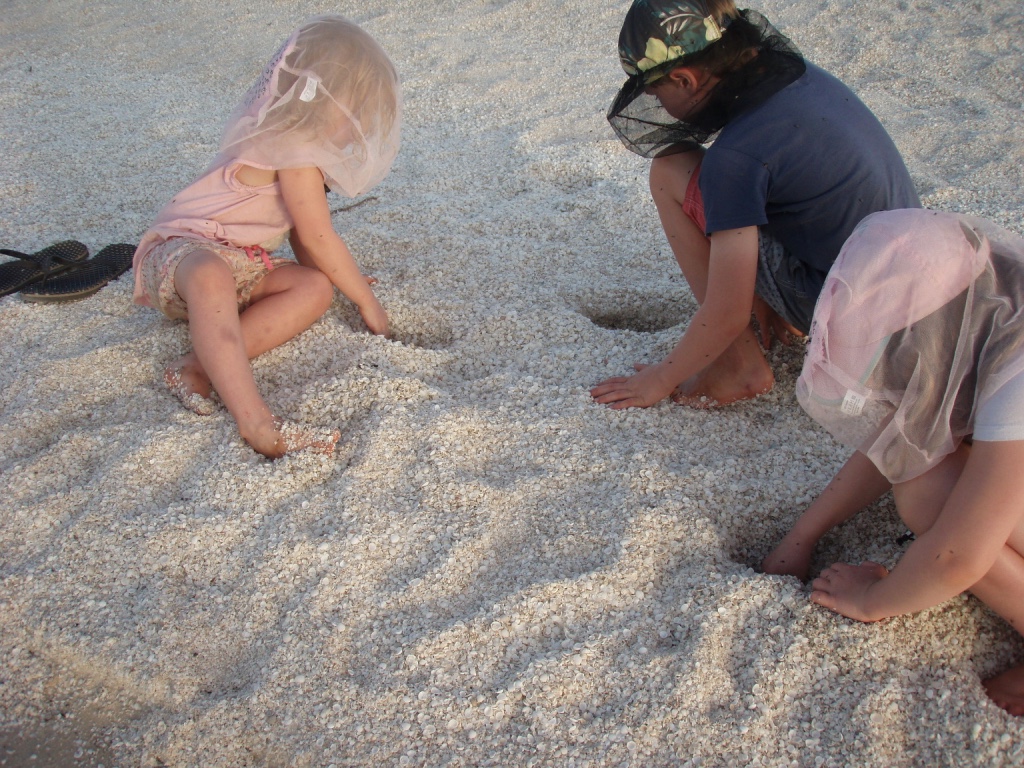
Playing in the shells

sunset over shelly beach

a kiss in the shadows

The beach is very wide 150m of shells before reaching the water estimated 10 metres deep.

Andrew enjoying the view
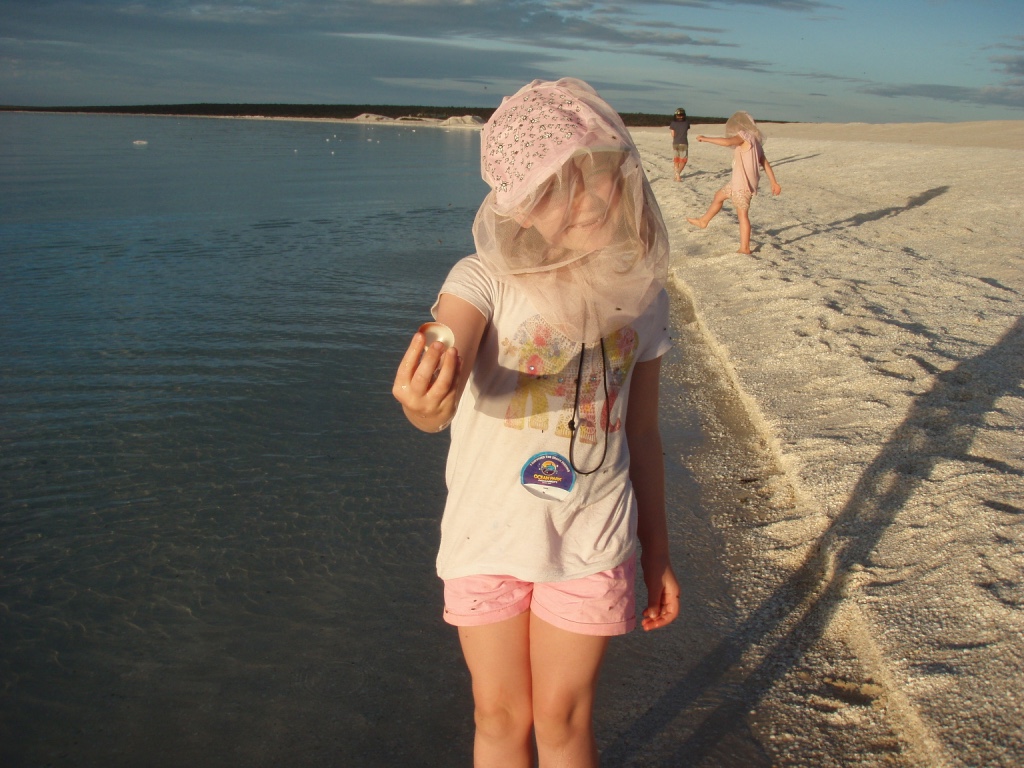
Holly on shelly beach

Kids on shelly beach

millions of shells
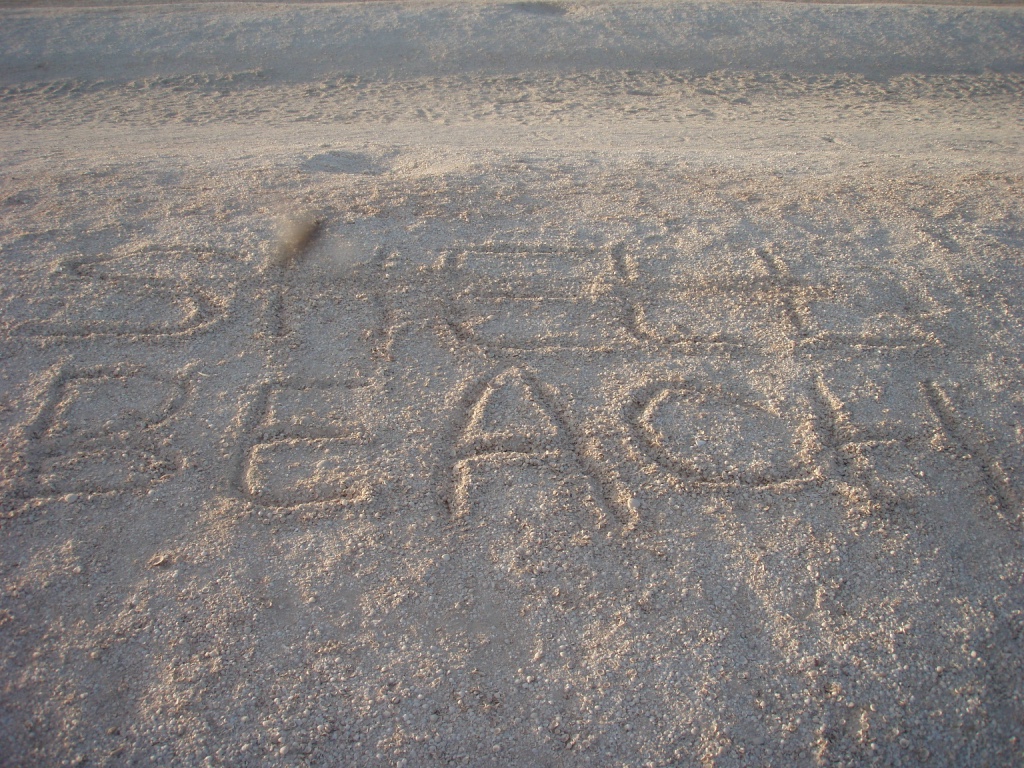
This was also written on the beach
Camping at Hamelin Pool was a bit rough and rugged…which we can handle. We got a site on the grass…it was dark when we set up. Trish the camp over was really friendly and she made a good coffee in the morning.
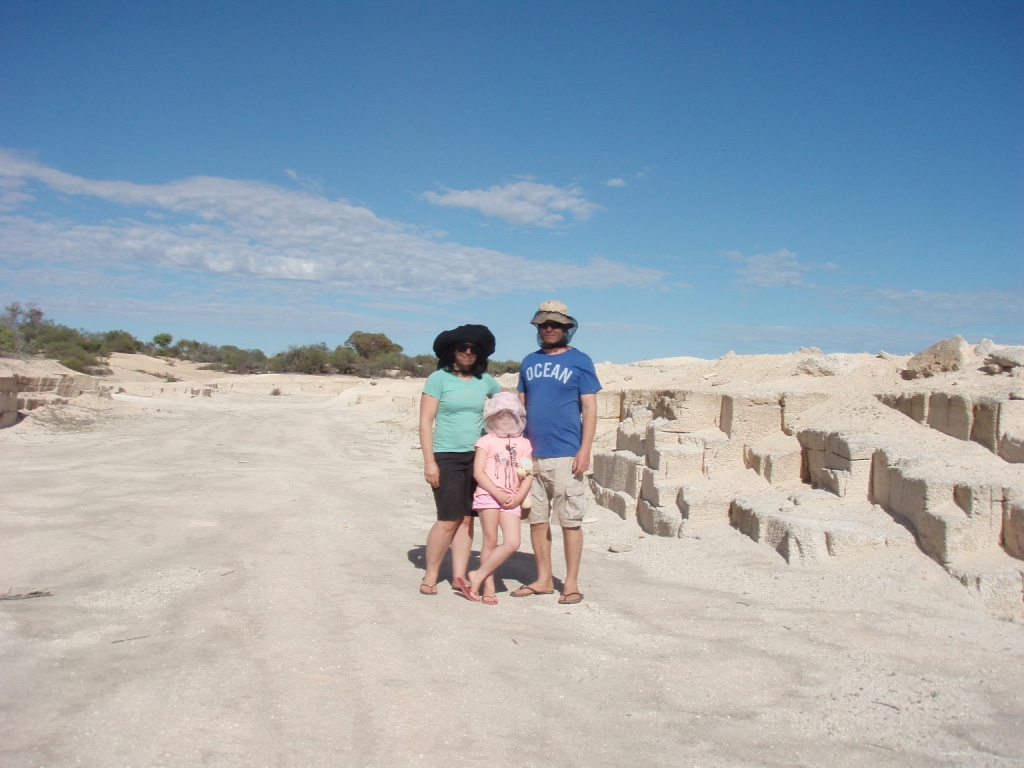
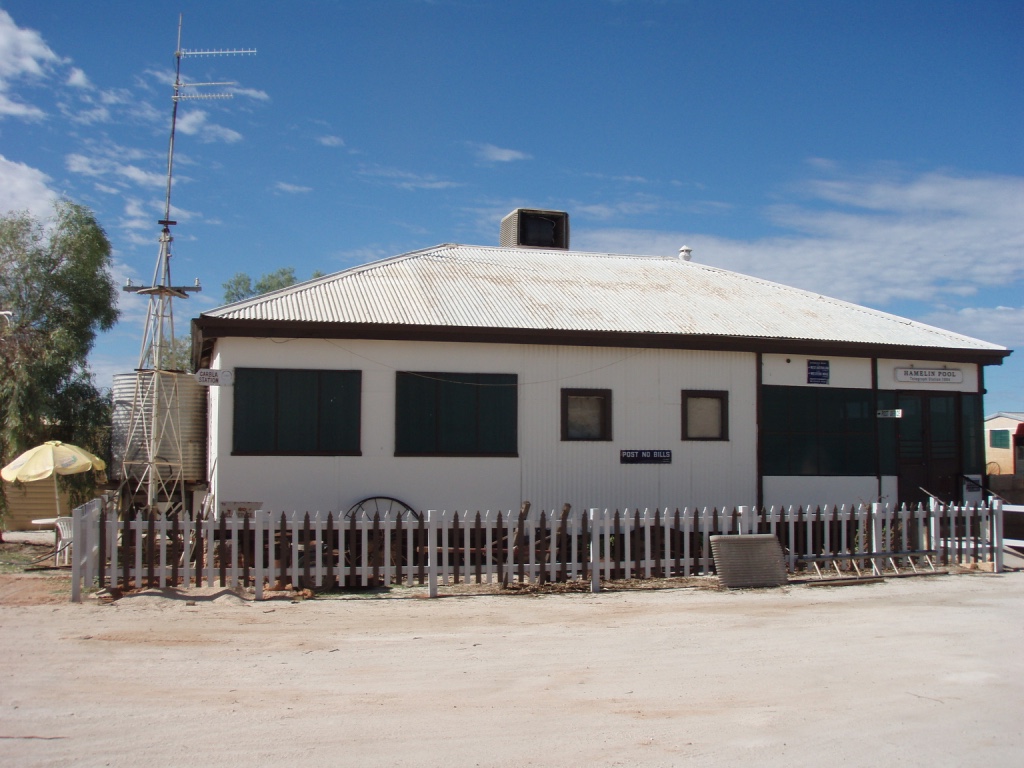
The next day after we packed camp we walked to the nearby shell rock quarry…this unique rock was formed from the shelly beach shells solidifying with limestone in-between and forming a rock. And we visited the Telegraph Station (located in the camp grounds) which was the point used to connect Northern WA to southern WA in early 1900s. It was an interesting museum with some cool old antiques and a large amount of information about morse code the original communication language.
On the way out of Hamelin Pool we visited more Stromatalites which were one the coast and really very beautiful. There was a deck to walk along and view the formations but the location if nothing else was really beautiful.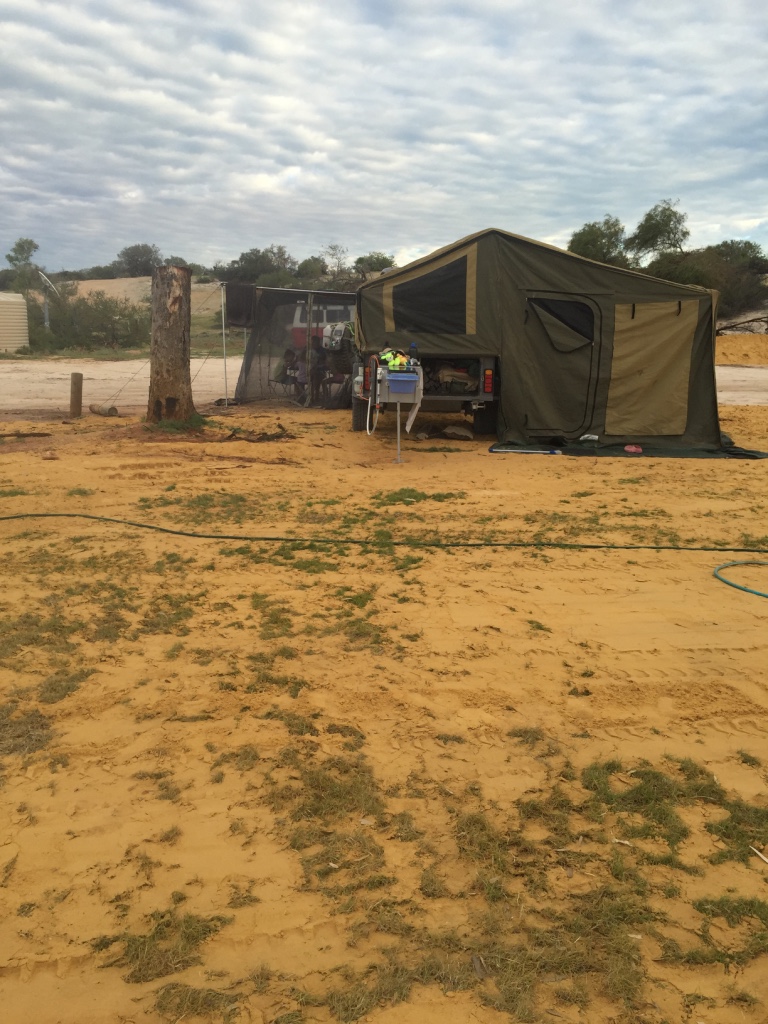
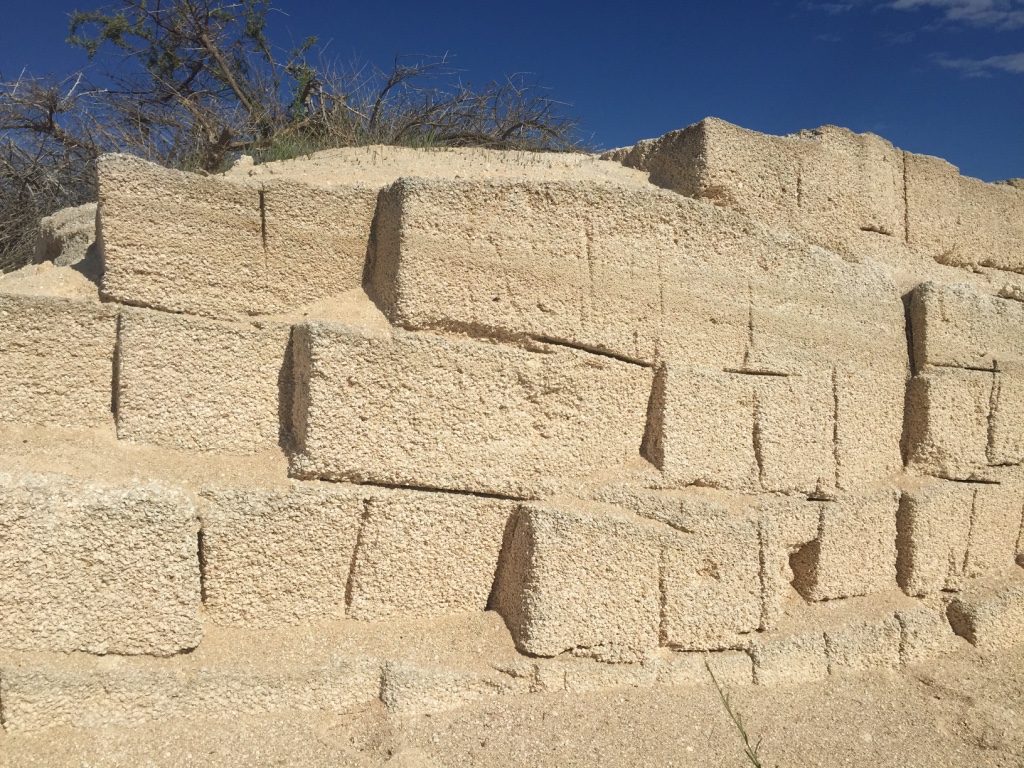

at the shell rock quarry


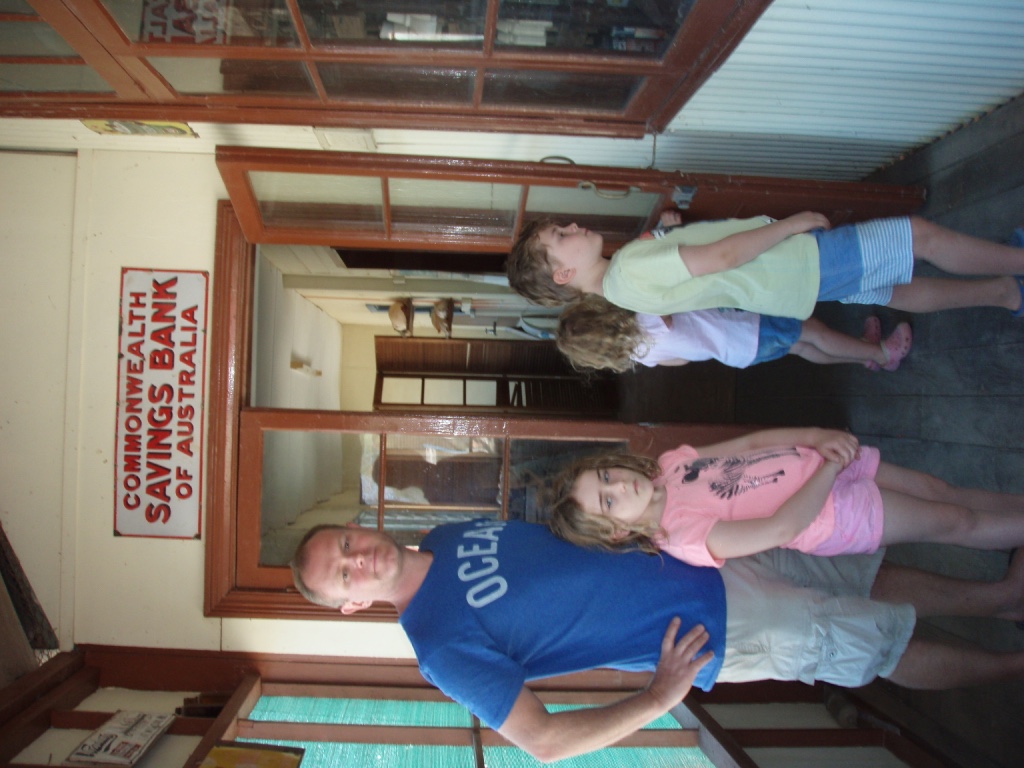


old telephone booth


a Stromatalite

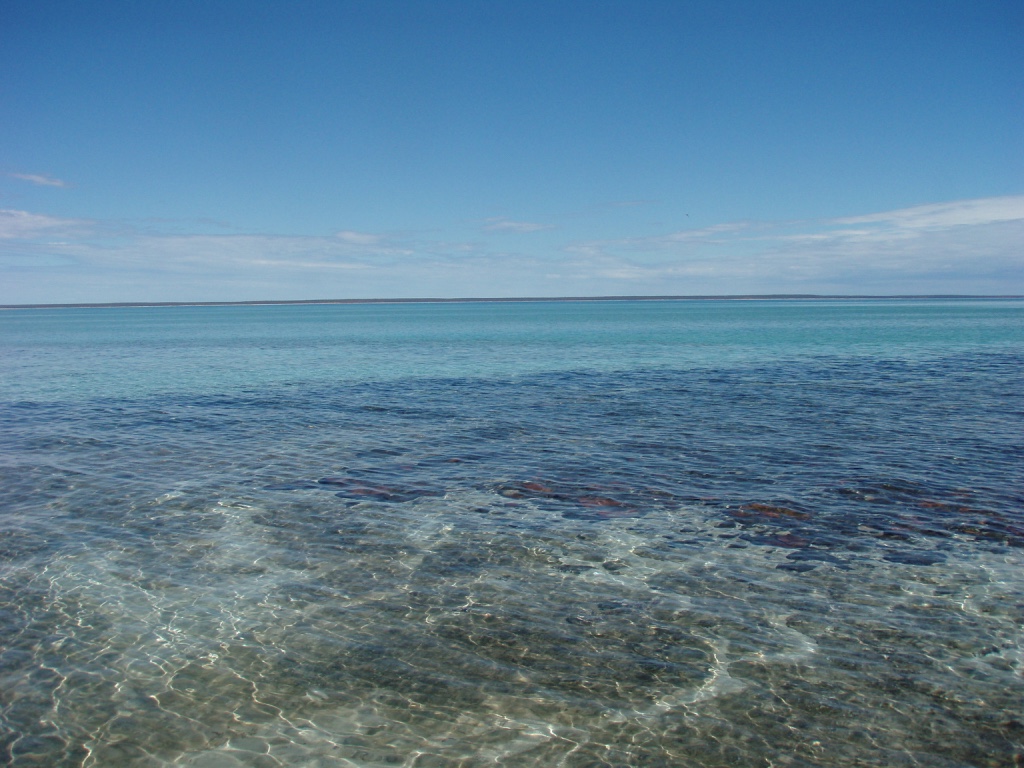
the Stromatolites
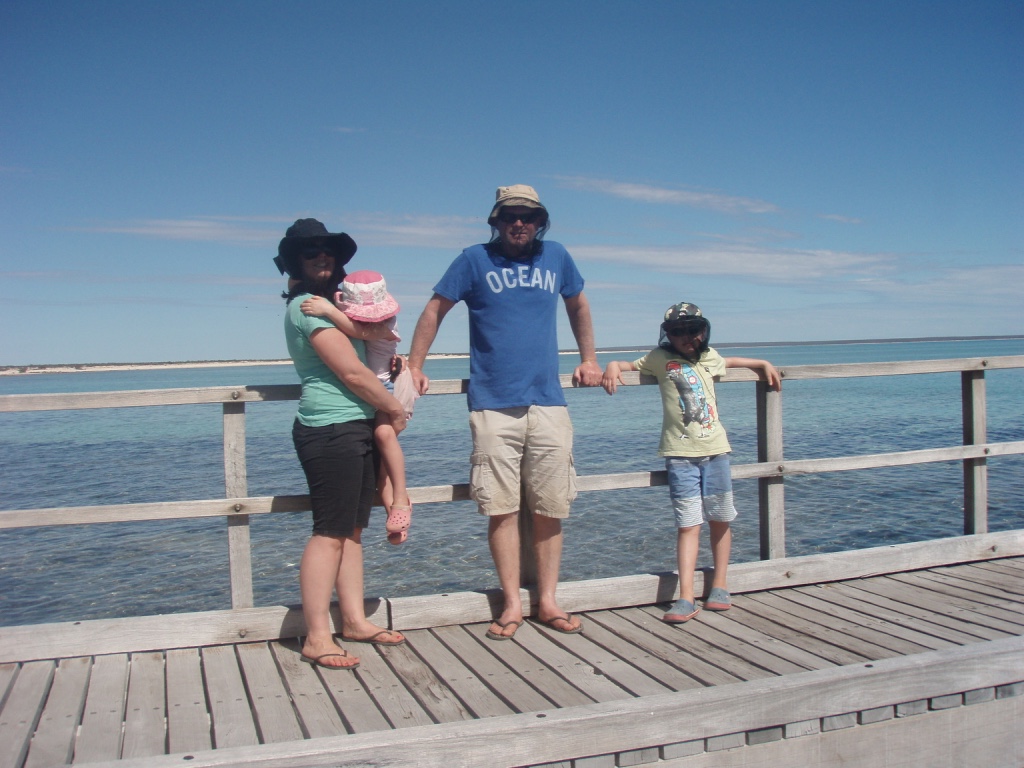
On the boardwalk
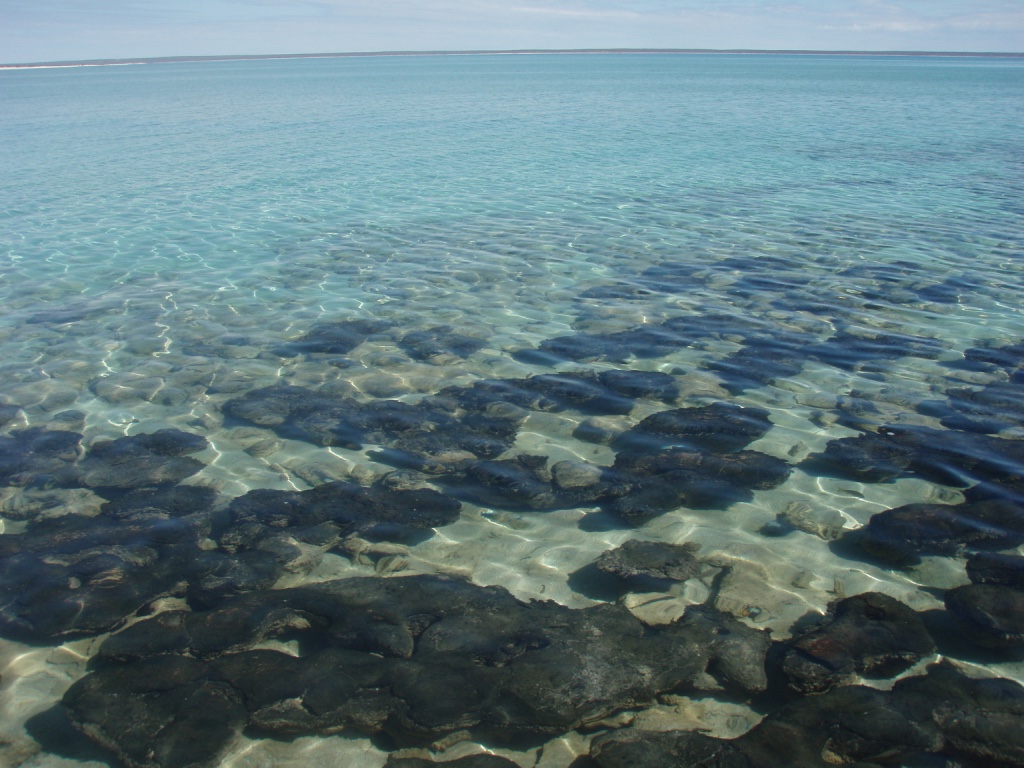
Francios Peron National Park and Gregories Camp
Francios Peron National Park- this is a large peninsula next to Monkey Mia and has a huge marine sanctuary surrounding the area. It was interesting on the way into the National Park they have BIG signs stating that it is 4×4 drive track and you need the appropriate vehicle and you need to let your tyres down to travel on the sandy tracks to avoid getting bogged. But just after we saw this sign we saw…a caravan and car bogged to its axels and they had their tyres at 30psi.
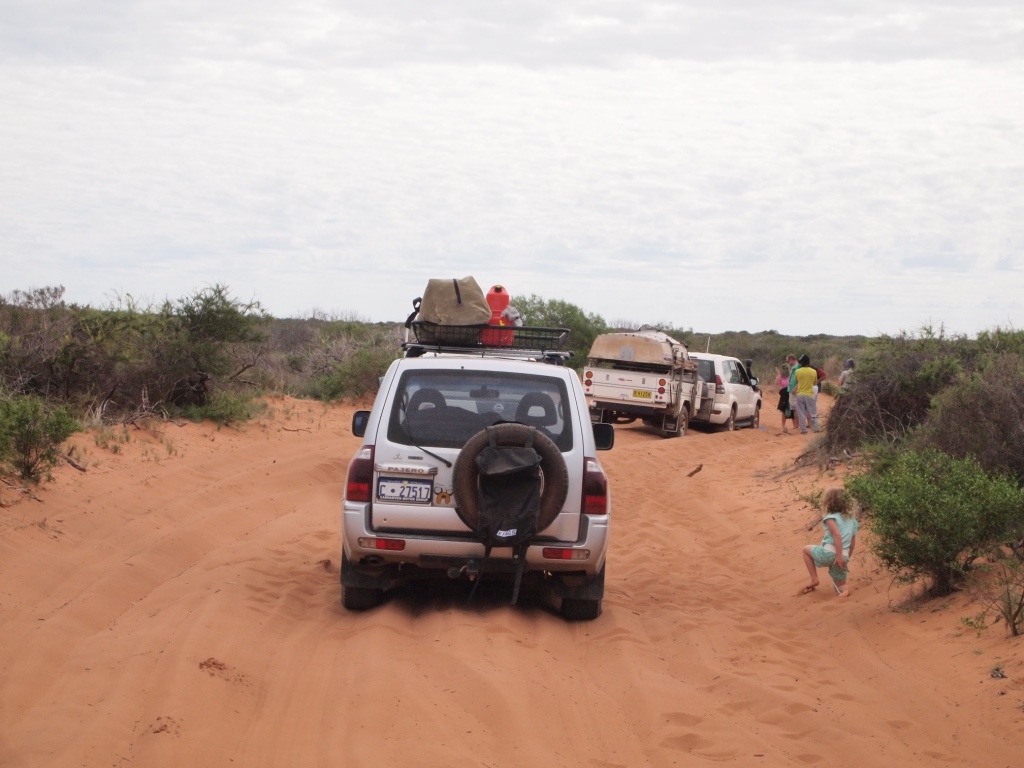
The first vehicle and trailer that was bogged.

Road out to the point of Francios Peron
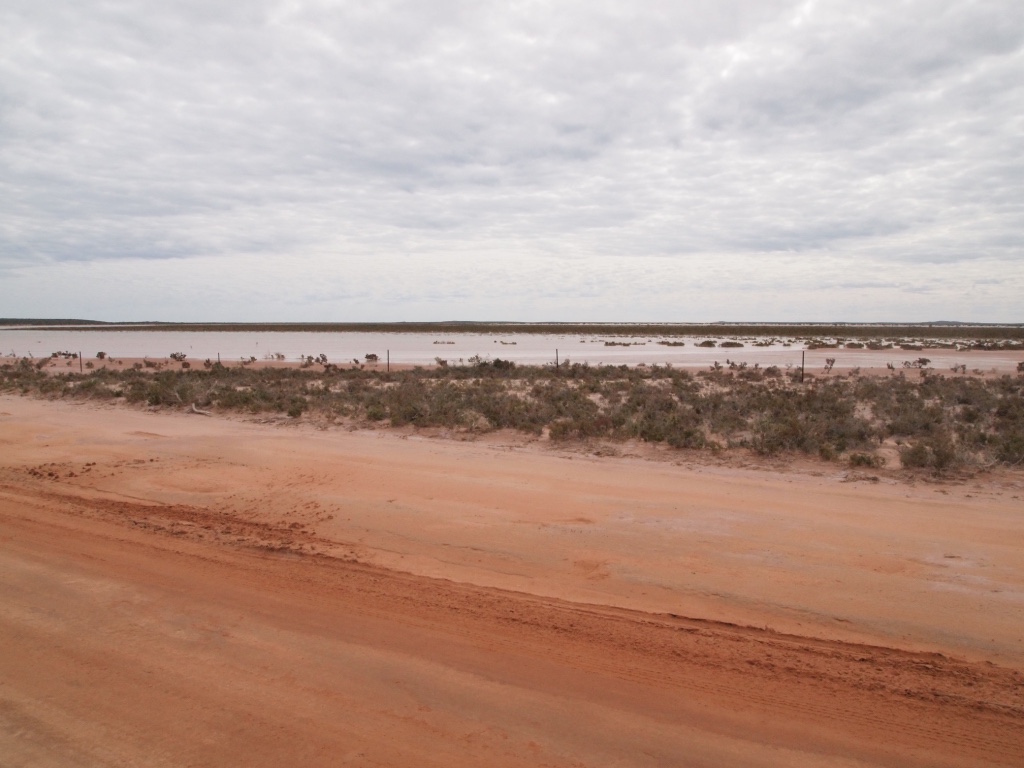
Mud flats next to the road out to the cape.
Andew and Aaron helped them let down their tyres and off they went.
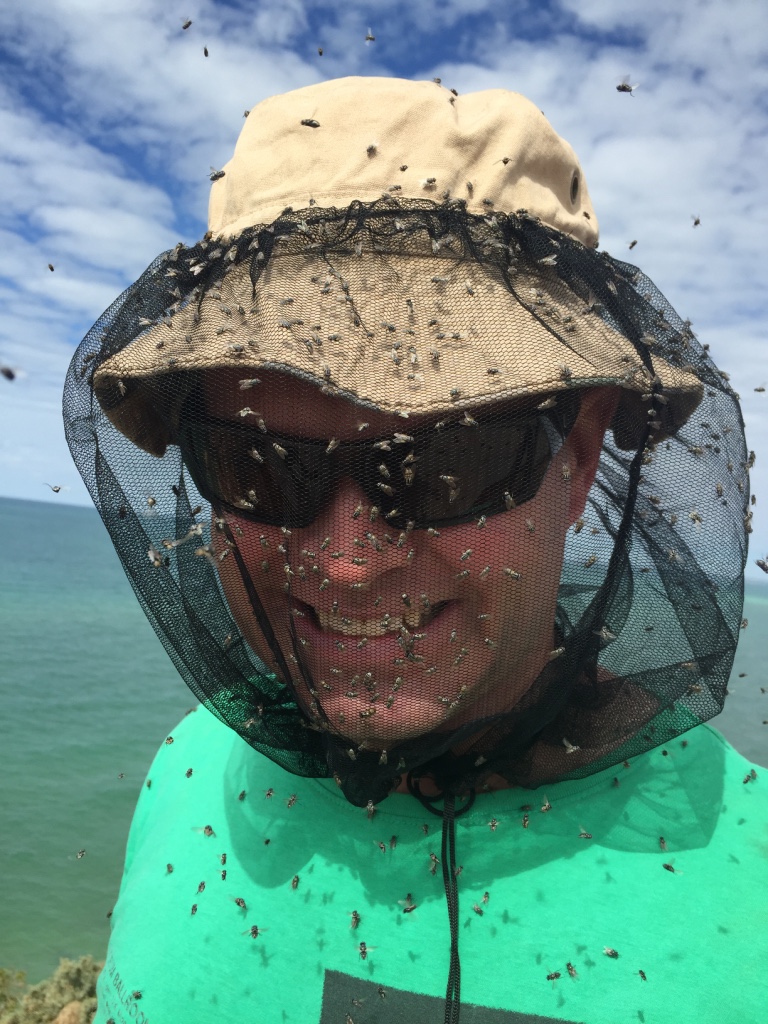
The crazy flies at Francios Peron

Lunch on the cape…under our fly net.
Here on the Cape in the Francios Peron NP the views were very beautiful but the flies were crazy…
We met some fishermen who said that this time last year they had a fishing weekend here and there weren’t any flies. Everyone said it was just due to the cyclone and large amounts of inland rain.
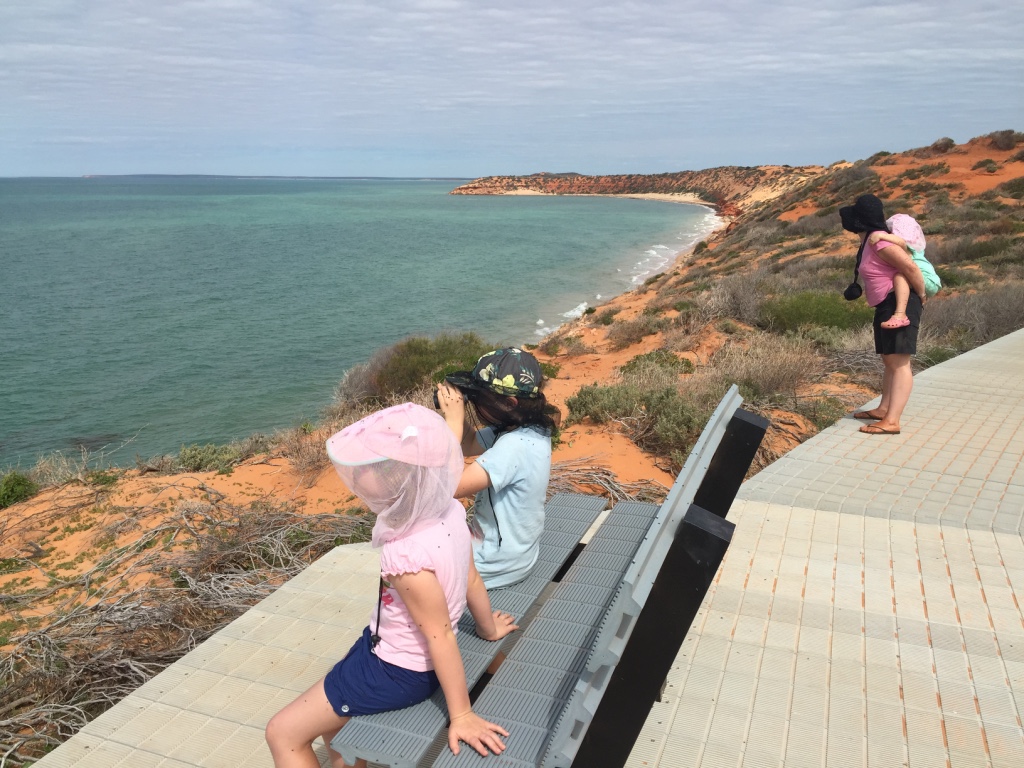
on the board walk looking for sealife.

Aaron at the cape point.
We were lucky enough to be a a viewing platform when a local indigenous tour guide named ‘Cape’ arrived and we were able to tag along with his clients and learn more about the area, and he located an Osprey flying and a dolphin, some snapper and a ray in the water. He gave us a recommendation for camping on the cape. We thanked him for letting us listen in and his advice. He has a great 4×4 tour if you don’t have a vehicle to access the cape.

The troupe carrier bus – the great guide Cape’s business
The camp that Cape suggested was South Gregories or Gregories. We tried both and got a spot at South Gregories on the coast with a low rocky ledge. We were having a swim and snorkel when a fish came racing up to us and scared us all out of the water…we later identified this as a blow fish and they can bite so luckily we had made a hastily retreat from the water.
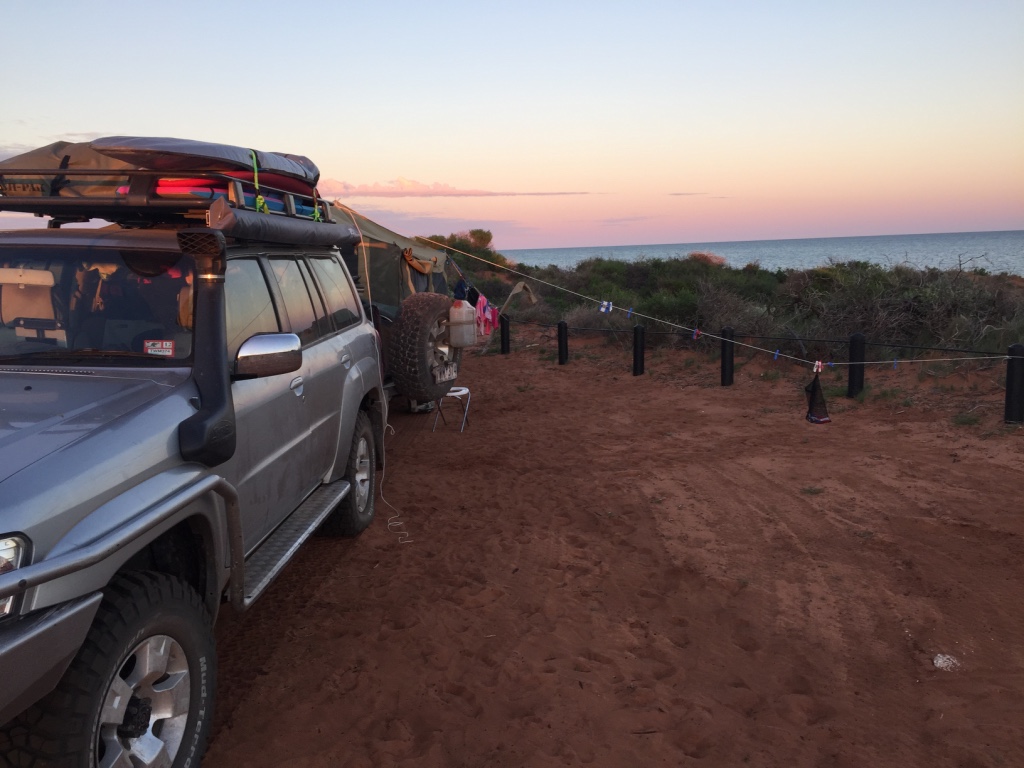
Camp at Gregories South with water views.

Camp at sunset
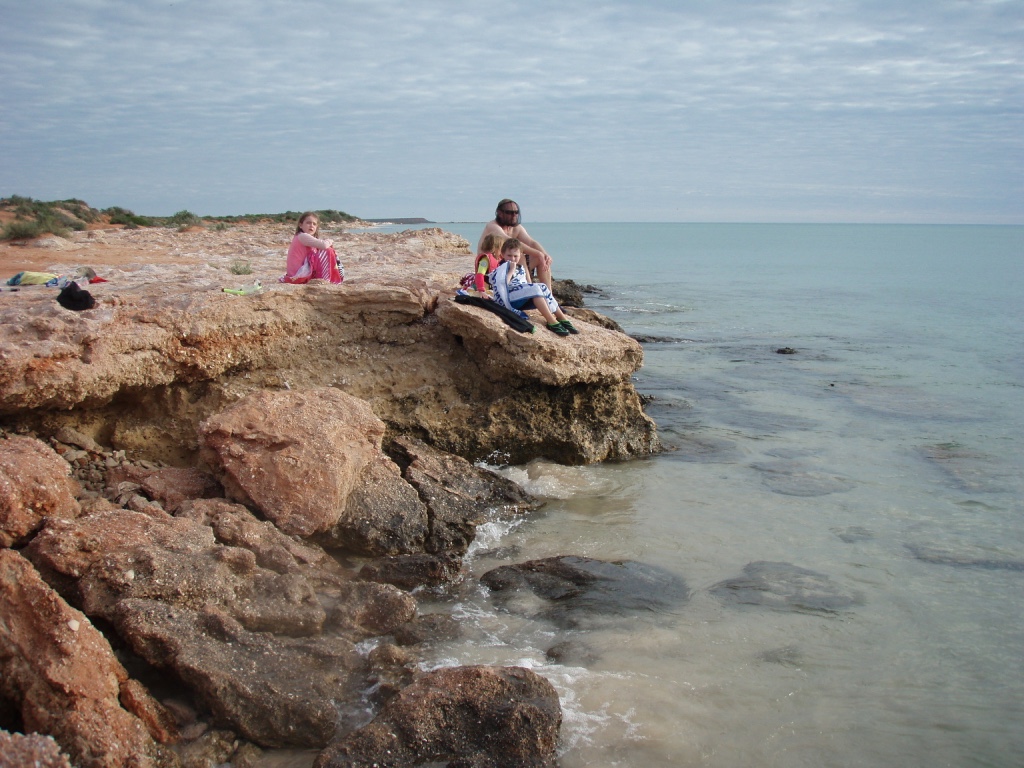
Swimming at South Gregories
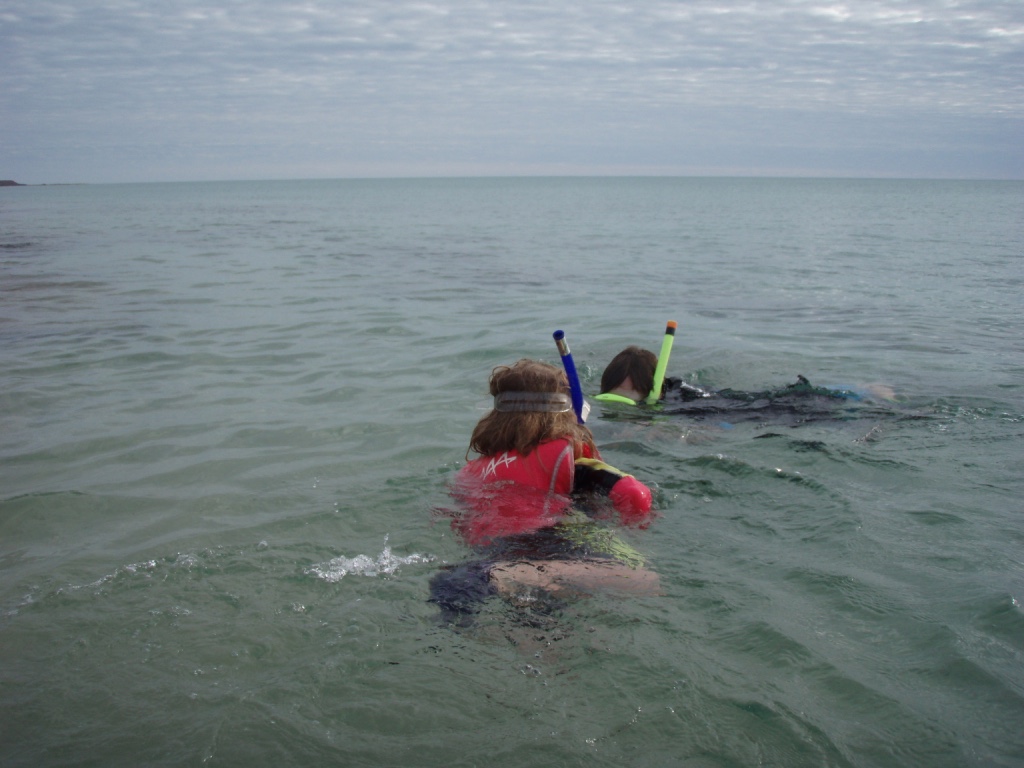
having fun snorkelling

Aaron…I am ready to snorkel

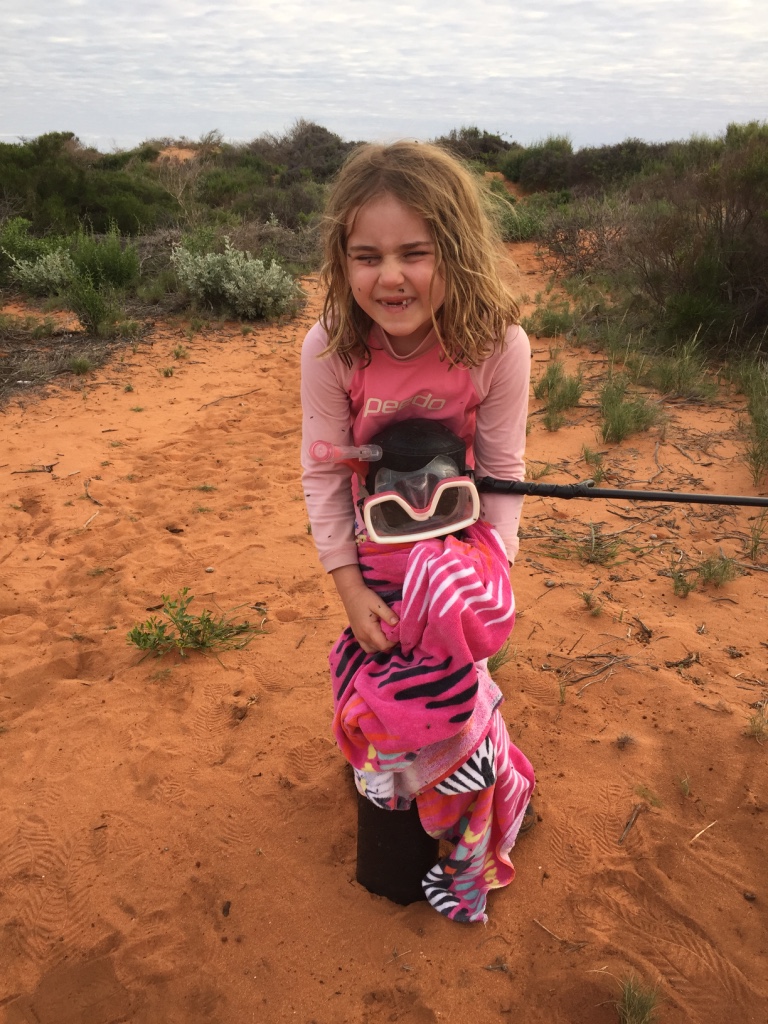
Who is this masked creature with Holly?
We ended up staying at South Gregories. We waited until the flies went to be before cooking.
On the way off the cape and out of the national park we met a German Couple in a Rav4 hire car that was completely bogged to its axels. They were driving with their tyres at 35psi after Andrew and Aaron helped them they drove away – out of the national park. They were lovely people could not speak much english and did not realise that car not a suitable 4×4.
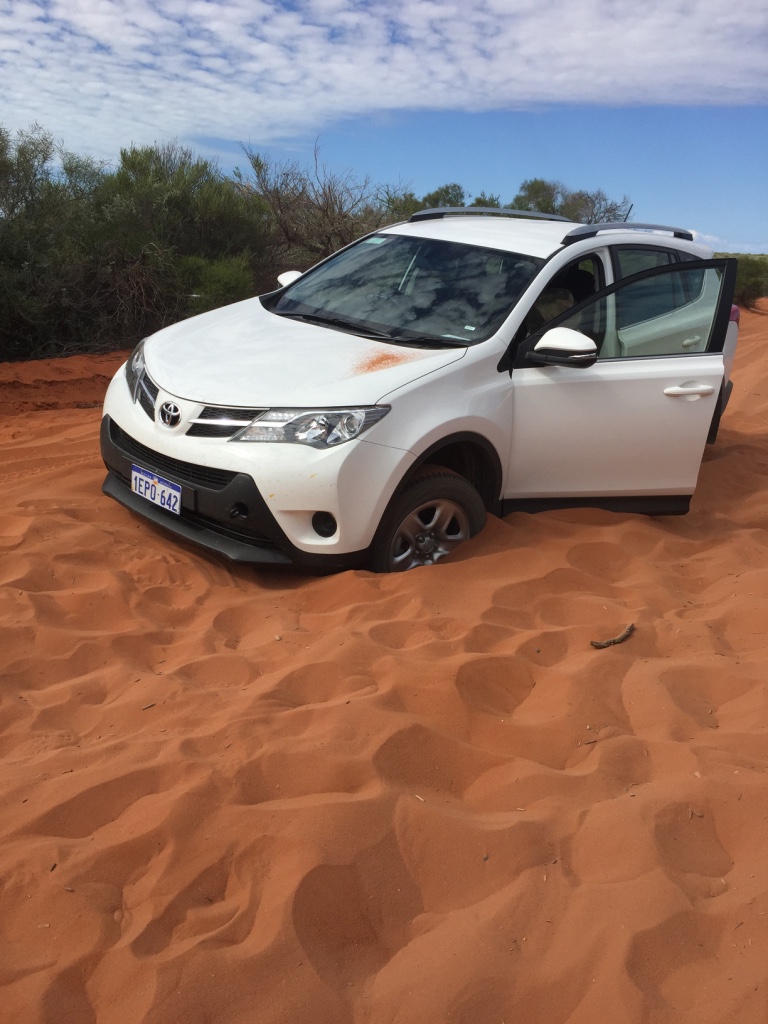
German couple in a rental car bogged to axel.

Helping them let the tyres down.


Michaela behind the wheel on the sandy tracks.
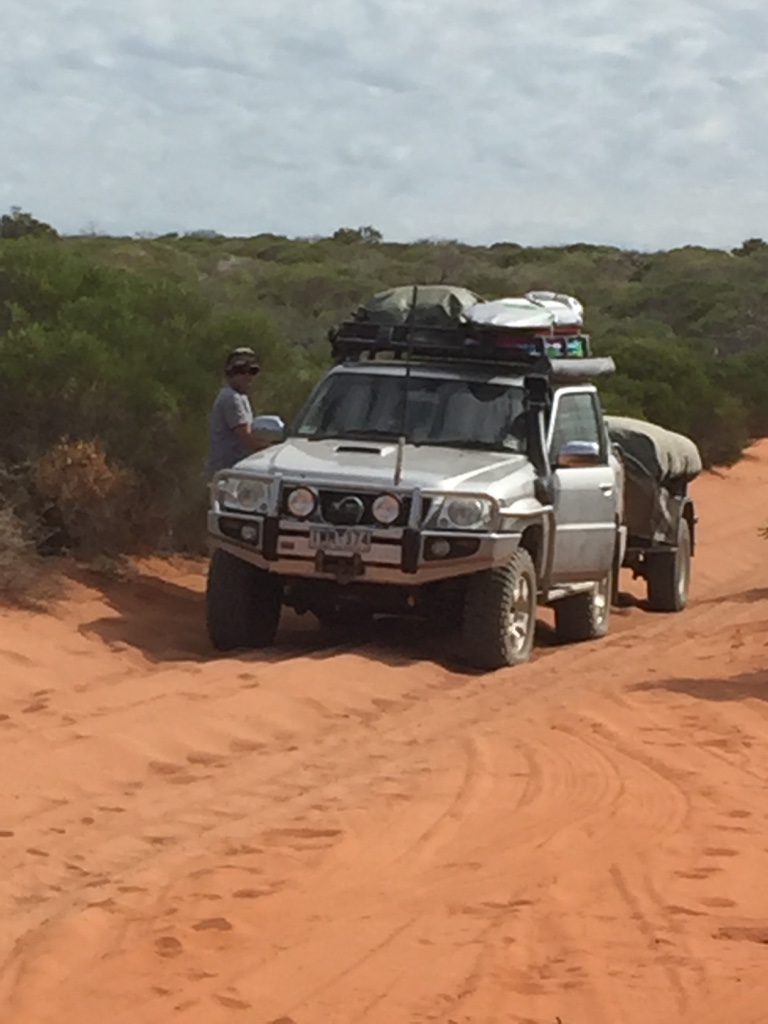
The Patrol in the sandy tracks

The warning sign – soft sandy tracks ahead – this was near where we saw the bogged vehicles.
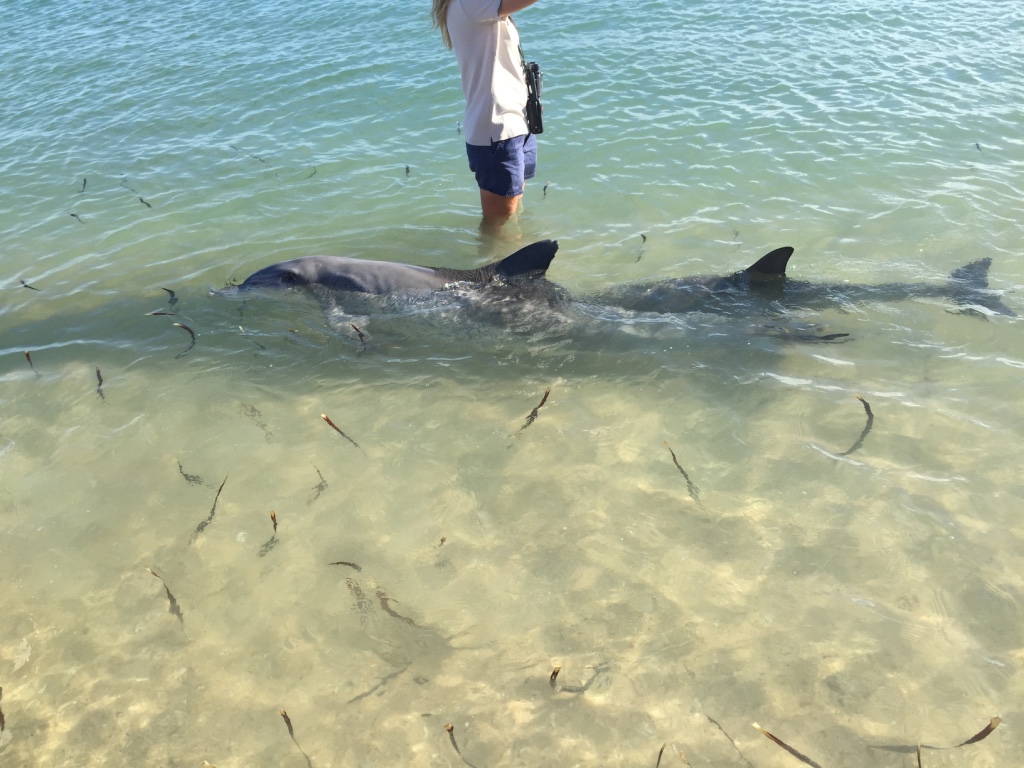
We drove from Steep Point to Monkey Mia and it was long day in the car when we arrived at the Resort…we checked into the Monkey Mia Caravan Park that was full and we were allocated the overflow camp near the front gate which turned out to be more roomy than most of the sites in the park a lucky bonus and they let us stay here two nights.
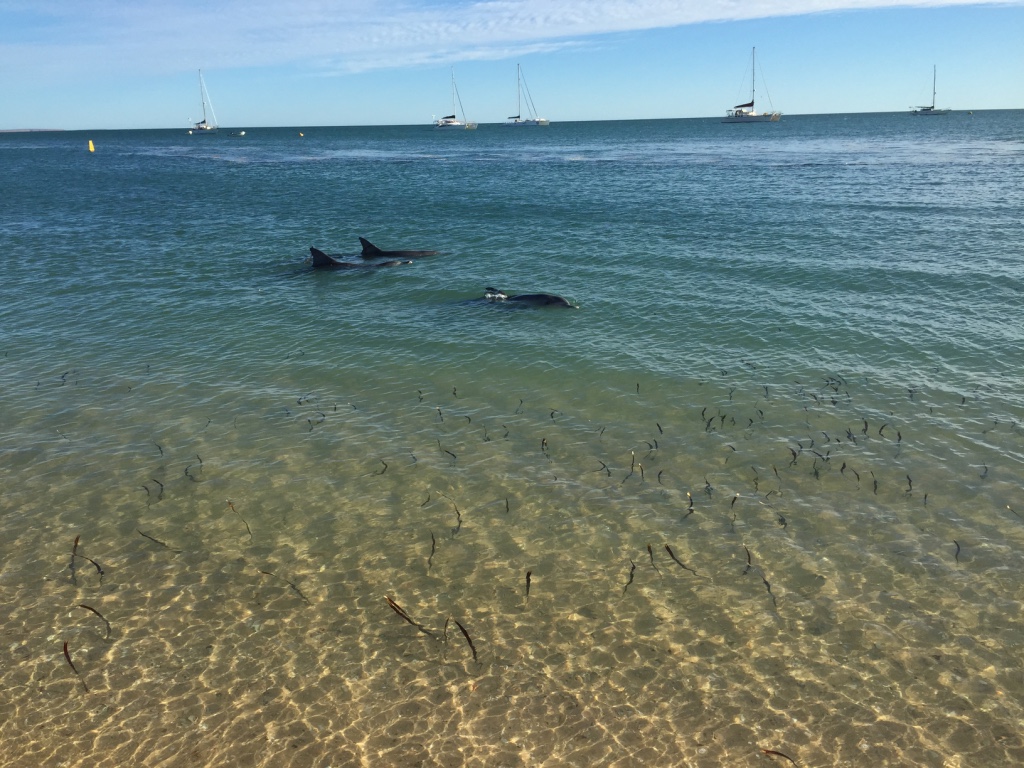


Dolphins happily swim by and check out the crowd

Looking at the dolphins in the beach line


dolphins at Monkey Mia
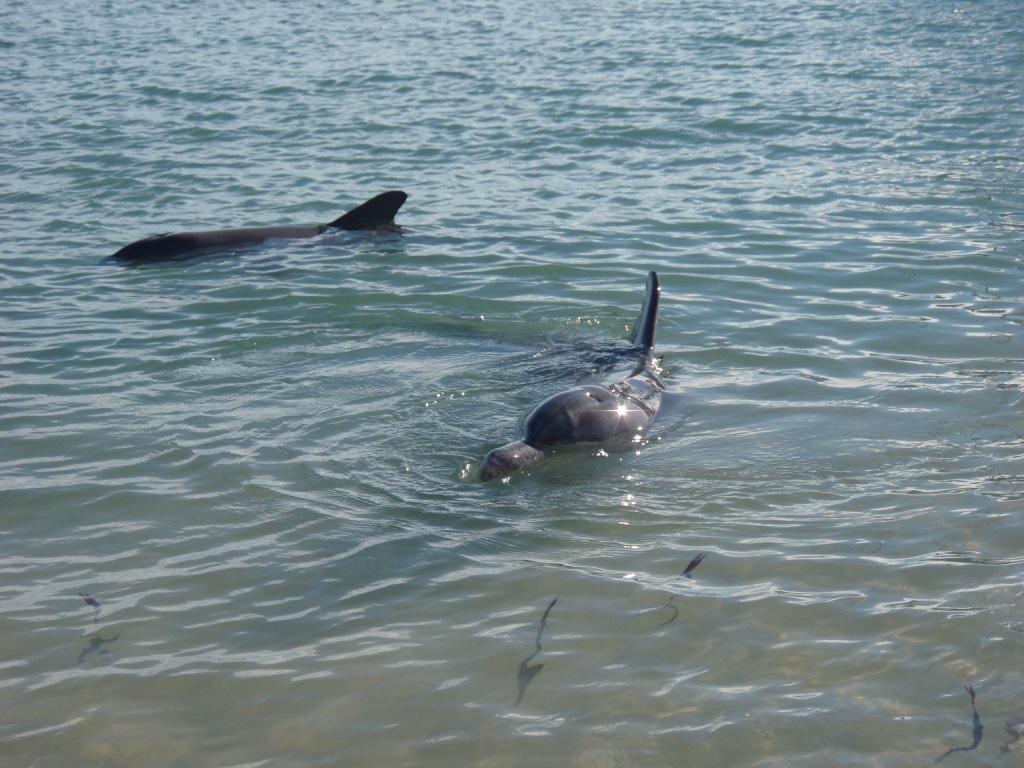
Dolphins come to say hello

The carpark camp and our washing lines!
The kids woke early to see the dolphins and we had discussed the need to be really well behaved listen to the rangers and you might get chosen to feed the Dolphins. They only feed the senior female in the pod as the young need to learn how to fish and the males get aggressive. So there are only five dolphins that are fed and they only get 3-4 fish each. There were approx. 50-160+ people there for the feeding so the kids odds were not good. It is still really beautiful to see the dolphins and on our first morning we got to see 10 dolphins up close although we didn’t get to feed any.
We were all thrilled to see the 10 wild dolphins that visited Monkey Mia that morning and three of the ten were in the feeding program. As they only feed older female dolphins and they only get a small amount of fish if they all come in at once then the feeding is all over for the day. It all depends on the dolphins and if they have better things to do than visit with tourists. After that we all went for a swim in the freezing pool and a dip in the heated spa. Andrew and I caught up on some admin (writing this) and the kids spent the best part of the day in the spa.
We all decided to get fly nets as the flies seemed to be getting worse. A happy family in the fly nets…saves swallowing too many flies.

Family happy with new fly net purchase.
That night we chose to splurge on dinner in the resorts more up market restaurant. Over priced and a bit disappointing but great not to cook two nights in a row!
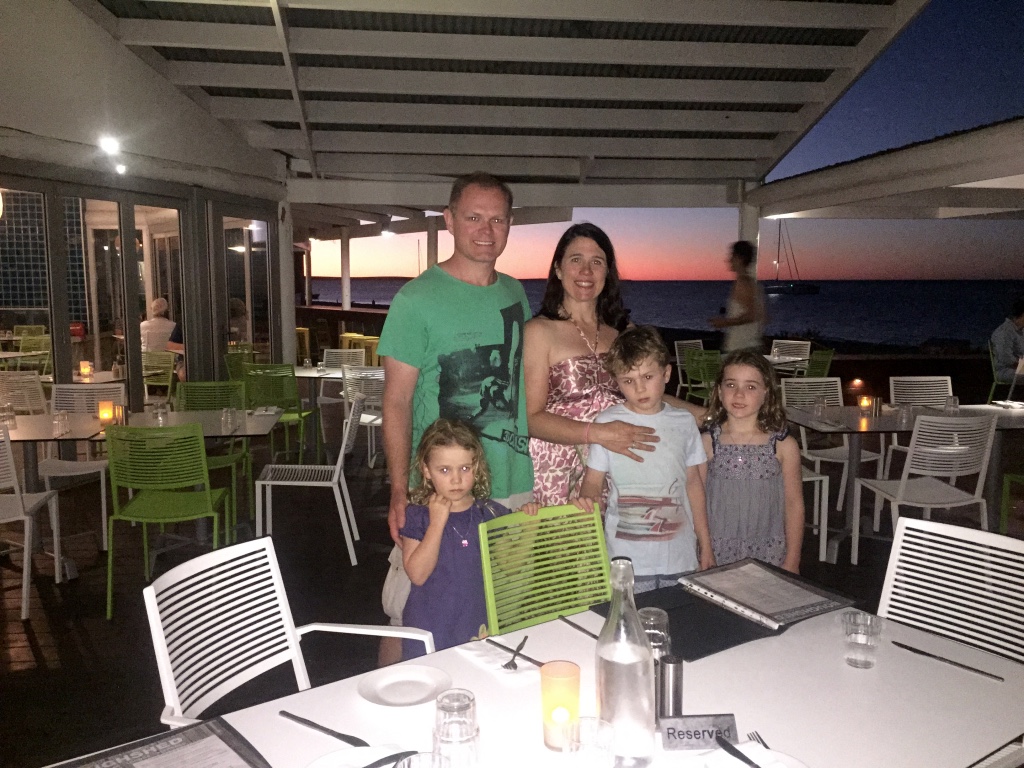
Out for dinner

Sunset at Monkey Mia
The next morning was ANZAC day and they held a dawn service at the resort. We decided that given we were camped only 200 metre from where the service was to be held we would wake the children and go. The sunrises and sets over the water at Monkey Mia. So we thought it would be pretty special. It was colder than expected but the dawn service was really lovely by the waters edge listening to the Canberra service. There were a number of locals from Denham, travellers, and resort staff. After the service they had a sausage sizzle for breakfast.

Meeting Tim Hargraves
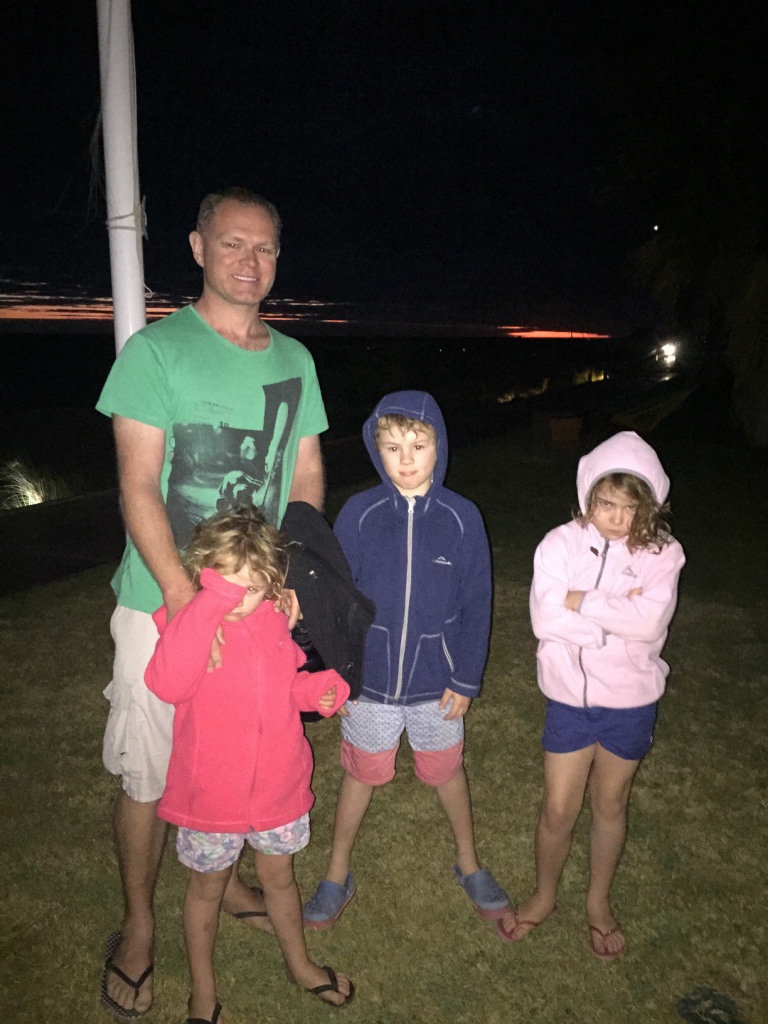
Anzac Memorial at Monkey Mia
We met a lovely old chap wearing medals for his own service and that of his father in the British Army. Aaron was first to ask about his medals and then we got chatting about his story and how he came to live in Denham. His name was Tim Hargraves and he told us many tales about his travels as a young man he said that he travelled overland and around the world for 7 years working in any way in could and often living on a shoestring. He then told us of his good fortune to meet a beautiful woman, at a party, with whom he quickly fell in love and a few weeks later they married and for their honeymoon travelled overland from England to Australia back in 1970 in a range rover. That would be quite a trip back then. Tim had a wonderful way with words and had the children listening to every tale intently. He asked us to drop in and visit his home in Denham.
The children again went down to looks at the dolphins that came into shore for a feed. It is pretty hard to get a chance to actually feed the dolphins as there are anywhere from 80-160 people at the beach and only 5 dolphins are fed but on the second morning only when only one dolphin “Surprise” came to shore our three children and another little girl were luckily chosen to feed her one of the three fish on her quota…they were so excited and thrilled.
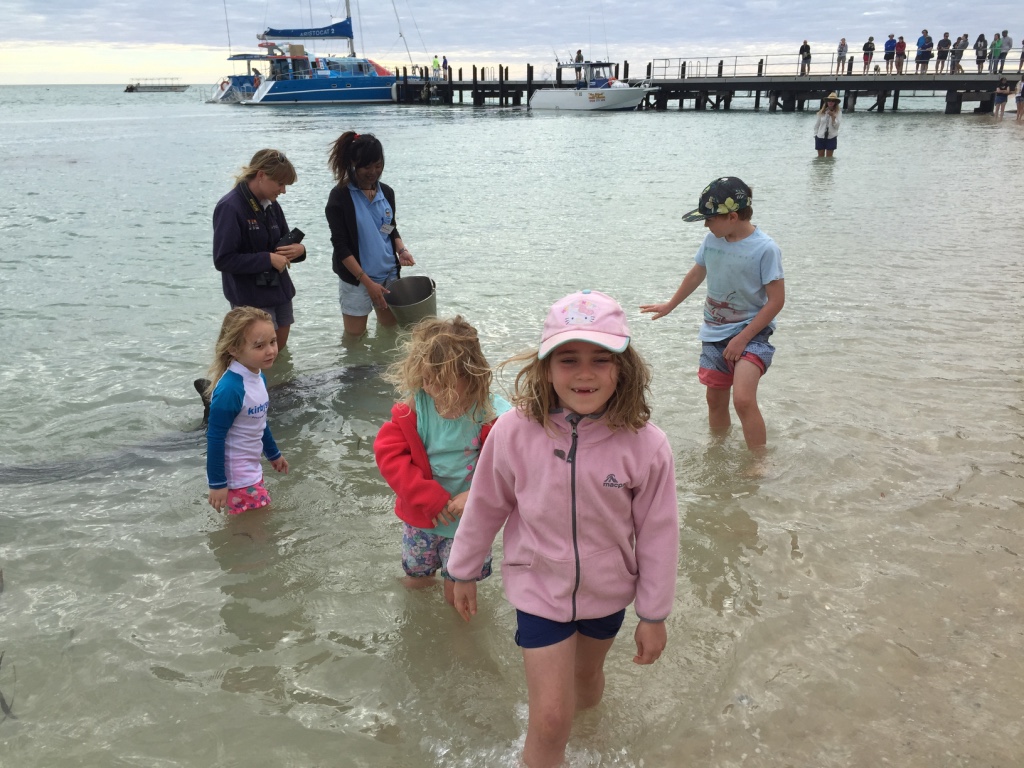
Looking happy with wild dolphin experience

Day two getting to feed a fish to Surprise the dolphin

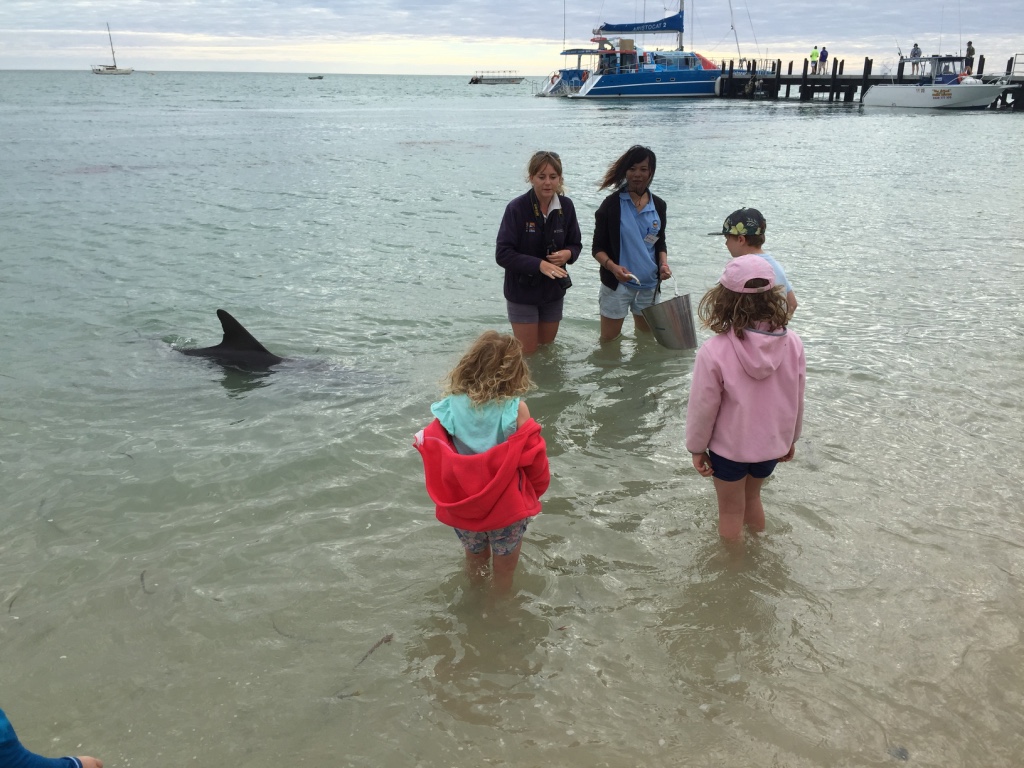
Dolphin coming for her fish
After the dolphin feeding we headed out to Cape Peron National Park.

We packed up camp early to beat the flies and headed off to Steep Point – this is Australia’s most Westerly point and only accessible by either boat or four wheel drive and a few websites advise the sandy tracks can be quite tough.
But the flies came with us…

Got out to read a sign and a few bush flies arrived to say hello
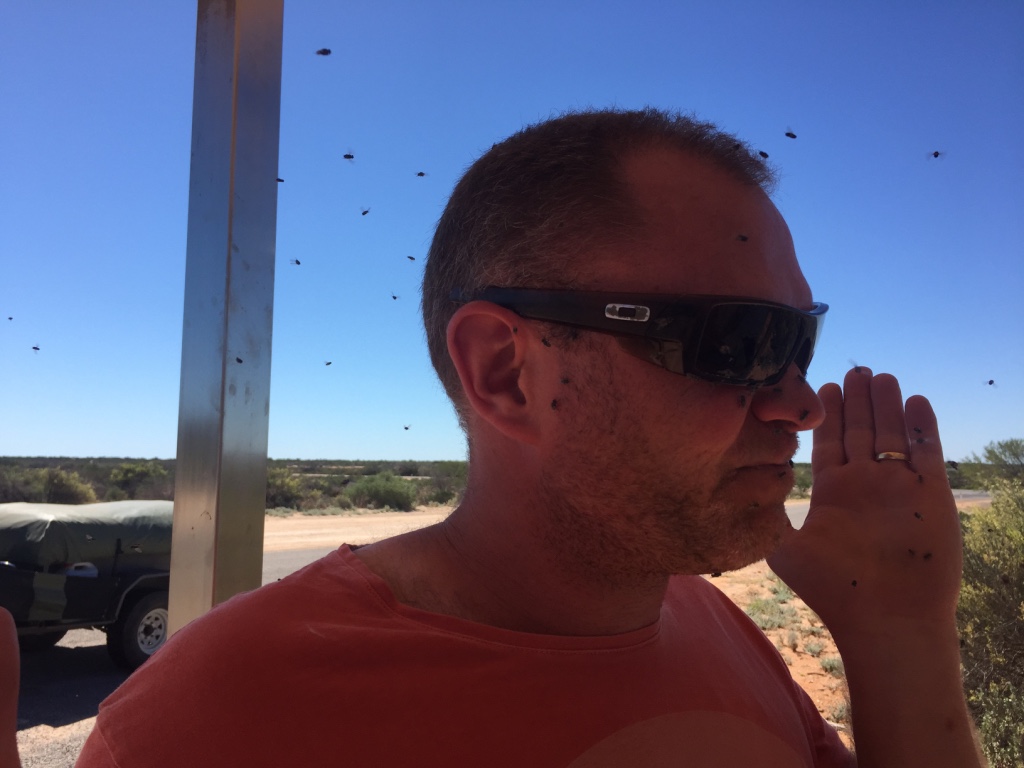
Flies everywhere
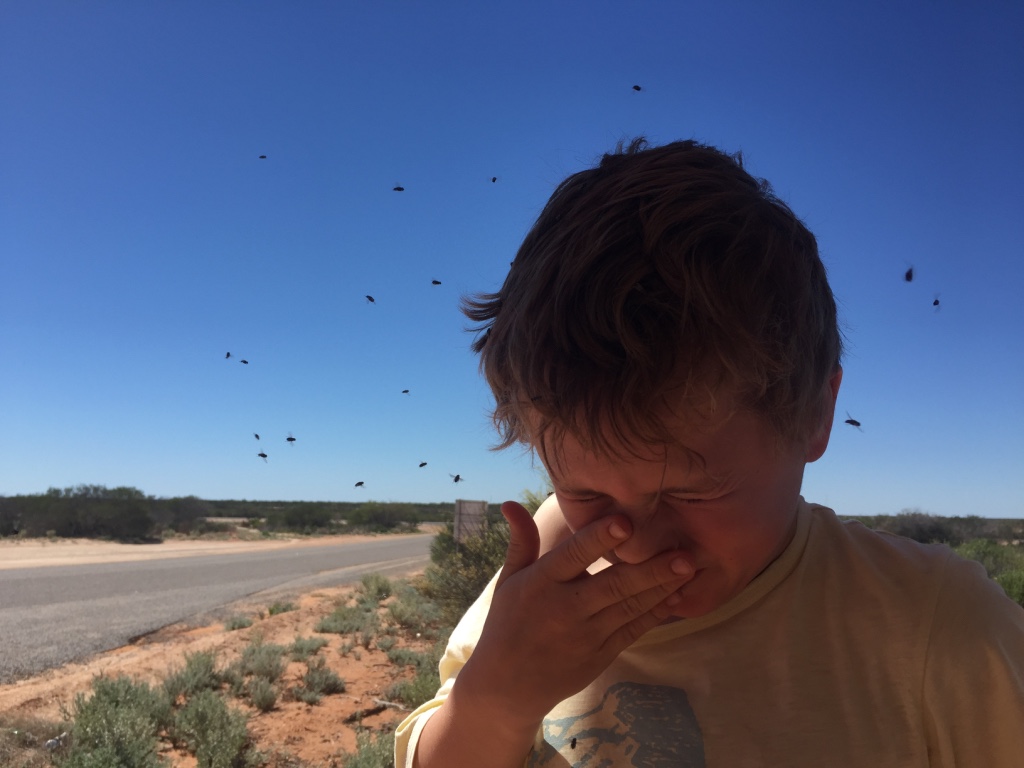
oh no flies in my eyes!
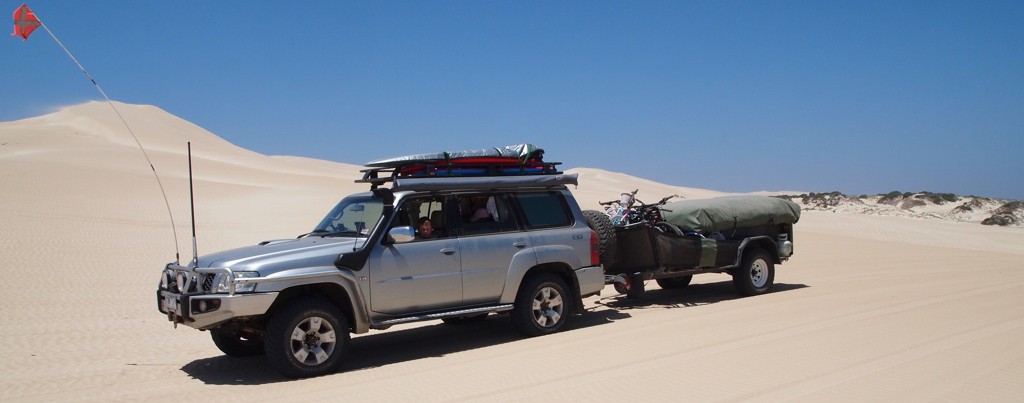
The tracks were okay and we found them no problem for the Patrol or the Tambo. We were really lucky we called to book and the Rangers wife said that most people book to camp at Steep Point close to 10 months in advance. So we were lucky to get two nights and extended to a third as we loved it and after driving around the peninsula to the point we had time to fish and enjoy the beach. Steep Point is booked out because it is a fishing mecca being located close to the deep Indian Ocean and the beautiful Shark Bay marine park with various ocean currents, warm north and cooler southern current bringing a range of fish it is a reliable and loved fishing spot.
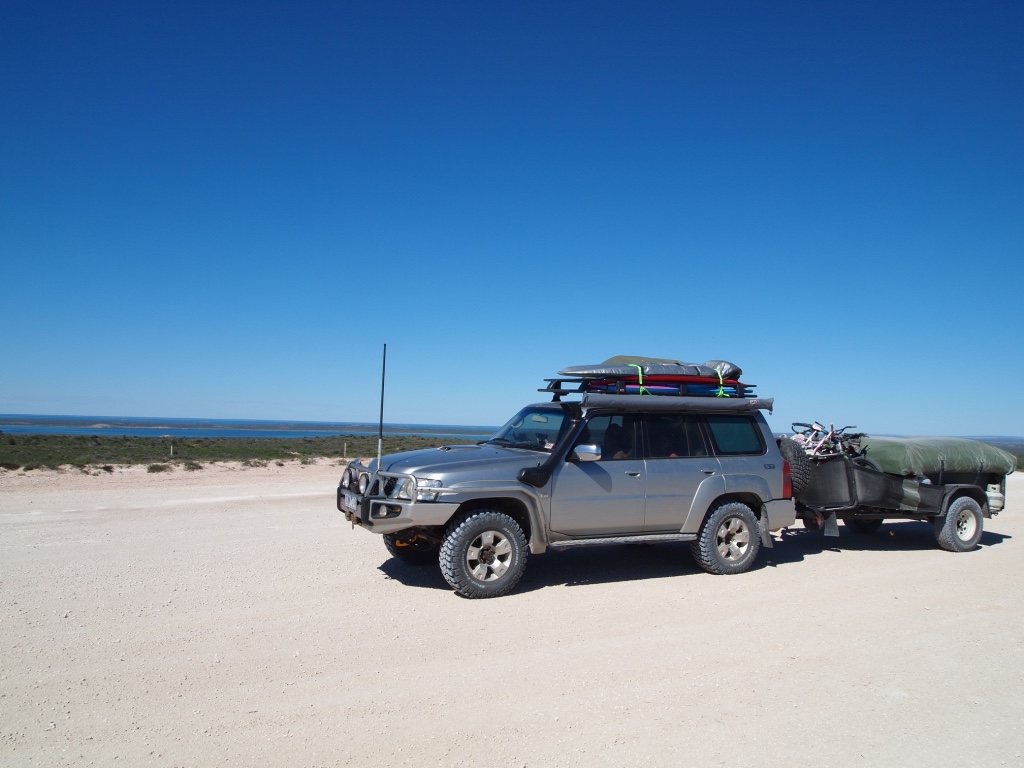
Views over Useless loop – across to salt mine.
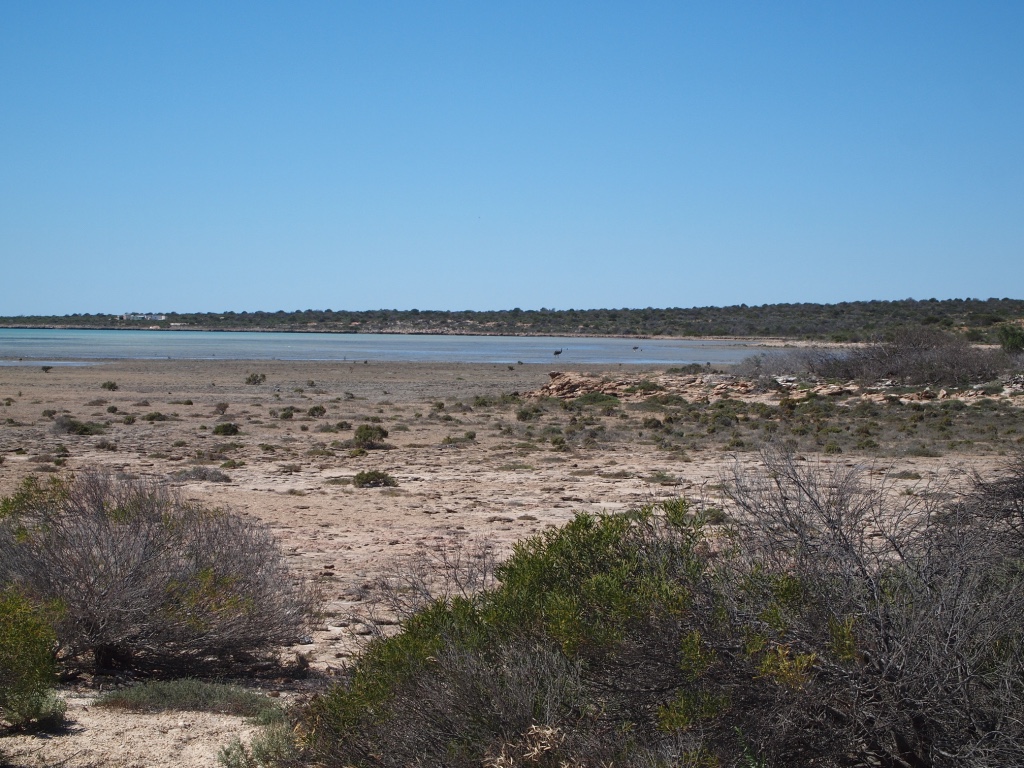
There are emus swimming in this photo…very small 🙂

The road out to the steep point camp grounds.
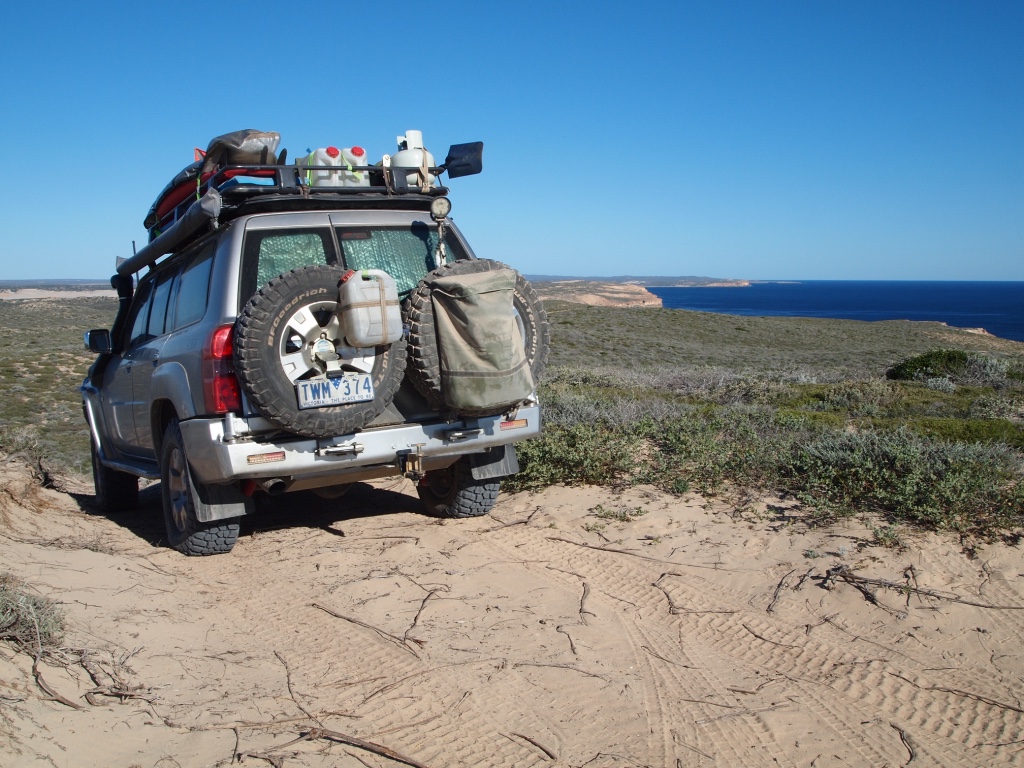
View from a high point.
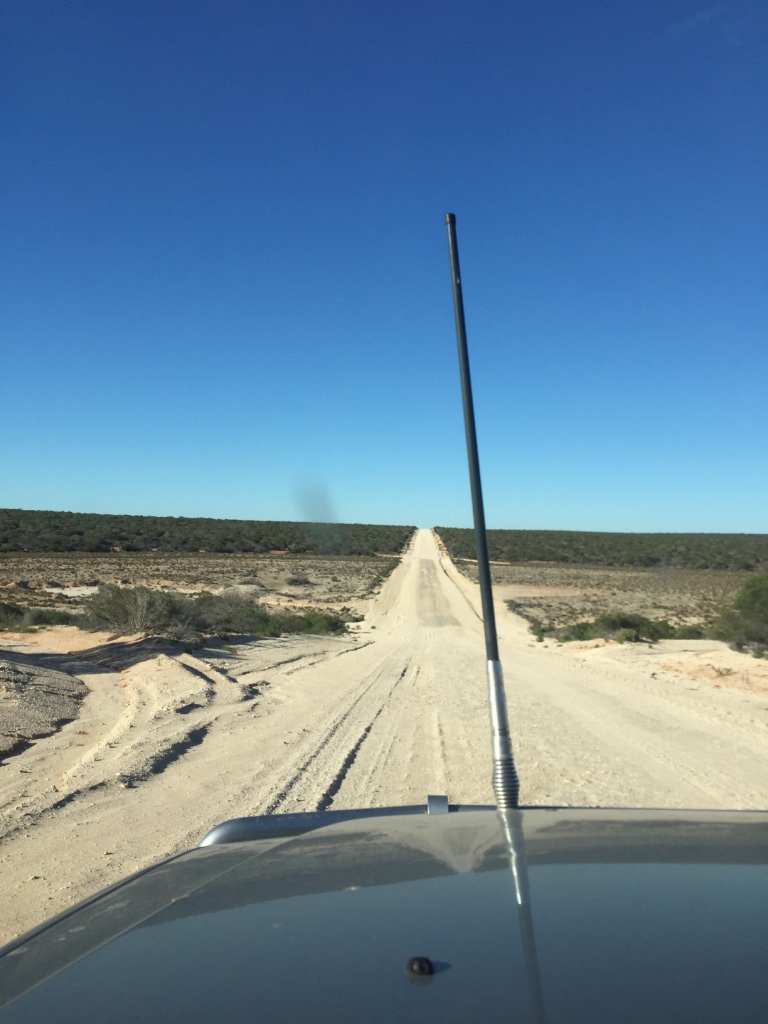
Another view of the road ahead…it is quite barren sandy land but very green after recent rain.
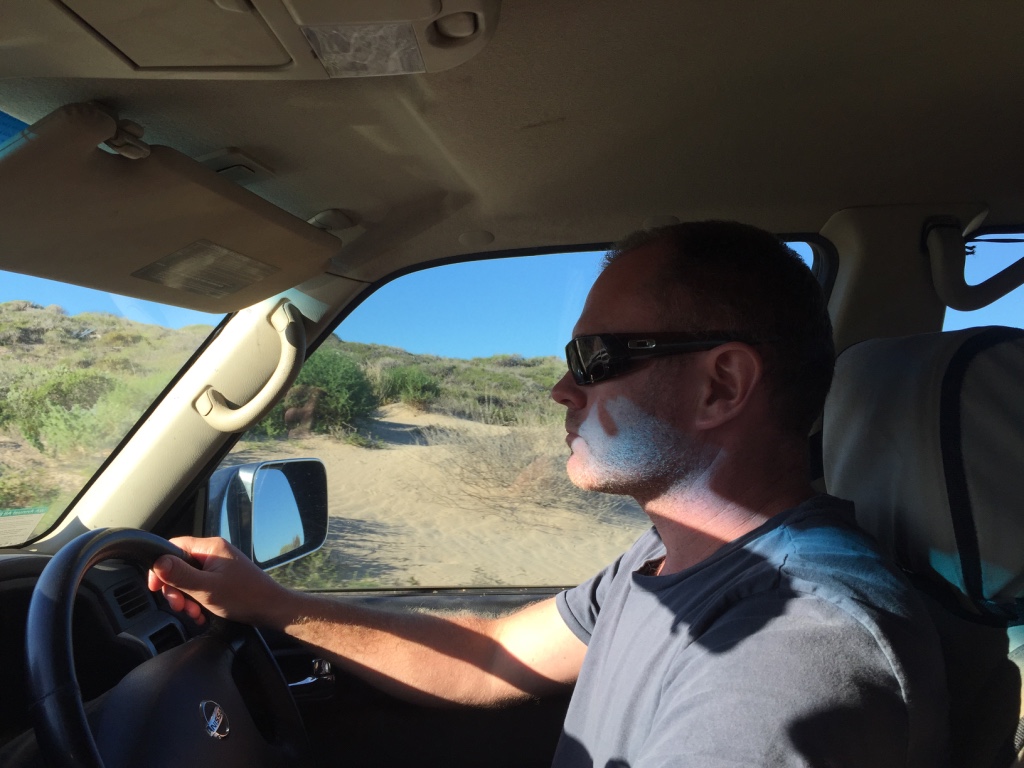
We were excited by the remote location and expected to enjoy secluded beach front camping we weren’t disappointed.


Our camp view to the dunes

Our camp view to the bay
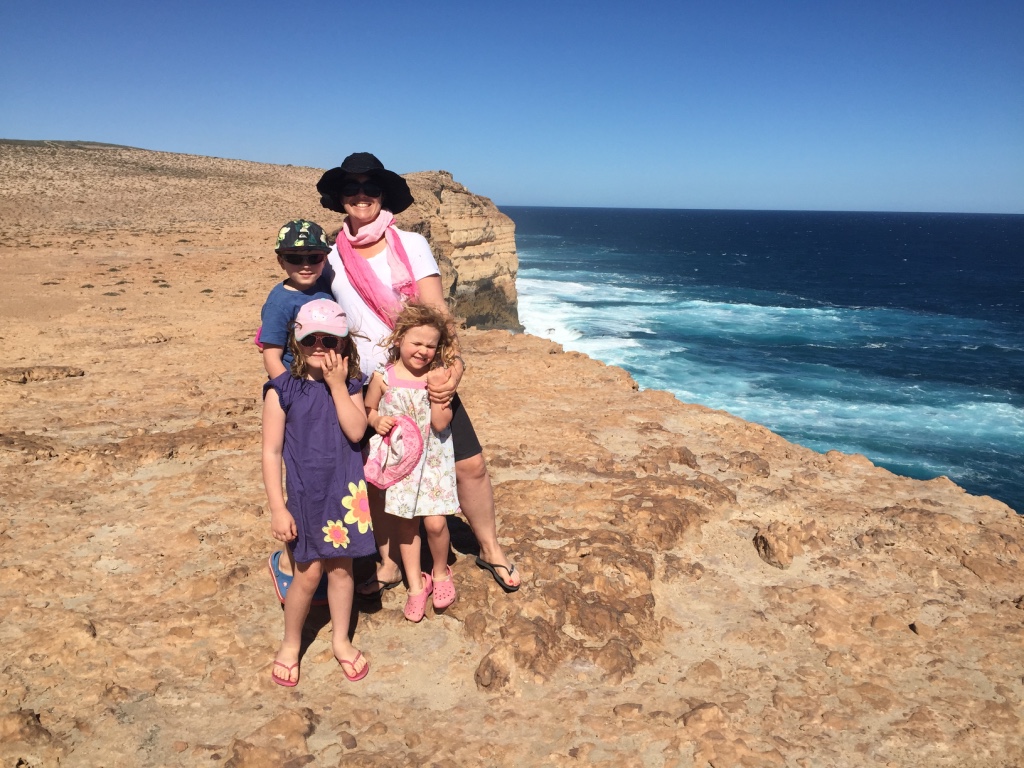
It was an amazing little peninsula with clear blue waters on the protected eastern side of the peninsula where we camped and the picture perfect cliffs with ocean views on the Westerly side. Our camp was within 5 metres of the beach with gentle lapping waves from the bay and the closest nearby camps were 200m away.
Our neighbouring camps which are well spaced out had large groups of men heading off early for fishing expeditions so we had the beach to ourselves. We met WA man named Rod from a neighbouring camp and he offered to bring us over a couple of fresh fillets later in the day. We were thrilled when a lovely man delivered nearly a kilo of freshly filleted red snapper fillets ready for our fry pan! It was superb caught and eaten in the same day…doesn’t get better or fresher than that and I didn’t have to fillet it – even better. Love the generosity and friendly Australian way.
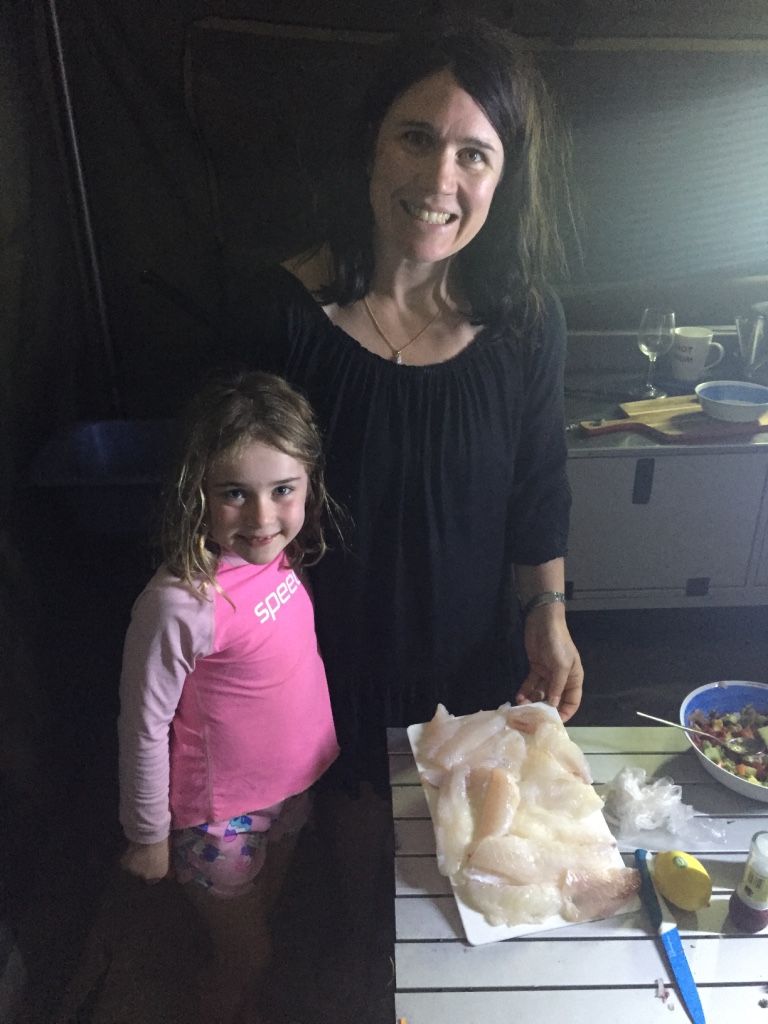
Fresh snapper fillets caught that day delivered from our neighbouring camp! Yum!
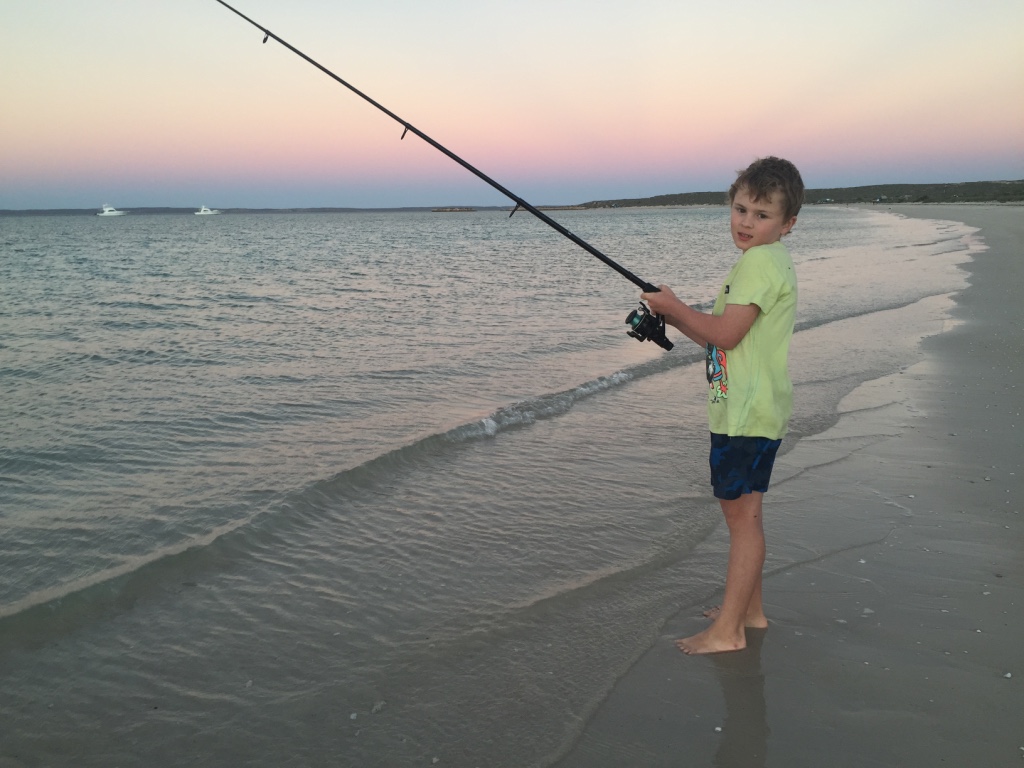
Aaron fishing off our beach.
We drove to the Western Point on the second day and other than one vehicle we past and a Kangaroo and joey we saw we didn’t see anyone else.

The kangaroo at the westerly point woke up
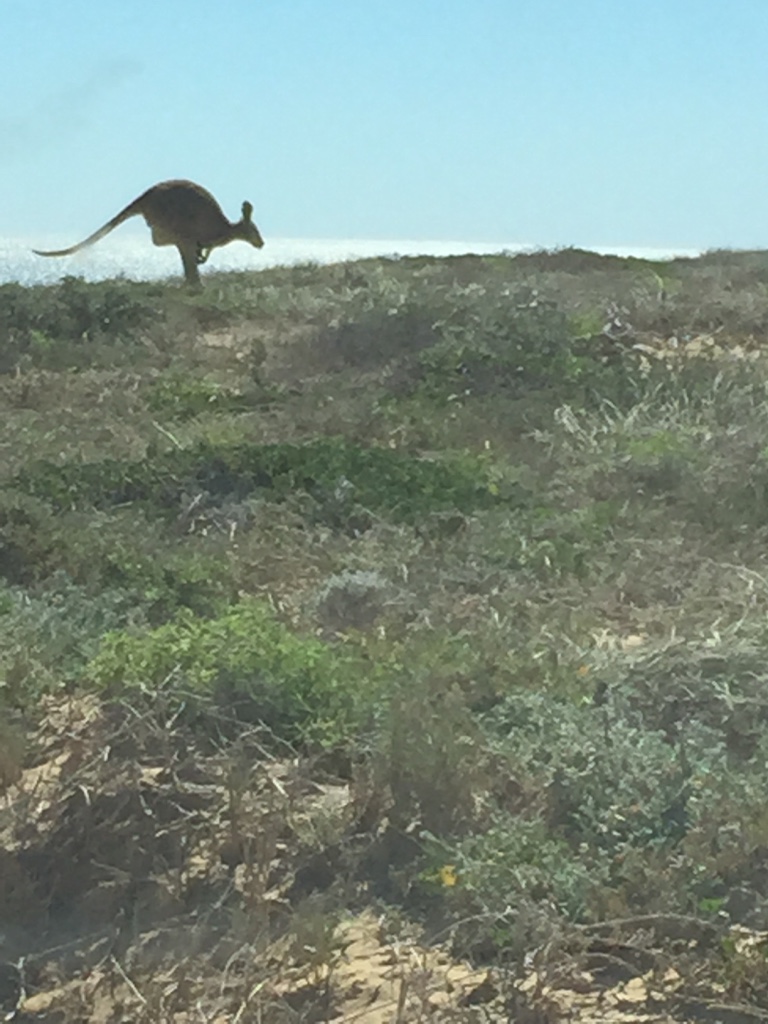
Hoping away
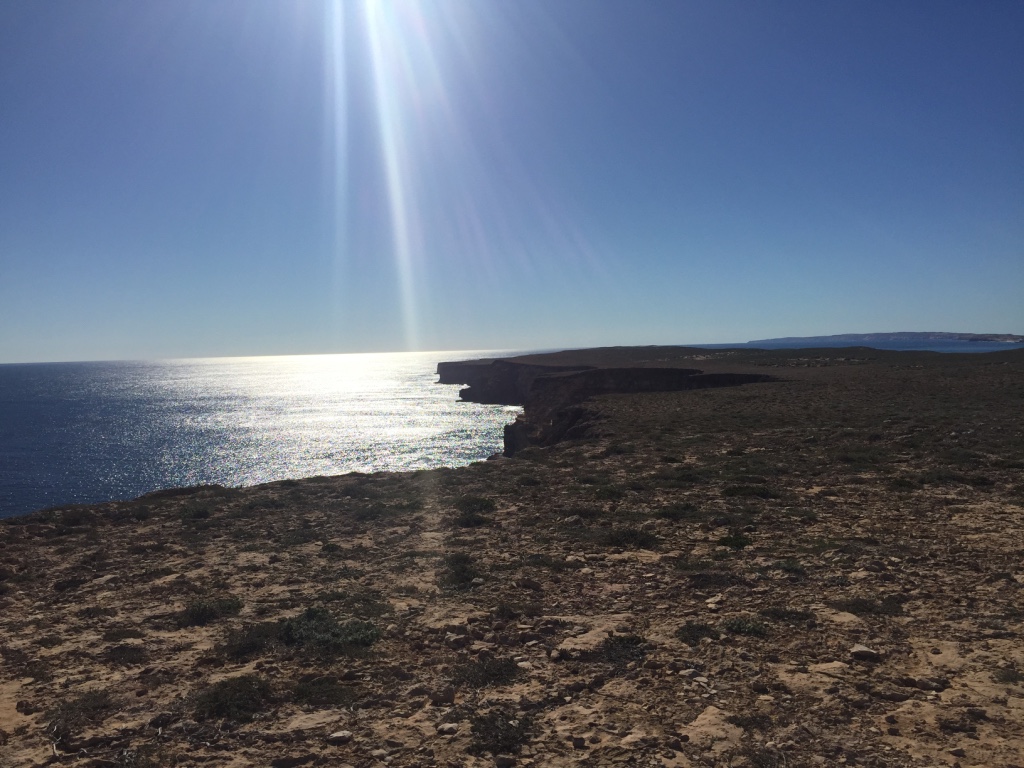
More stunning ocean views.

Kids at the most westerly point.
The point is a rocky out crop with cliffs and vast ocean views. It was the first of the geographic points for our trip and a landmark that due to its locations few Australian’s would get the chance to visit. Very cool. They have a photo pole for taking selfies…clearly many arrive and want to somehow photograph all members of the team at the point. This location was remote, secluded and beautiful and for a fisherman bountiful too. We loved it.

Family snap at the most westerly point of Australian mainland.
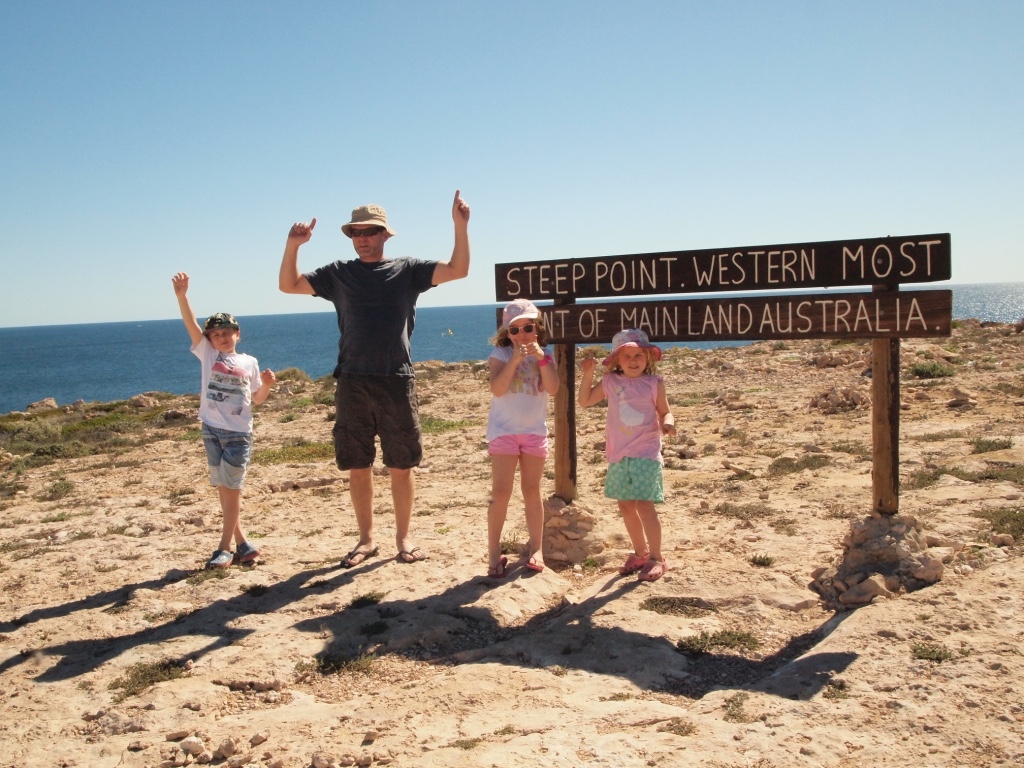
Hooray we are here too!

The Patrol makes it to most Westerly point.

A shovelhead ray that a man caught off the beach!

Aaron snorkeling…not too good at lining camera up!

Ready for snorkel.
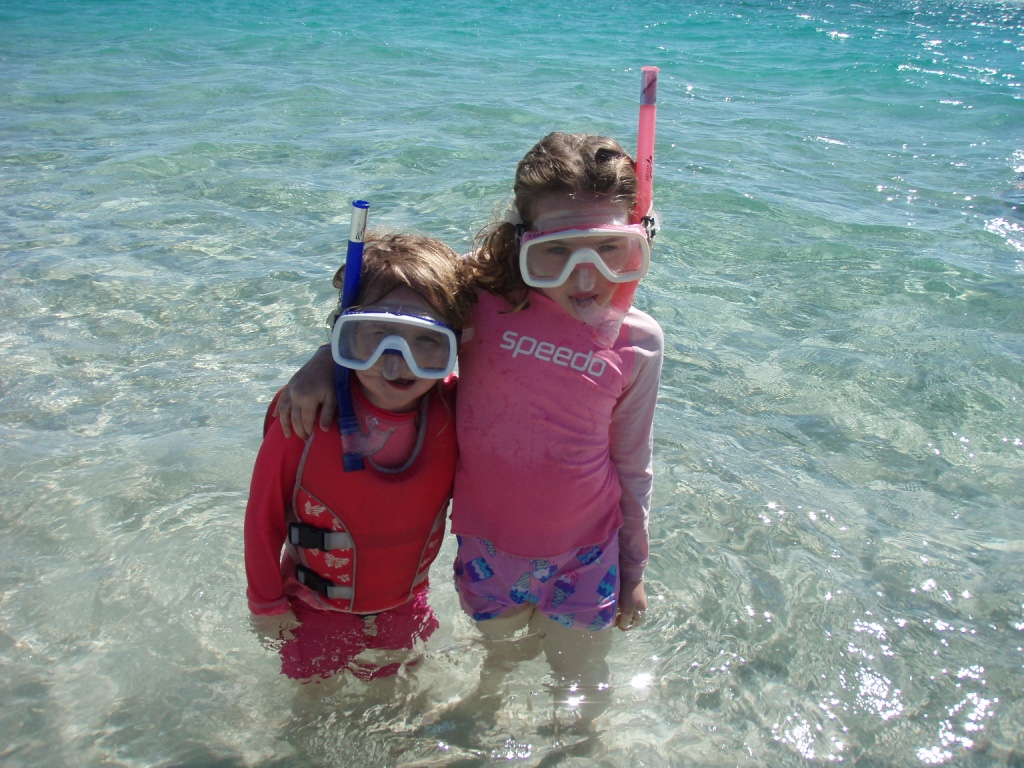
Girls in snorkel gear.
As we were leaving Steep Point we visited the Blow Holes and they were spectacular…huge fountains of water sprayed out of two holes in the limestone cliffs. The come from underground tunnels worn through the limestone rock. They were quite a spectacle the girls were initially terrified of the sound and sudden rush of water but Aaron loved getting sprayed. The are an amazing example of the power of the ocean.

View of the blow holes from the car – we parked a good distance away!

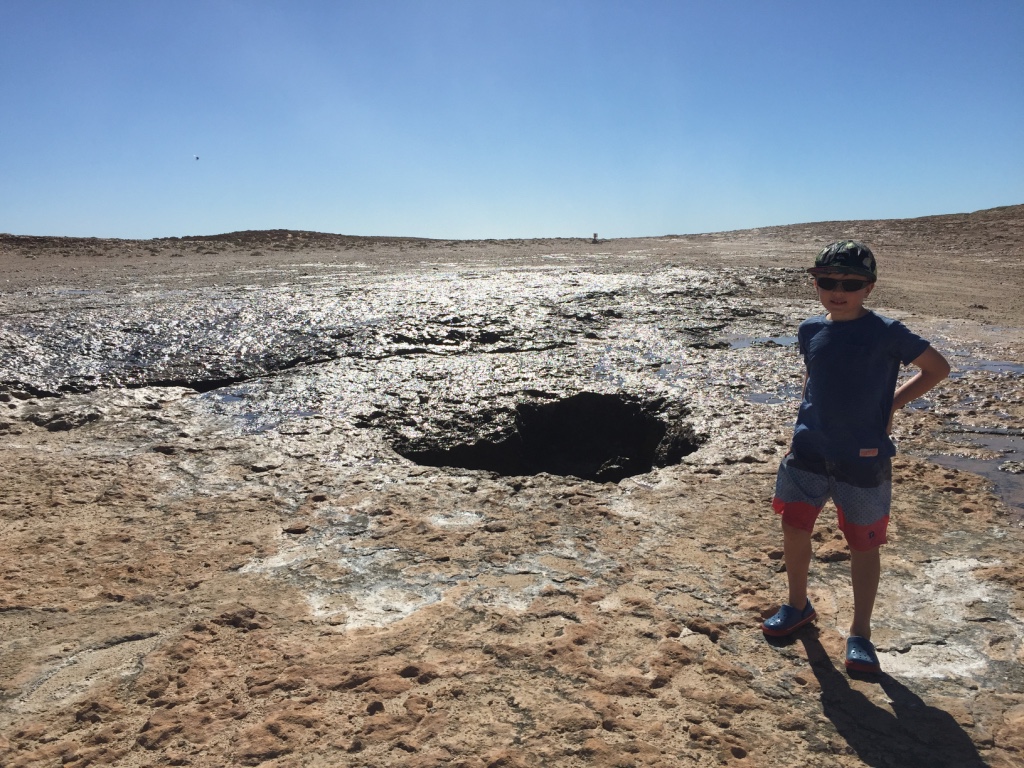
Aaron waiting and watching
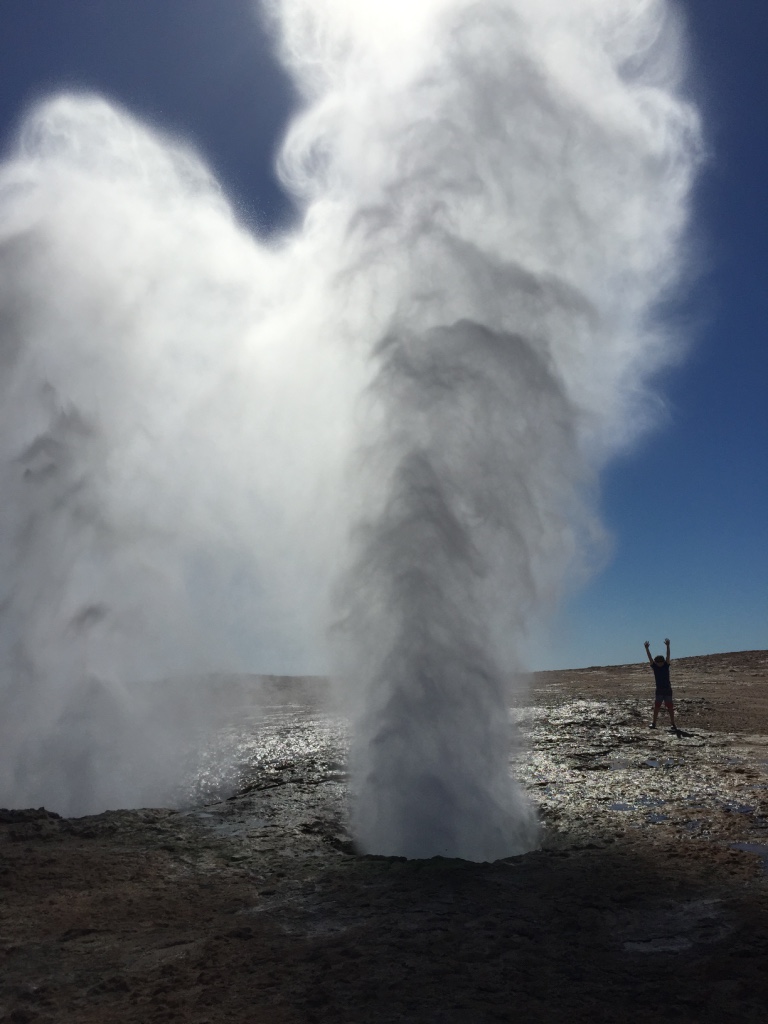
Aaron getting a shower

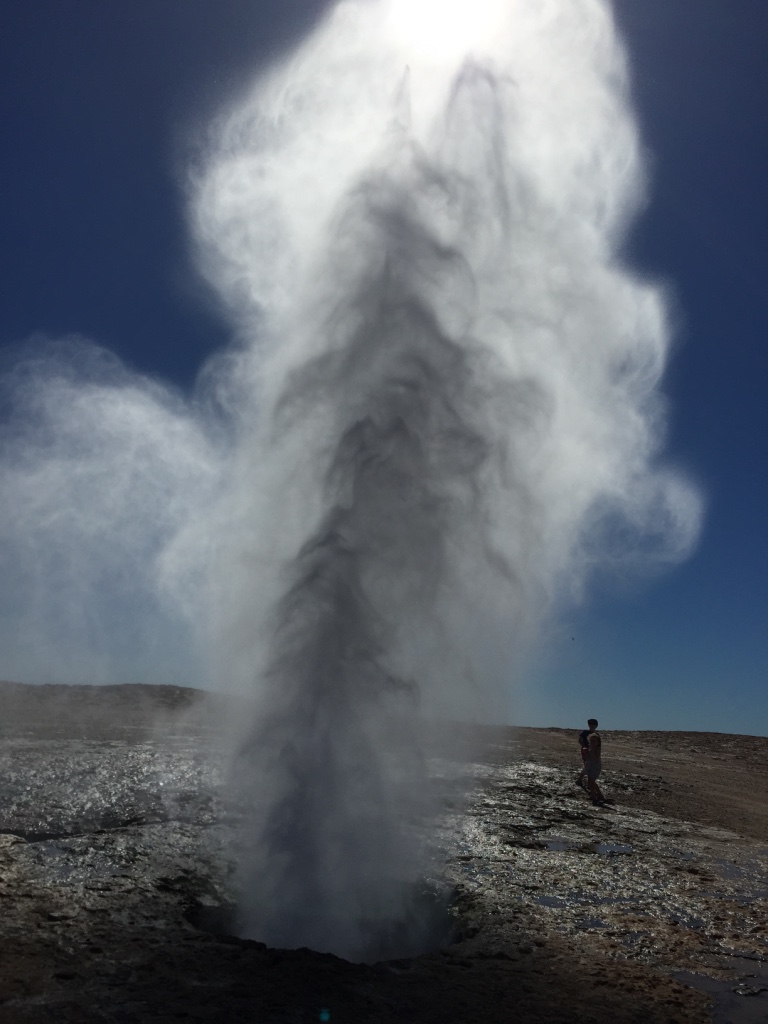
View of the blow holes from the car – we parked a good distance away!

Big blow from ocean swell


Looking into the holes…we could not see the daylight..water coming thru tunnels

Me and the kids with coastal view steep point
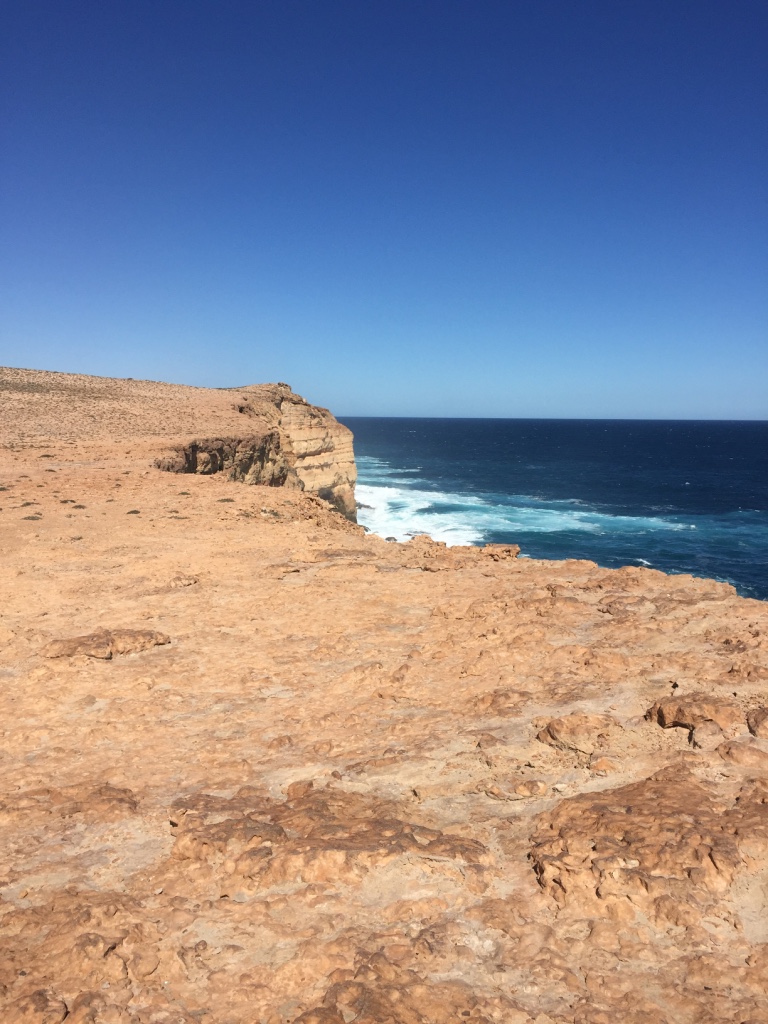
Awesome coast line and big blue Indian Ocean views
On our last morning at Geraldton we visited the museum which was fantastic for the children they had a read and find hunt of information and a list for the children to each lick off (Bianca’s was pictures only) and they worked their way around the exhibits looking and reading a number of different topics. It was a fascinating museum with a lot about the history of the area, the local indigenous people and the many ship wrecks off the coast – including a number of dutch shipwrecks from as early as 1600’s. 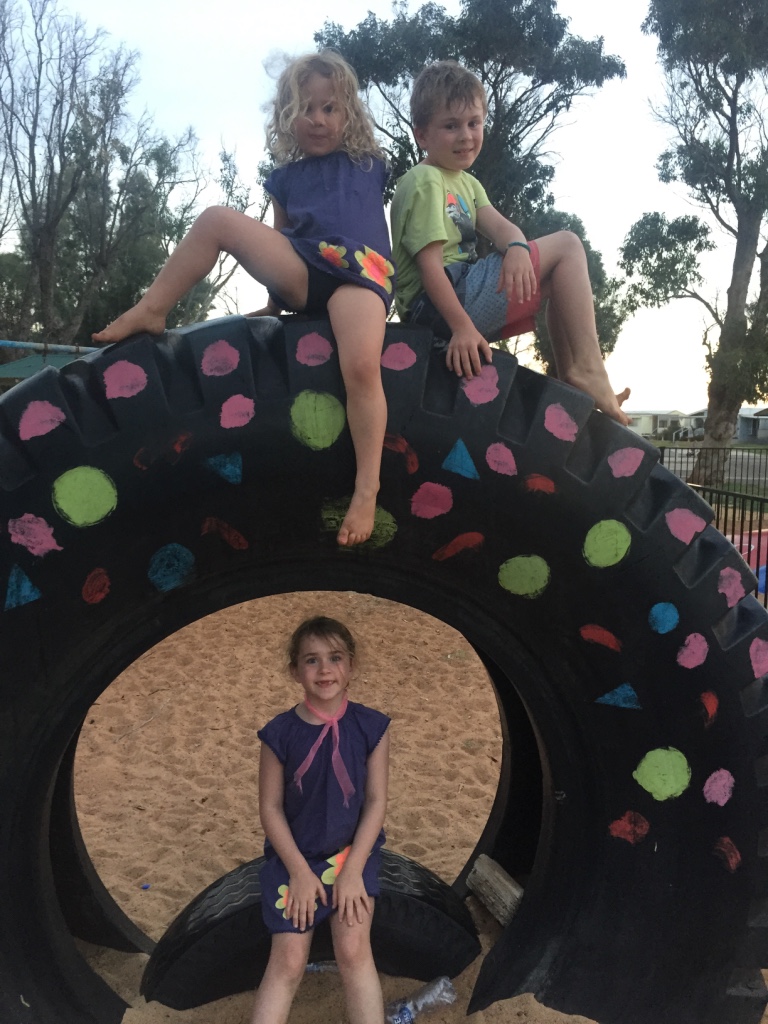
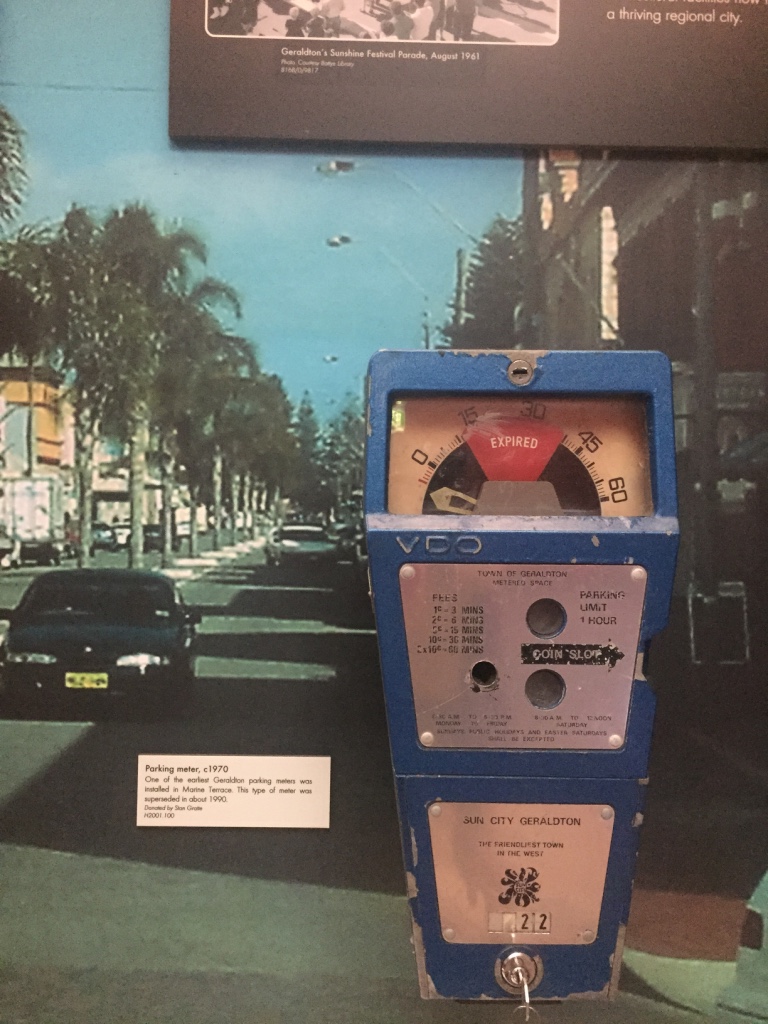
Remember these old parking meter I loved that it was 1c per minute….not anywhere near this price in Melbourne!
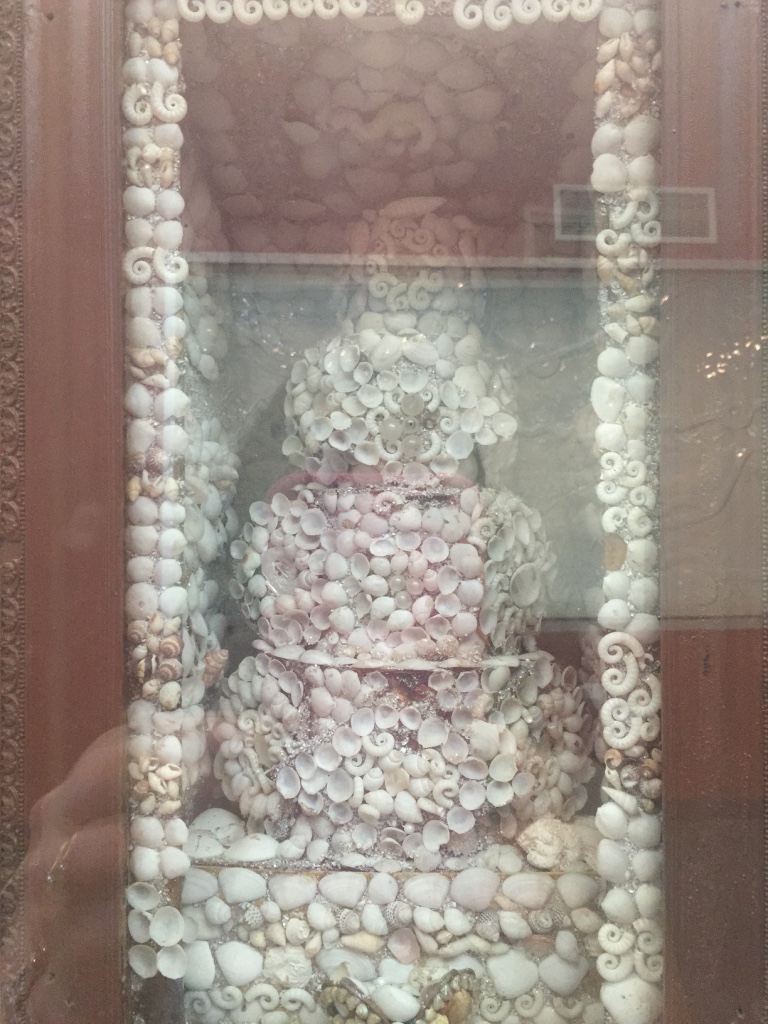
A shell wedding cake photo in the museum at Geraldton

Holly found some knuckles games – made from bone..just like the game she plays at school.

Kids with BIG Rubix Cube – these were actually cool public toilets on the water front.
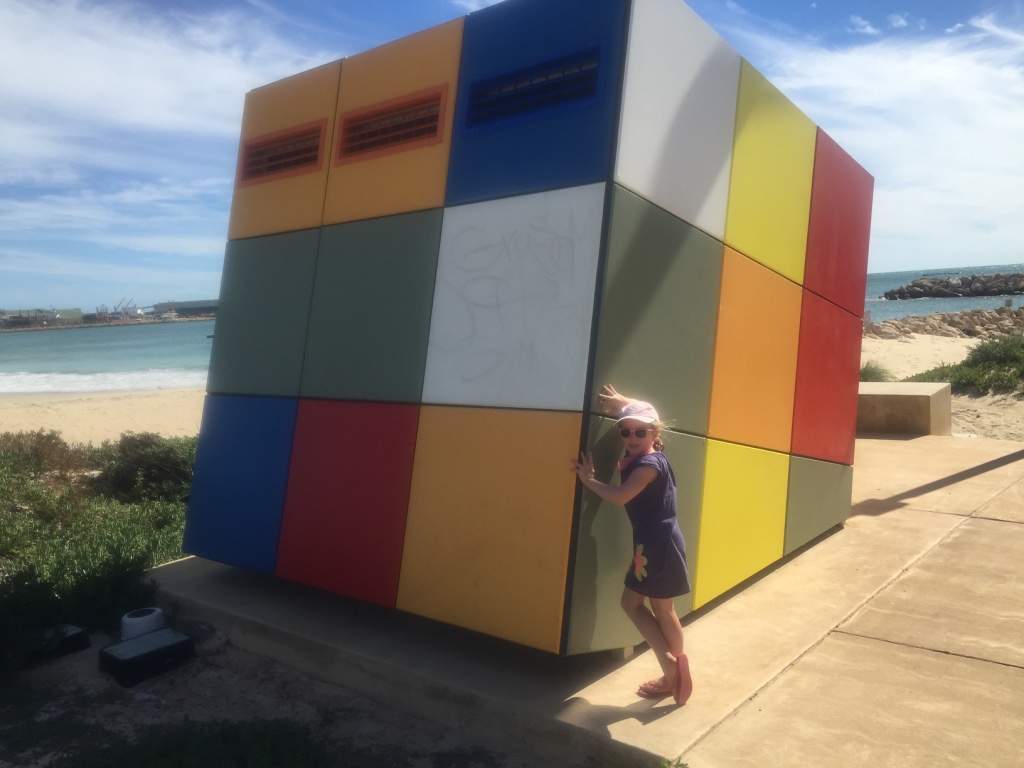
Holly having a go too.

Big rubix cube aaron rolling.
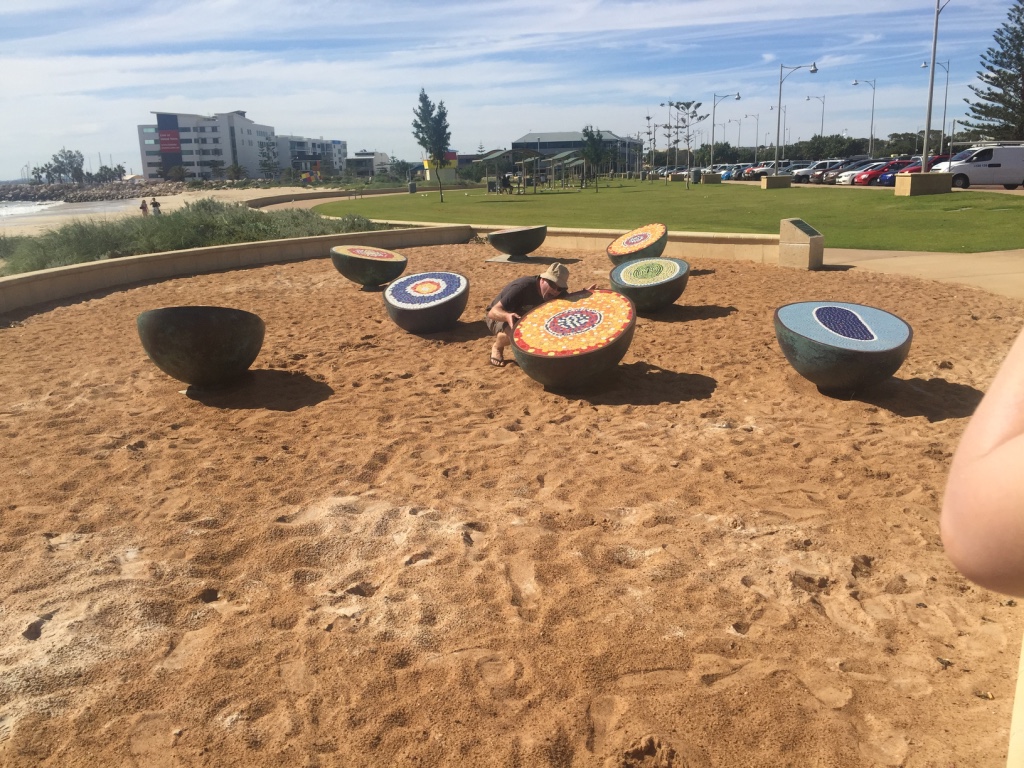


Aaron and Holly watching the surfers

watching local surfers on the beach at Geraldton
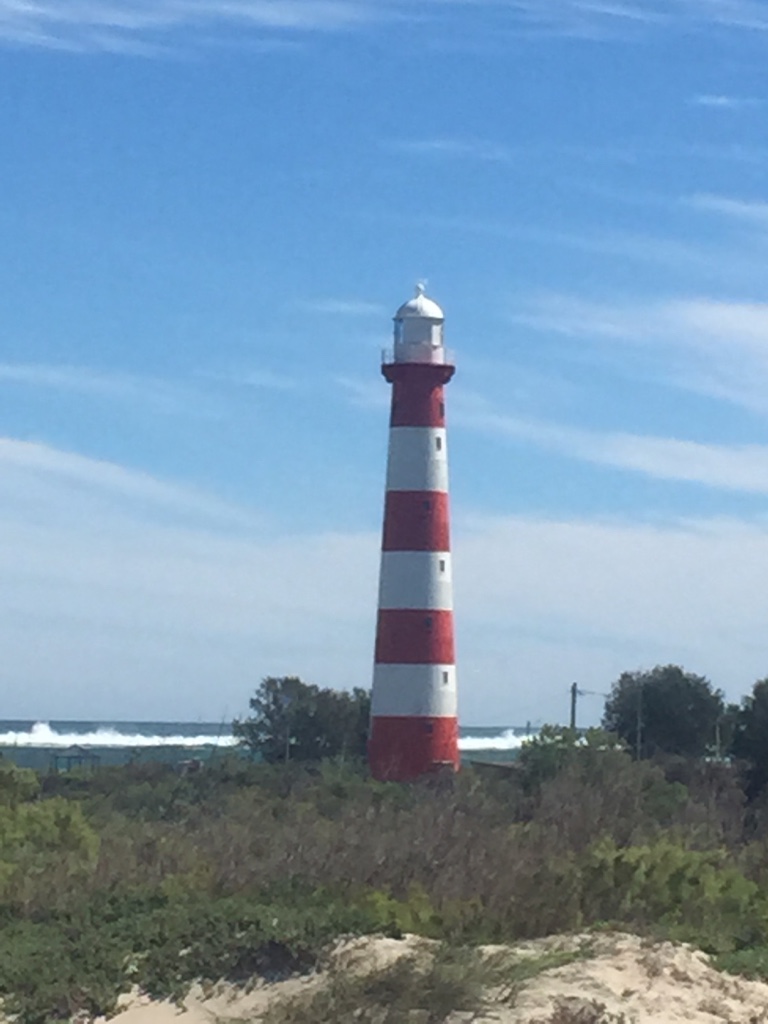
The lighthouse at Geraldton
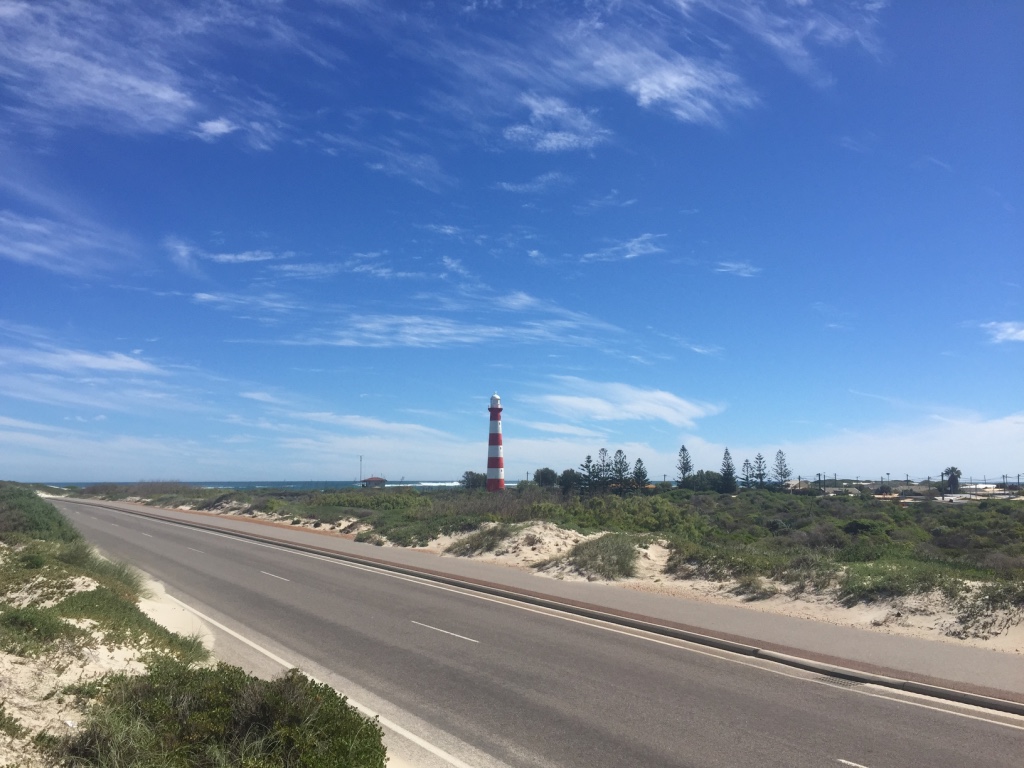

Geraldton is called the windy city and there are trees bending over from the wind…this one was right in town!

Ruins on the way to Kalbarri

More Ruins at the site of the convict labour camp.
These ruins were interesting as they were for convict labour hire – WA was a free settlement – no convicts were held or sent here other than to work as labour to lay roads, buildings and other infrastructure.

jumping pillow at the Big4 caravan park in Geraldton was a hit!
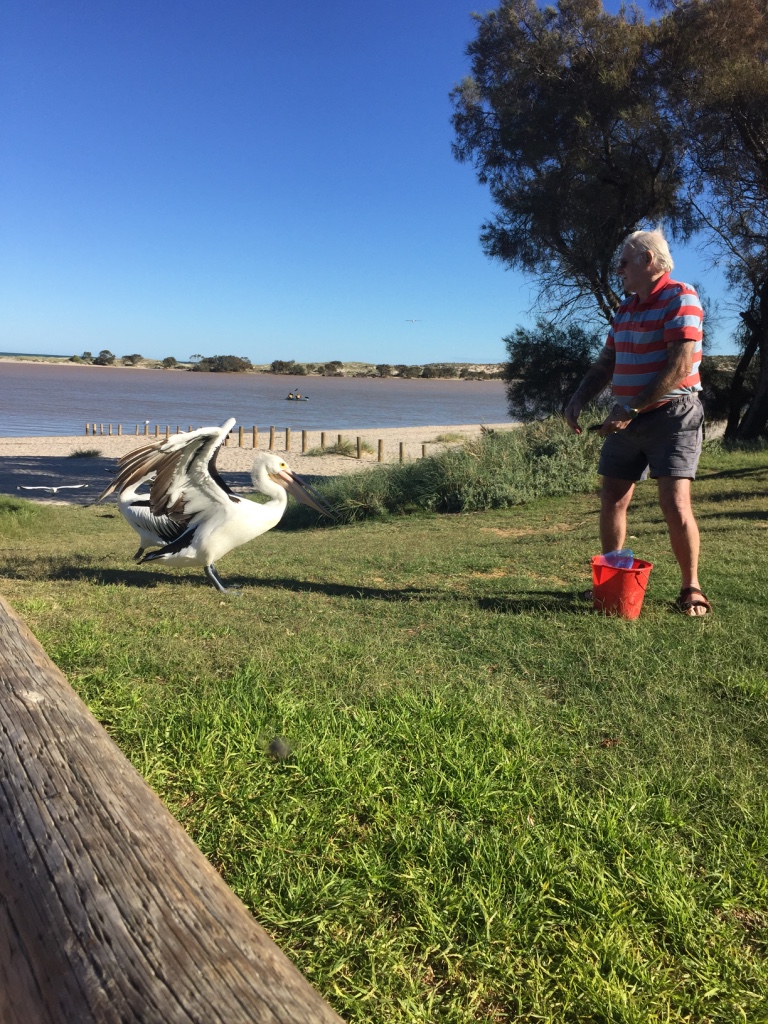
Kalbarri has a beautiful river and some resident pelicans which come and receive a few fish very morning for the tourists pleasure. The kids loved this and it was fun to see the Pelicans feeding up close. 

Pelicans came up close and asked for their breakfast
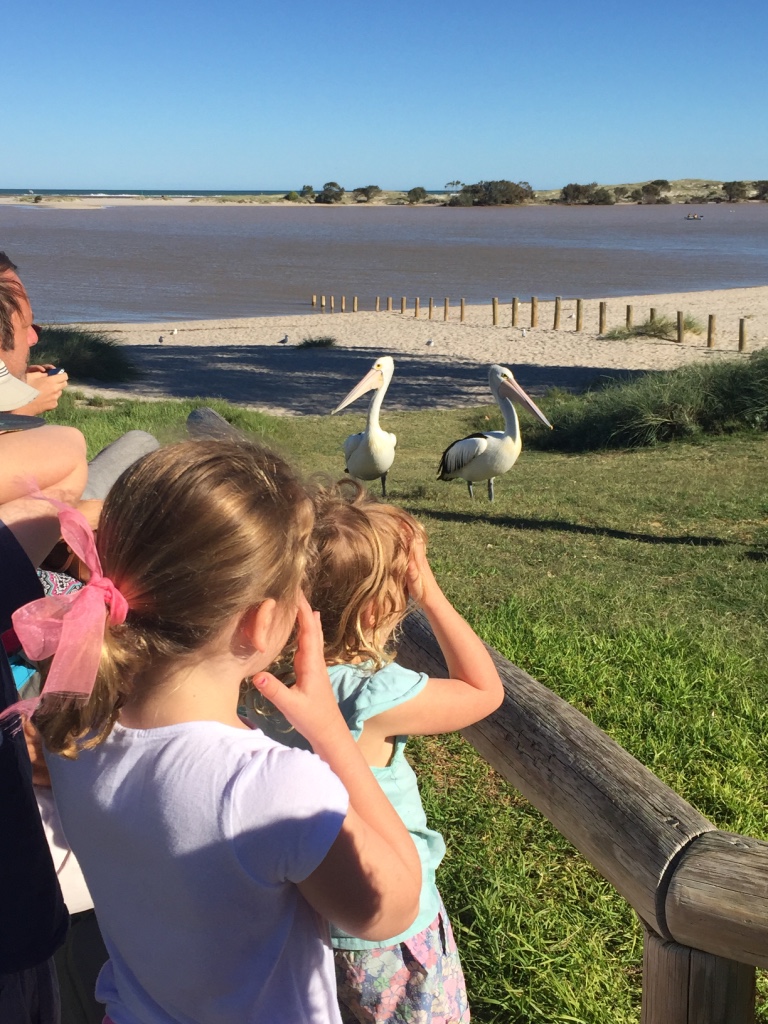


Watching and listening

Pelican feeding at Kalbarri daily event local volunteers
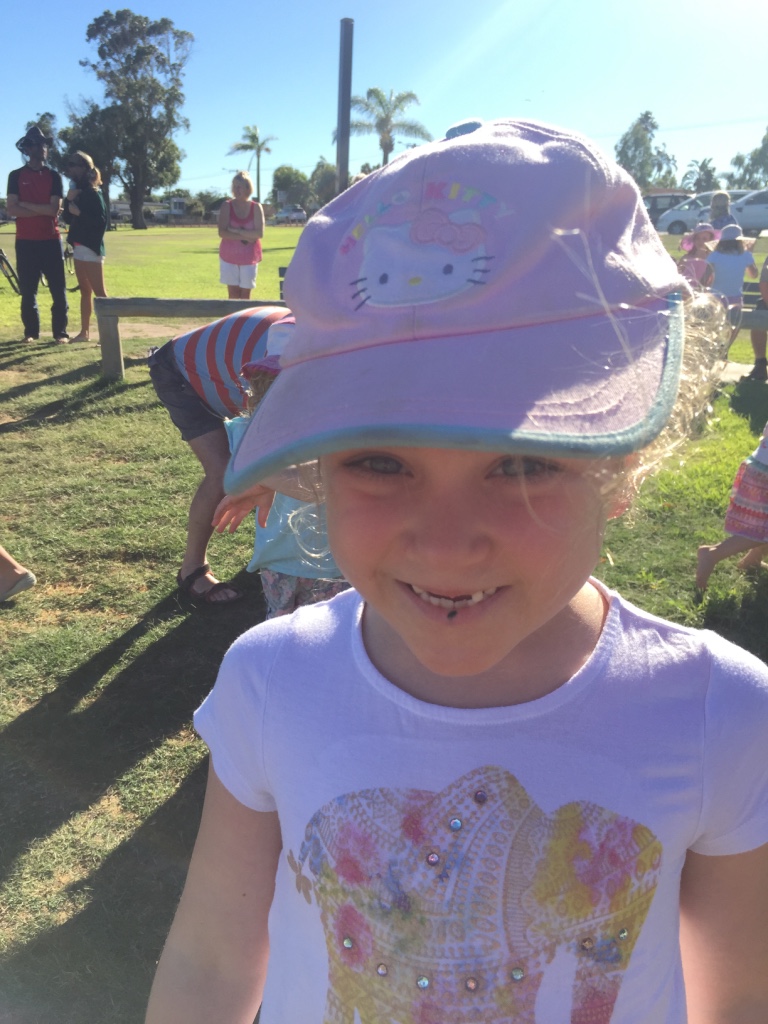
Holly very happy that she just fed a pelican!
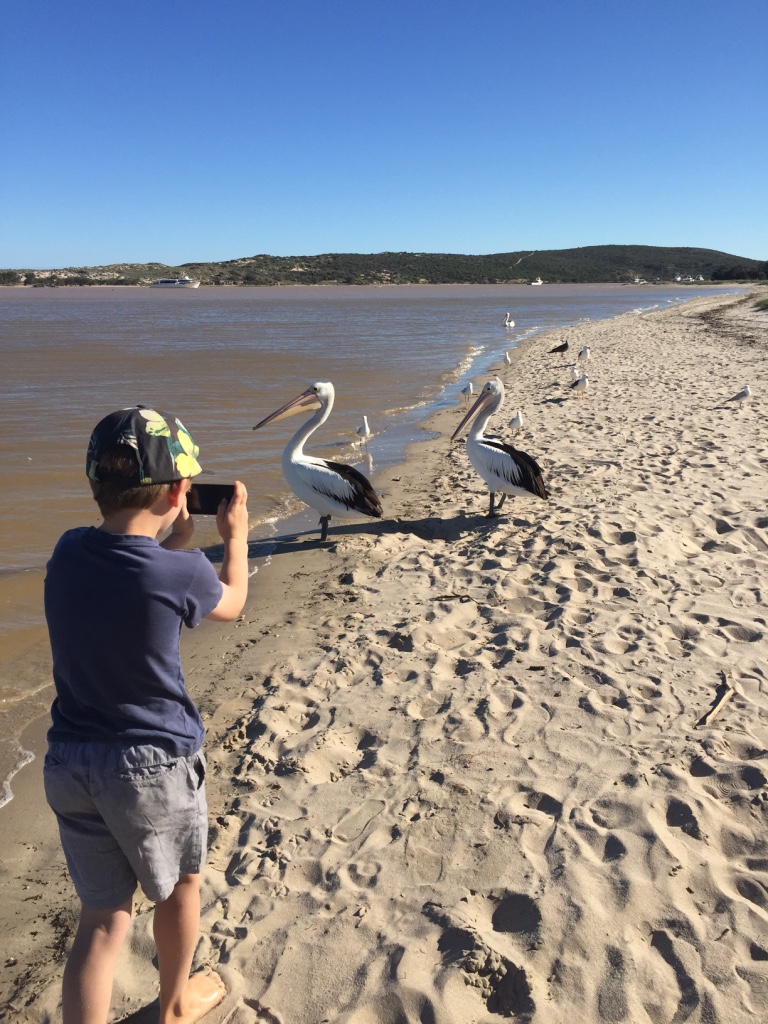
Aaron photographing pelicans – he has a new passion for photography.
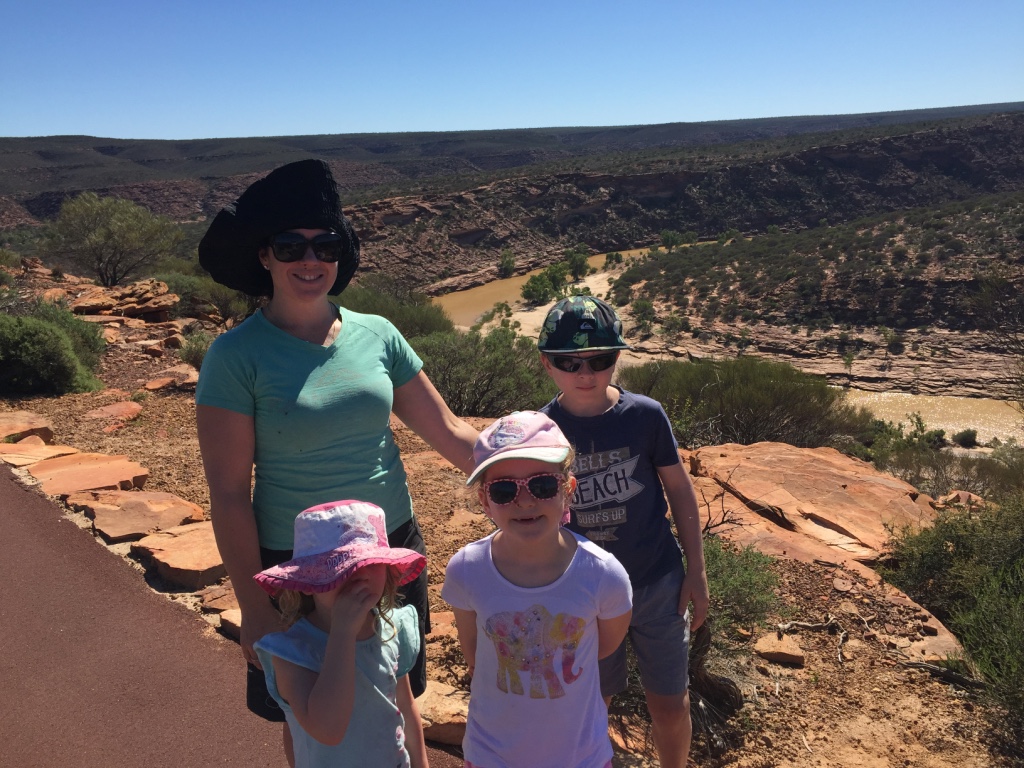

taking in the breath taking views.
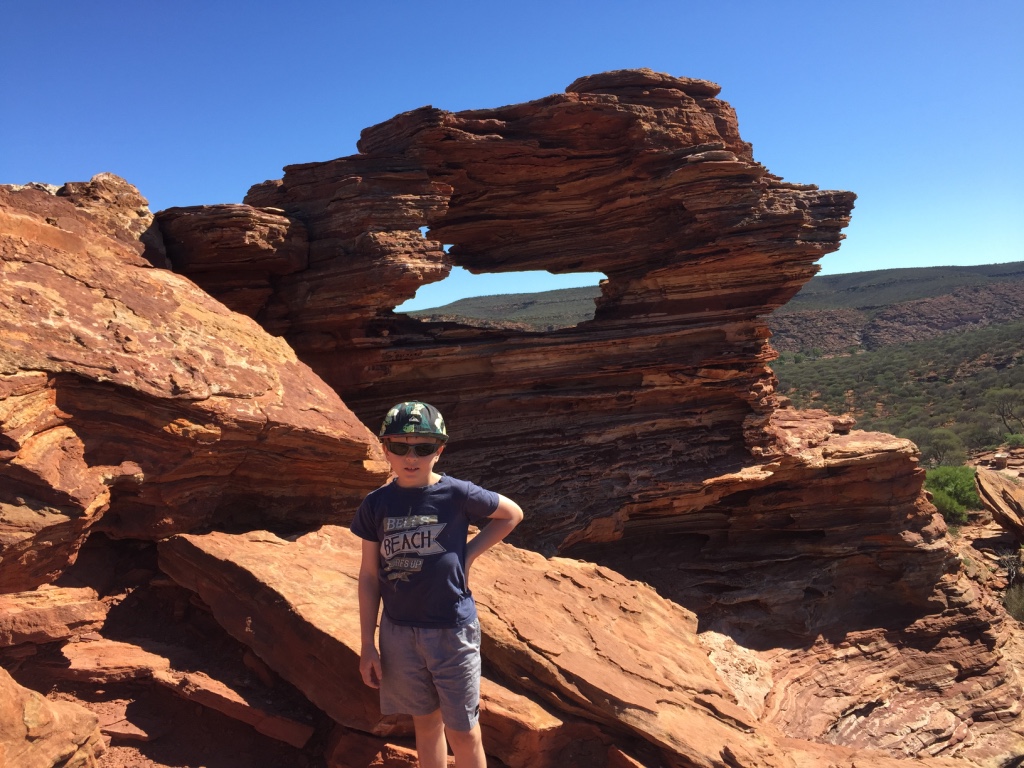
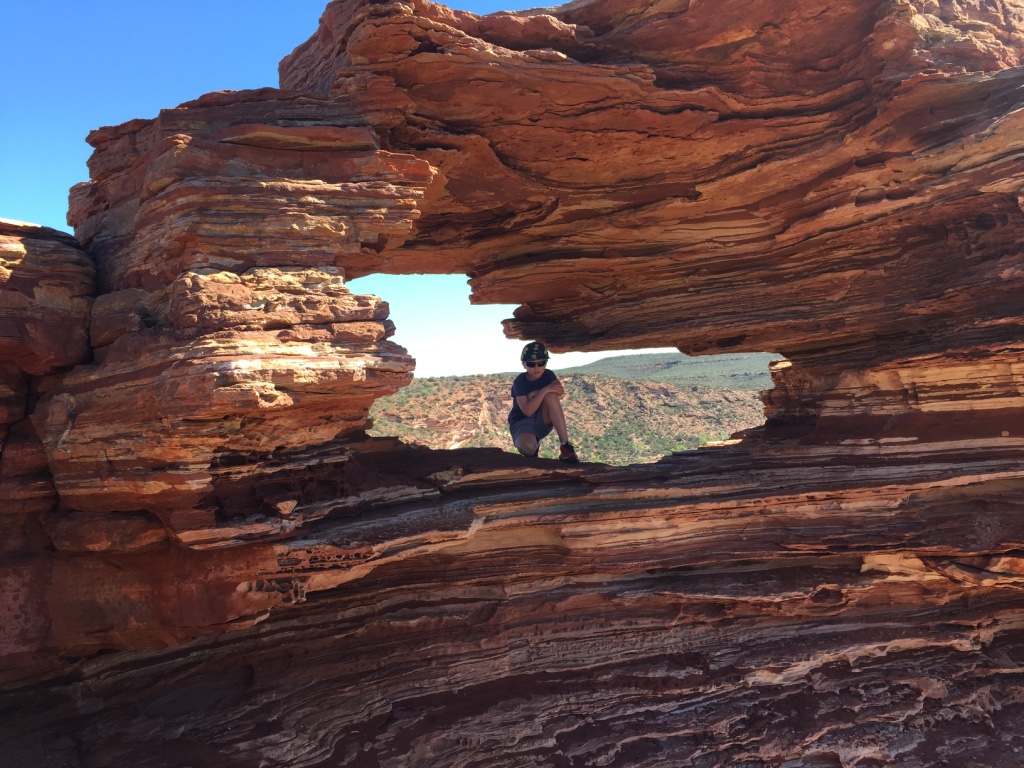
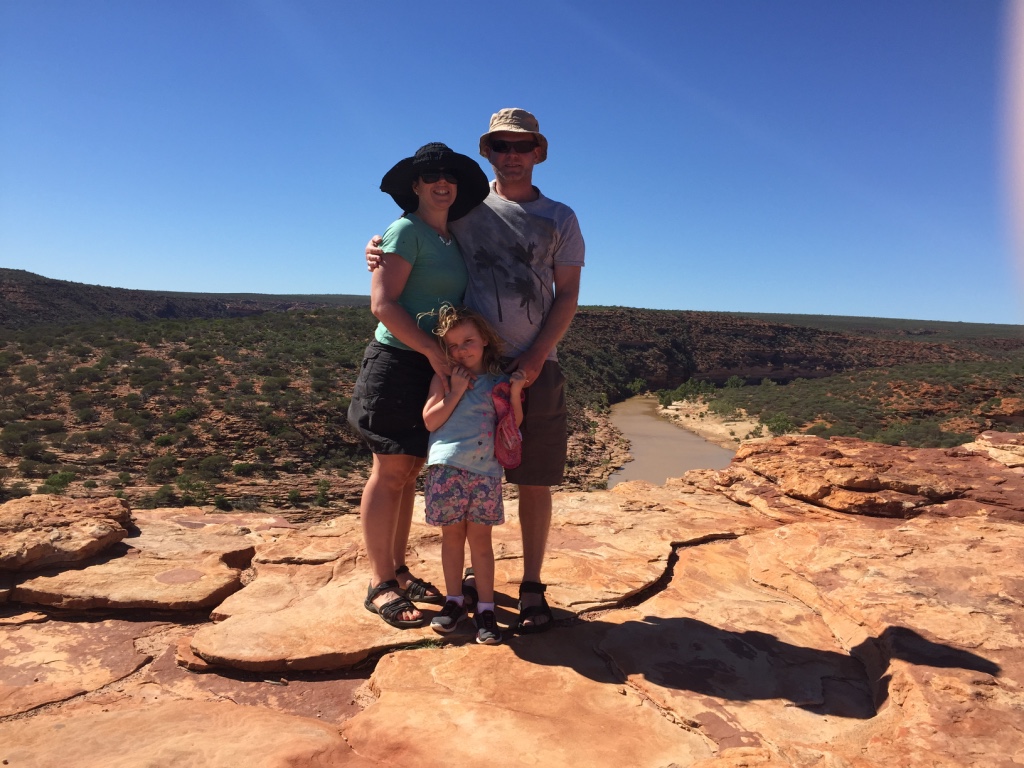
Holly shot this one.

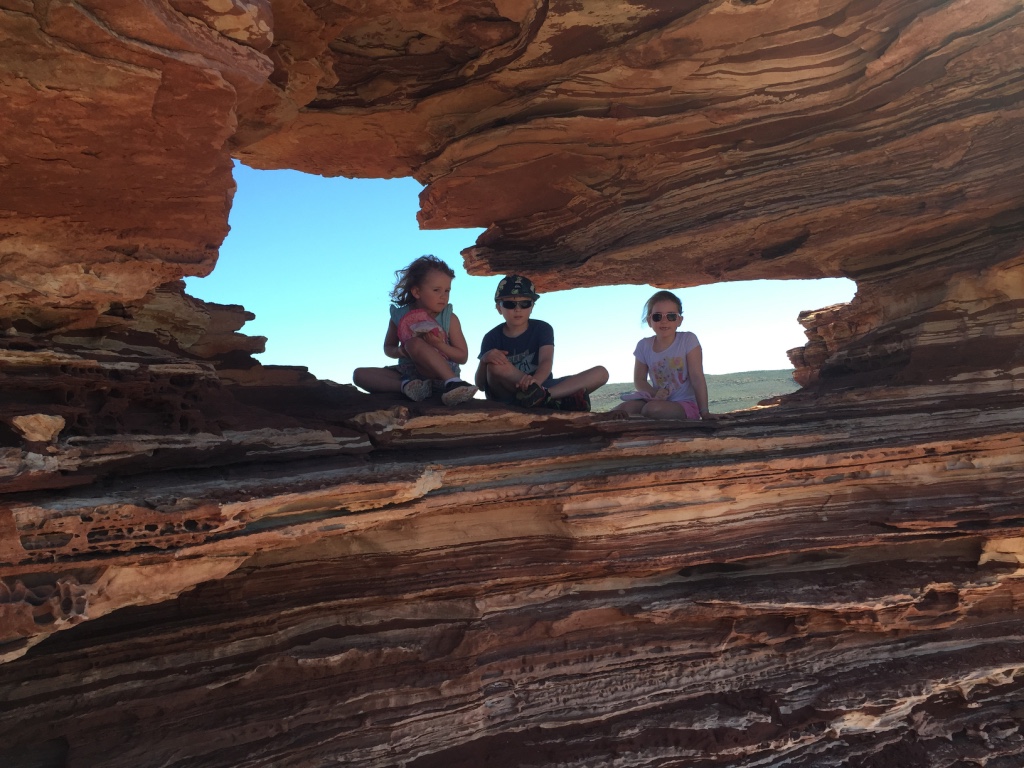
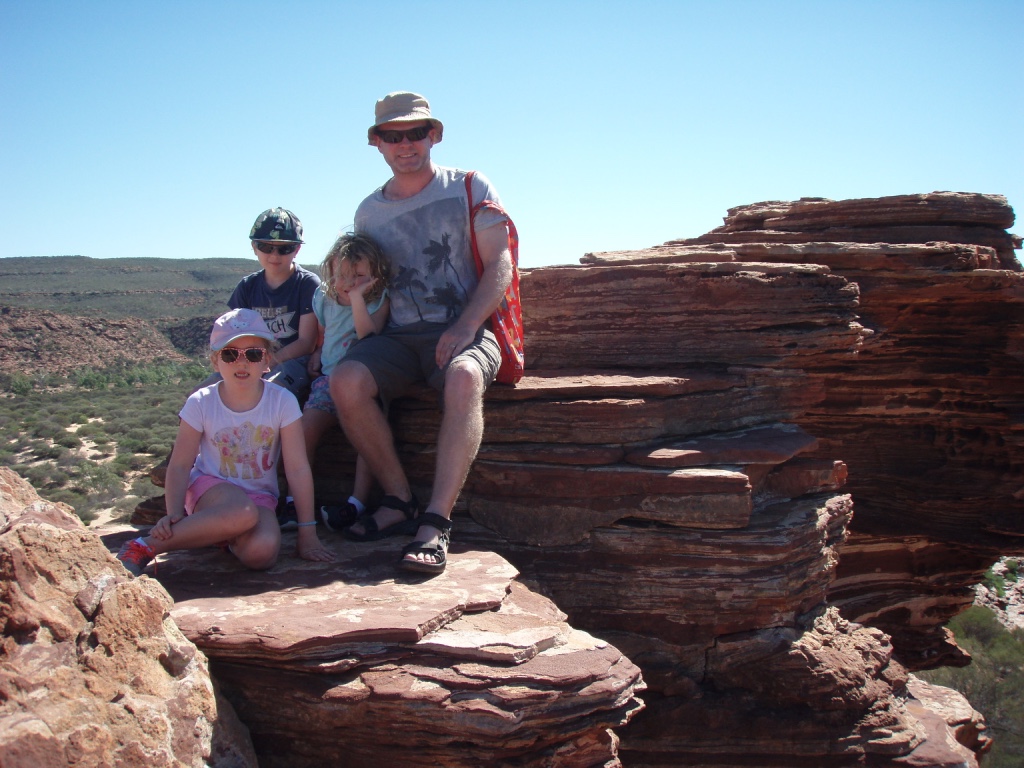
the whole family in Natures Window.
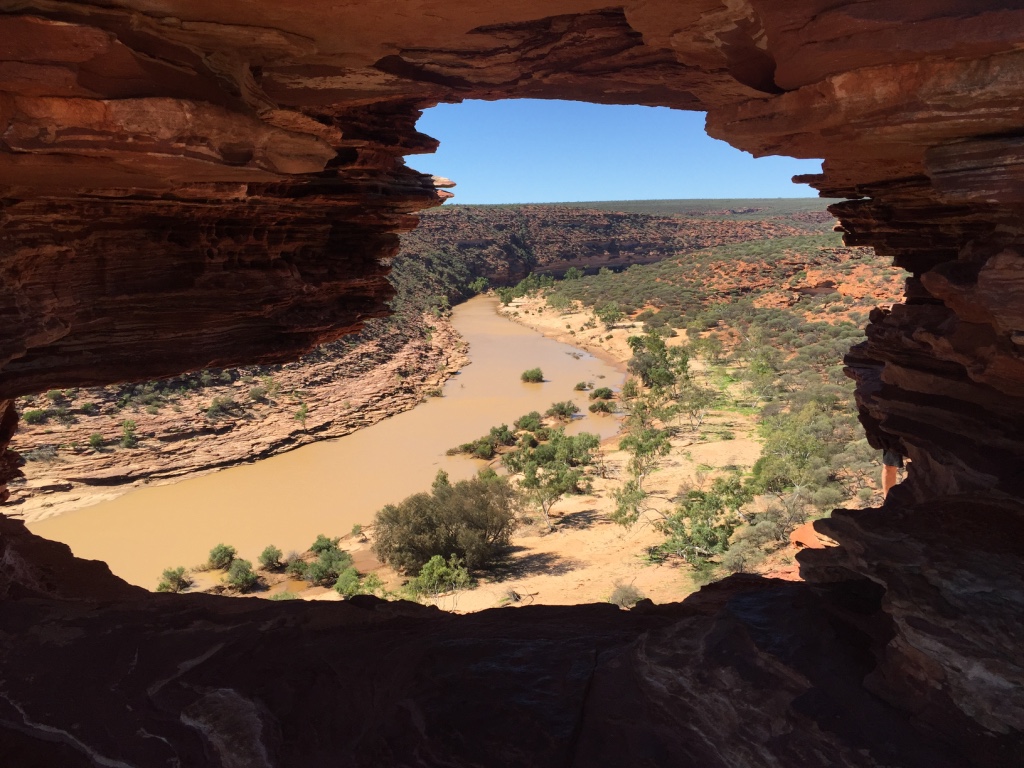
the view through natures window
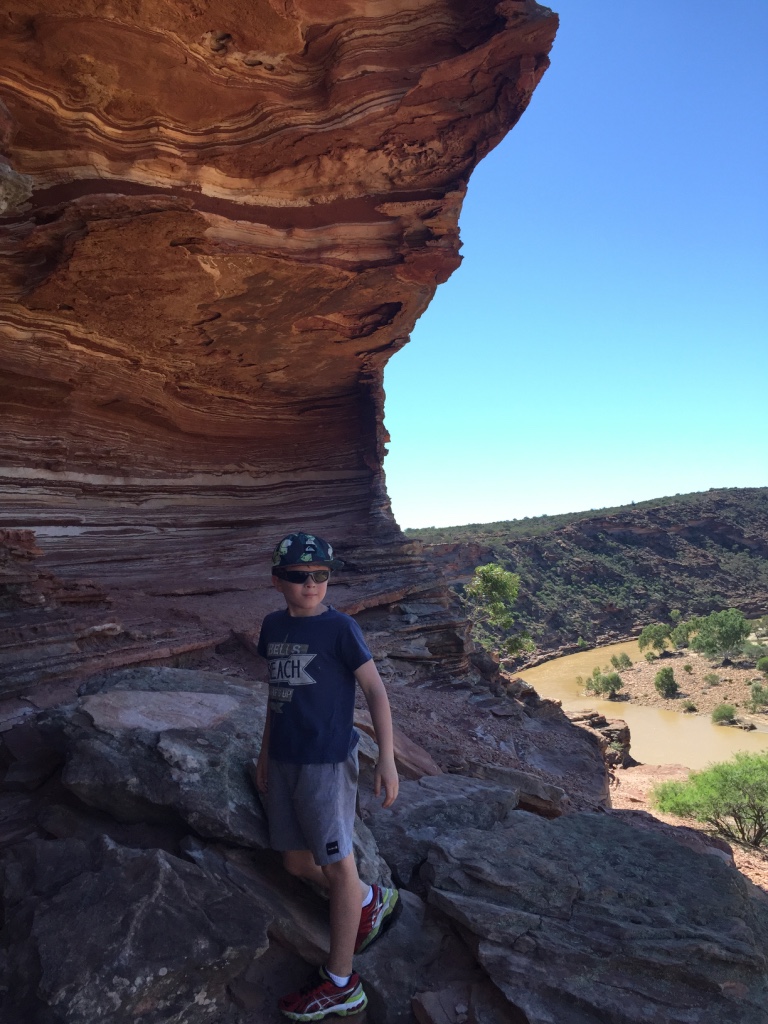
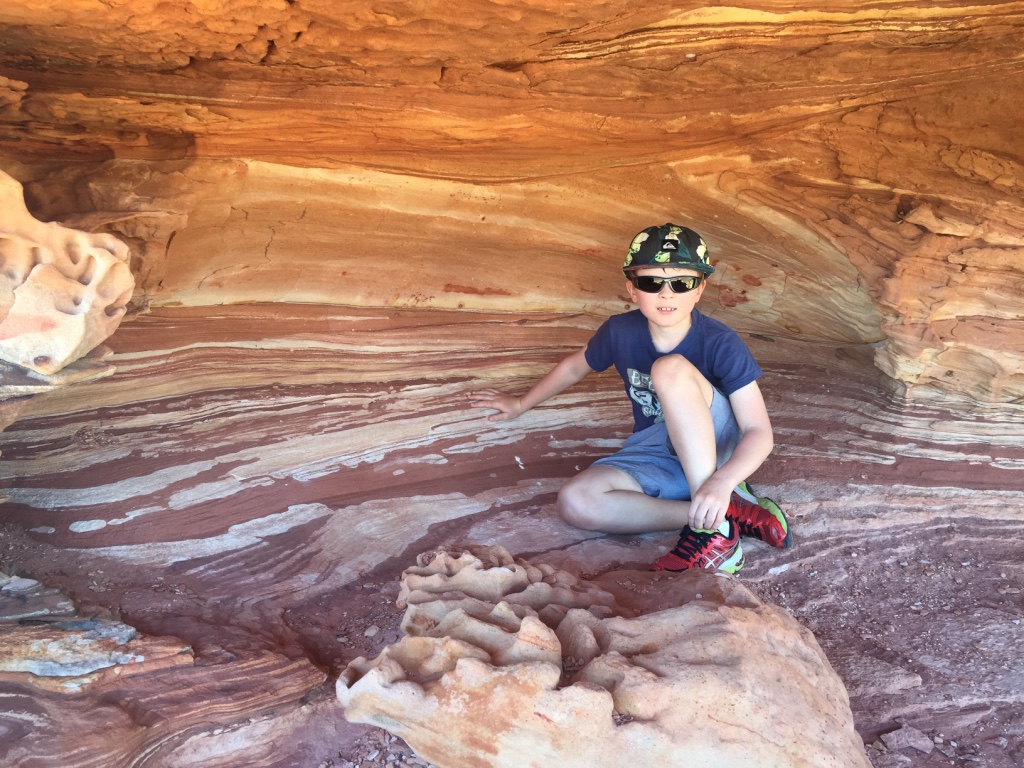
Aaron in a lovely cave with stripes in the rock.
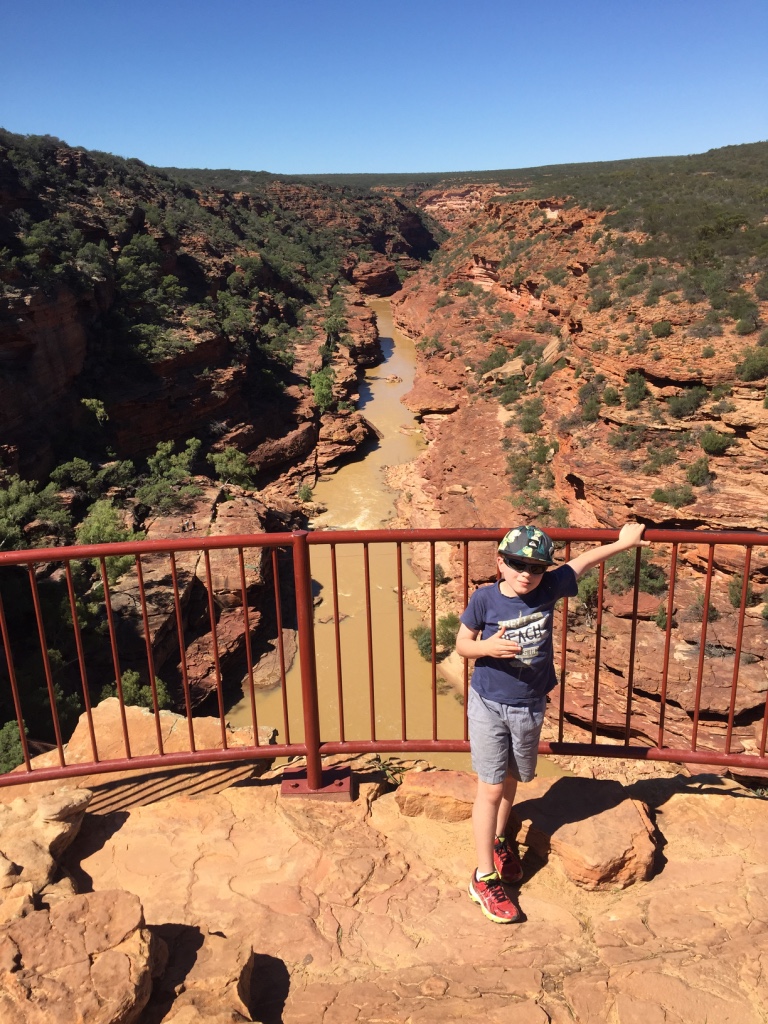

Kids in natures Window
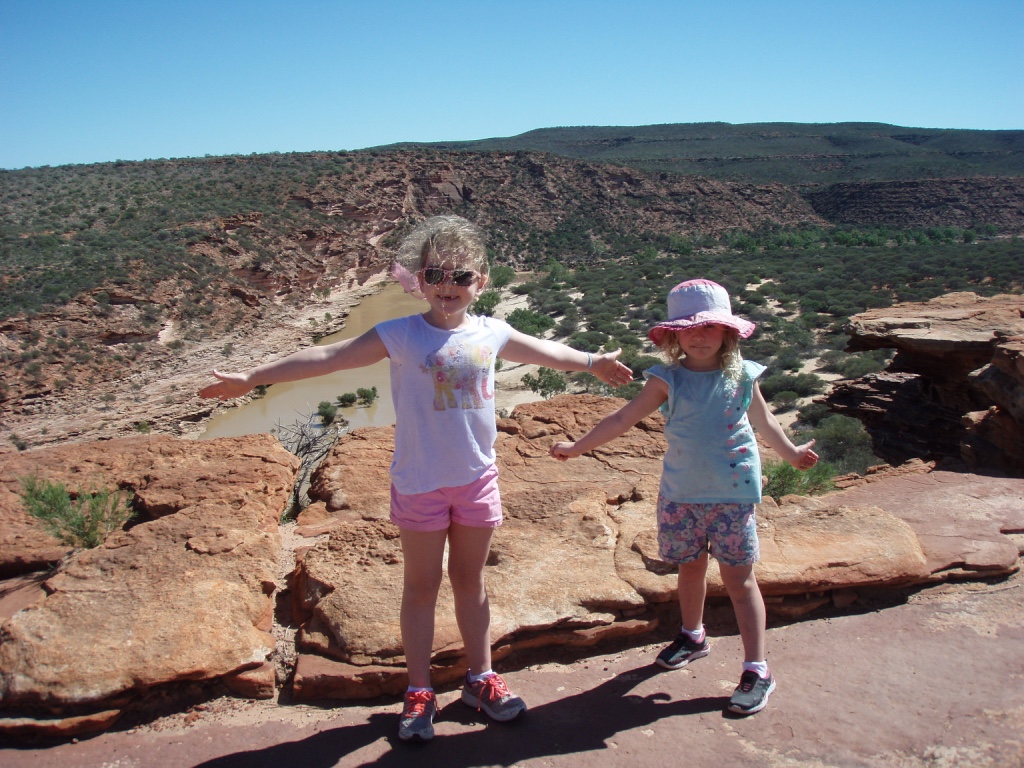

pretty wild flowers
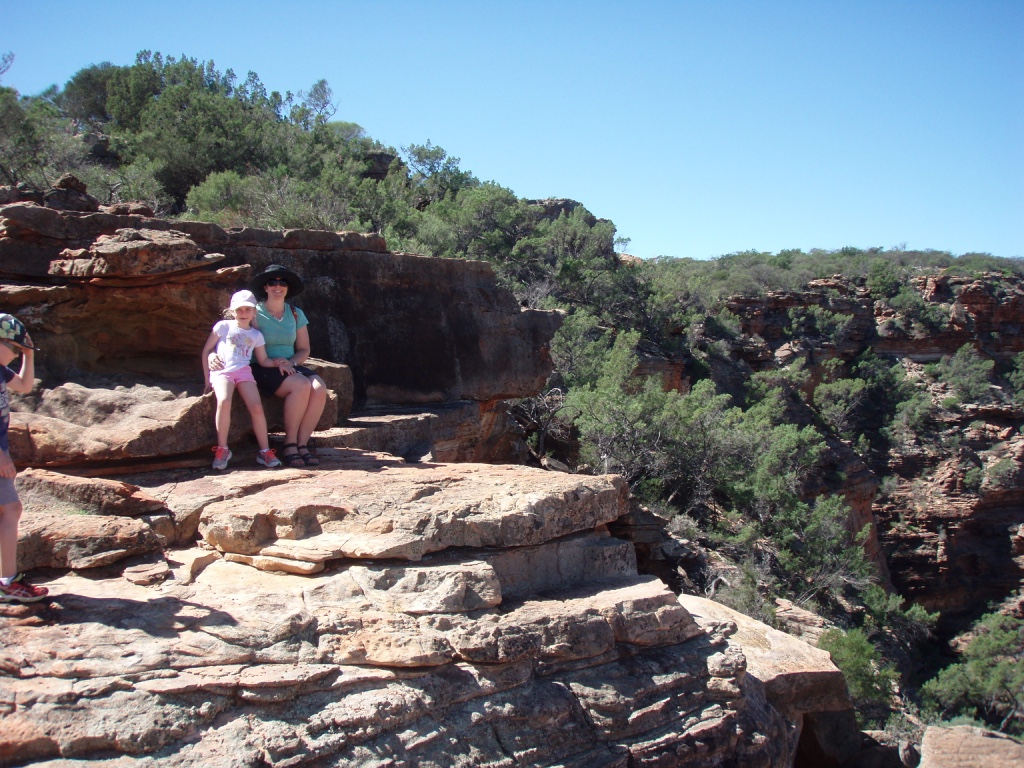
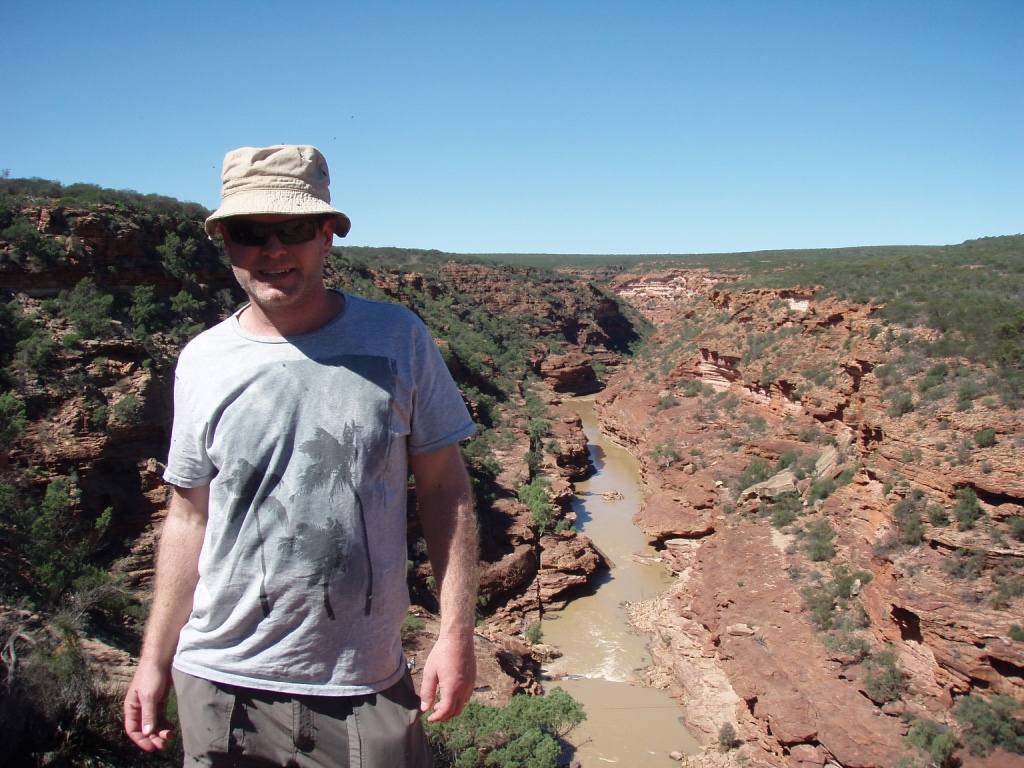
Murchison river up at the Zbend spectacular – although mudding water from the rain.
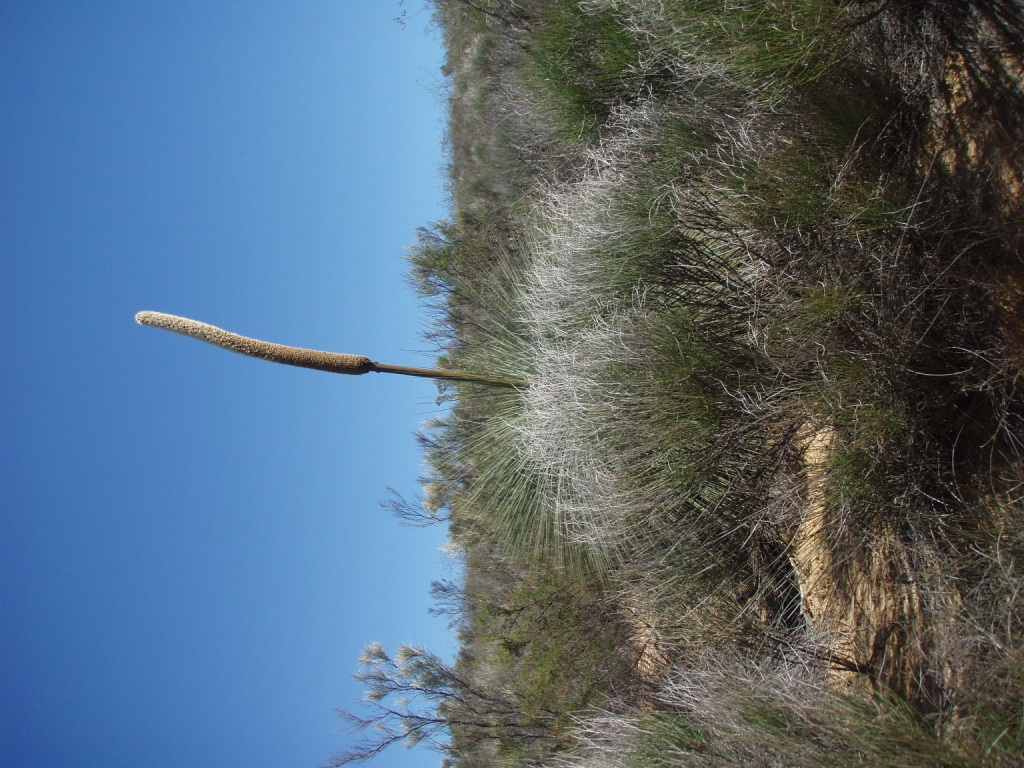


the cliffs coast leading into Kalbarri.
We headed further up the coast to a lovely little town on the coast called Kalbarri – we were lucky to time our arrival for the last weekend of the WA school holidays as we had not booked and only just got a river front camp due to some others vacating them earlier that morning. Kalbarri is set on the mouth of the Murchison River which normally boasts crystal clear aqua coloured water but following the northern floods and the cyclone as few weeks earler the river was running brown (not unlike the mighty Murray) none the less the town is very pretty and it is easy to see why it attracts people for the costal vistas, river and ocean sports and in addition it is next to some beautiful river gorges in the Kalbarri National Park. 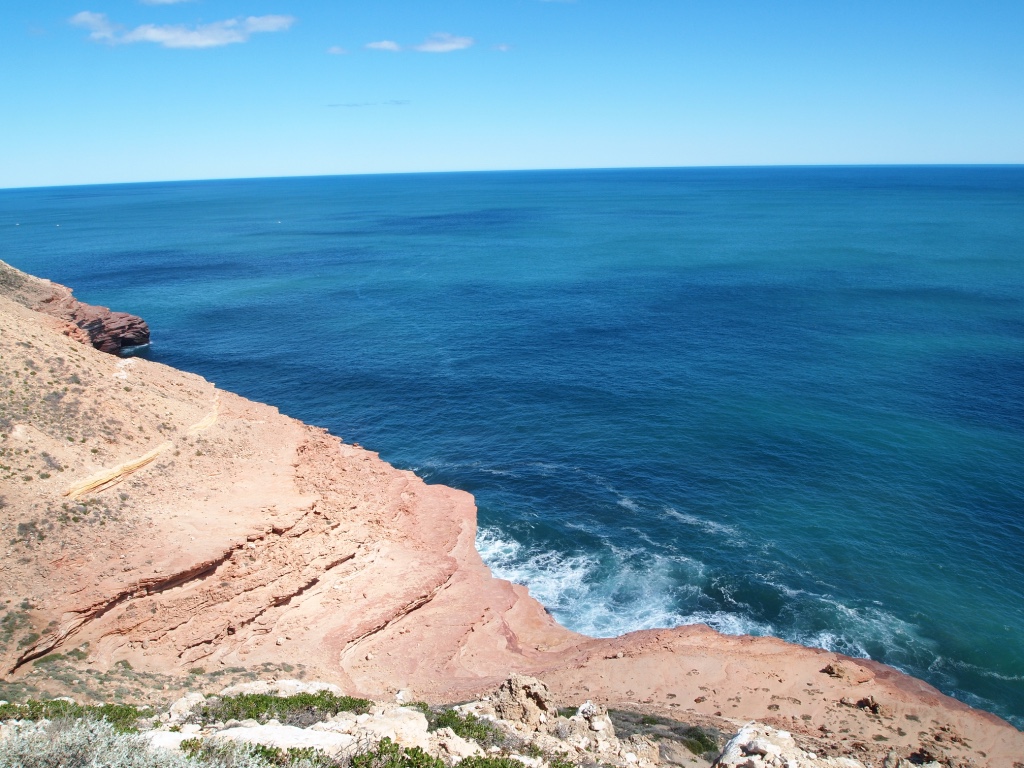


River Views from camp.

camp in Kalbarri

Aaron up a tree…lots of climbing.

Lemon smiles….we had fish for dinner.
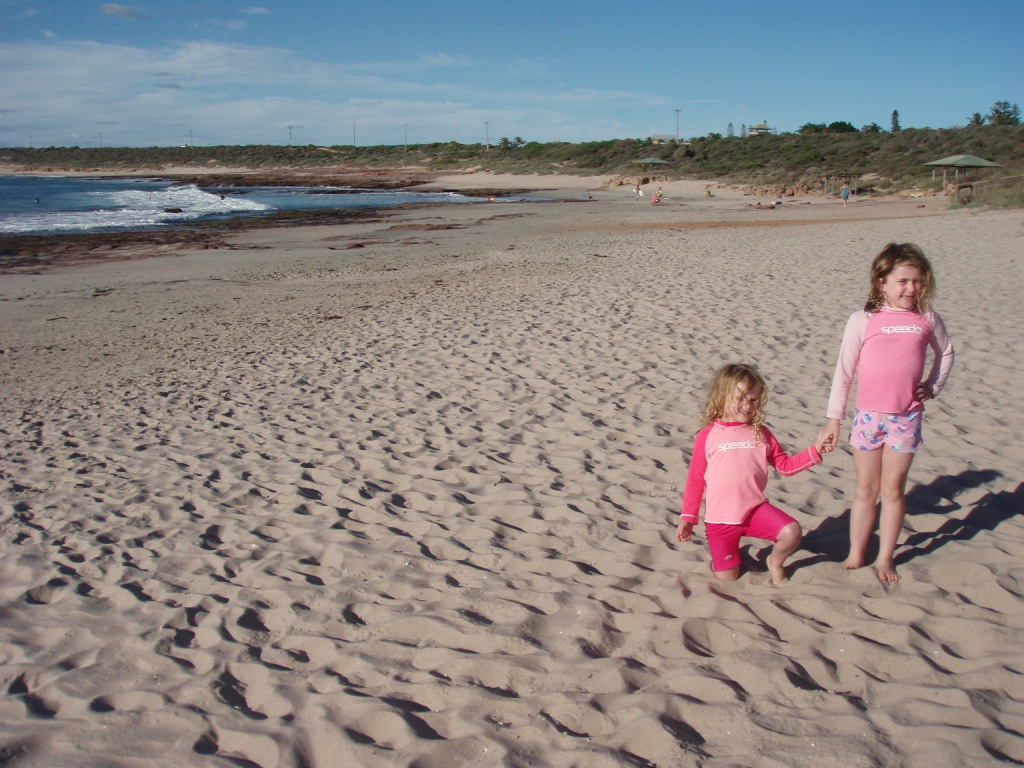


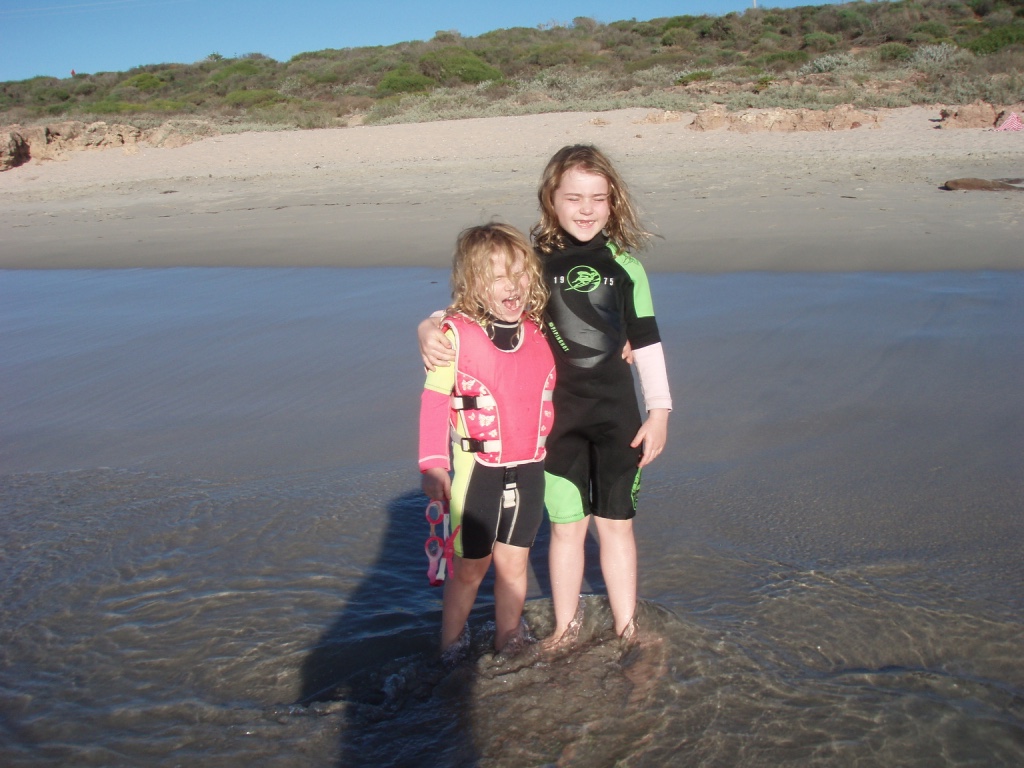
The girls jumping waves

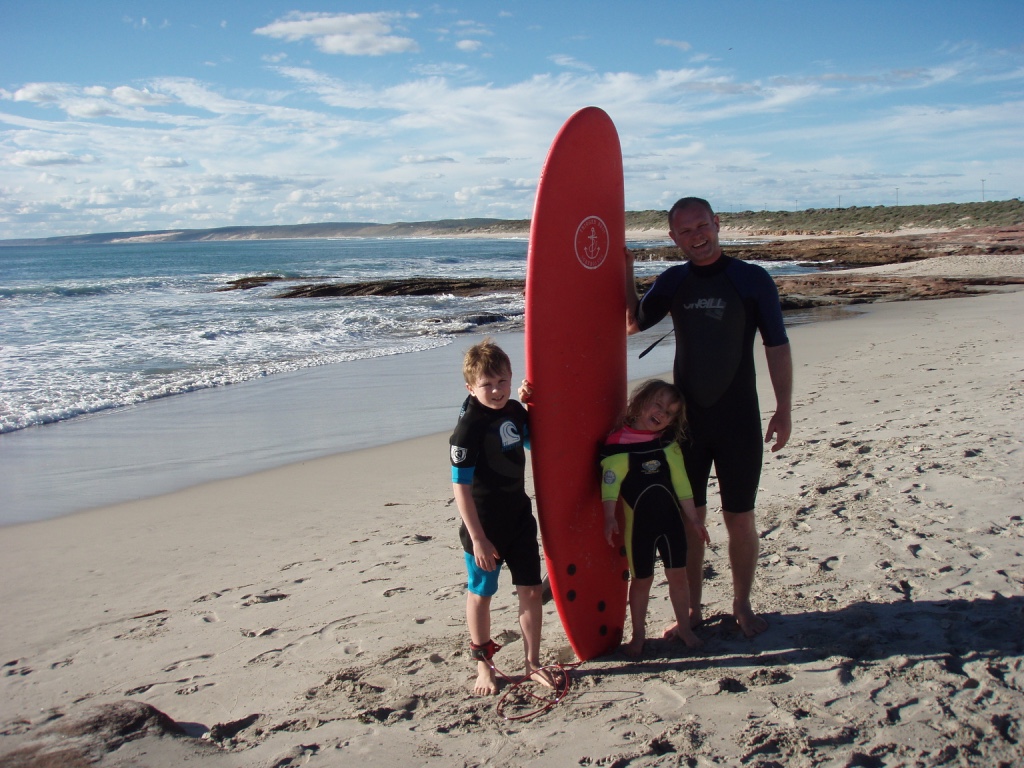
Aaron catching waves at Jakes at Kalbarri.
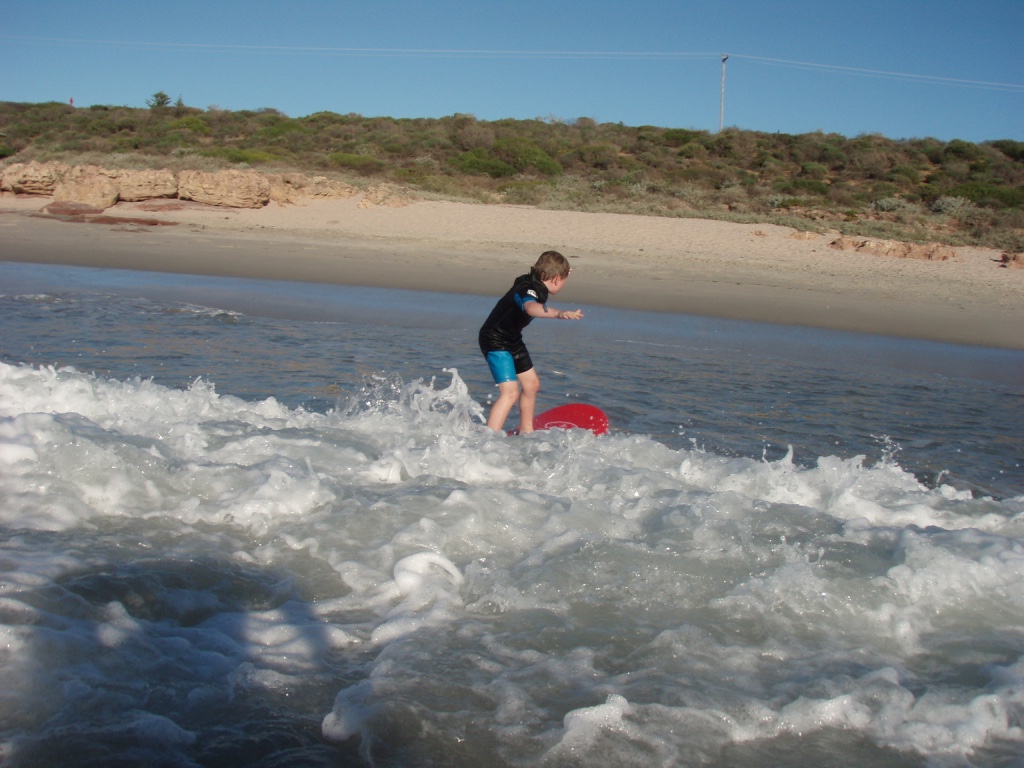
Riding it all the way in.

Andrew in the waves.

Sunset on the Murchison river.
 We stayed in the Anchorage Caravan Park which had a pool which the kids loved we headed down to the little local surf beach Jakes where Andrew and Aaron again caught a few waves and the girls had a paddle. Set among rocks the little surf beach was beautiful and at the entry to Kalbarri there are many cliff lookouts similar to the Ocean Road only with more red rock providing a stunning contrast to the blue sky and Indian Ocean.
Regrettably our visit was also timed to coincide with about a billion bush flies. Andrew was encouraging the kids on a hot afternoon walk to a gorge lookout he said “come on I know you are hot and bothered but its not much further” and Aaron quickly returned with “I am more bothered (by the flies) than I am hot!” The walk out to the gorge look outs were worth the effort and ice cream bribes as the views were really gorgeous. It felt like we could have spent more time here but we had to move on.
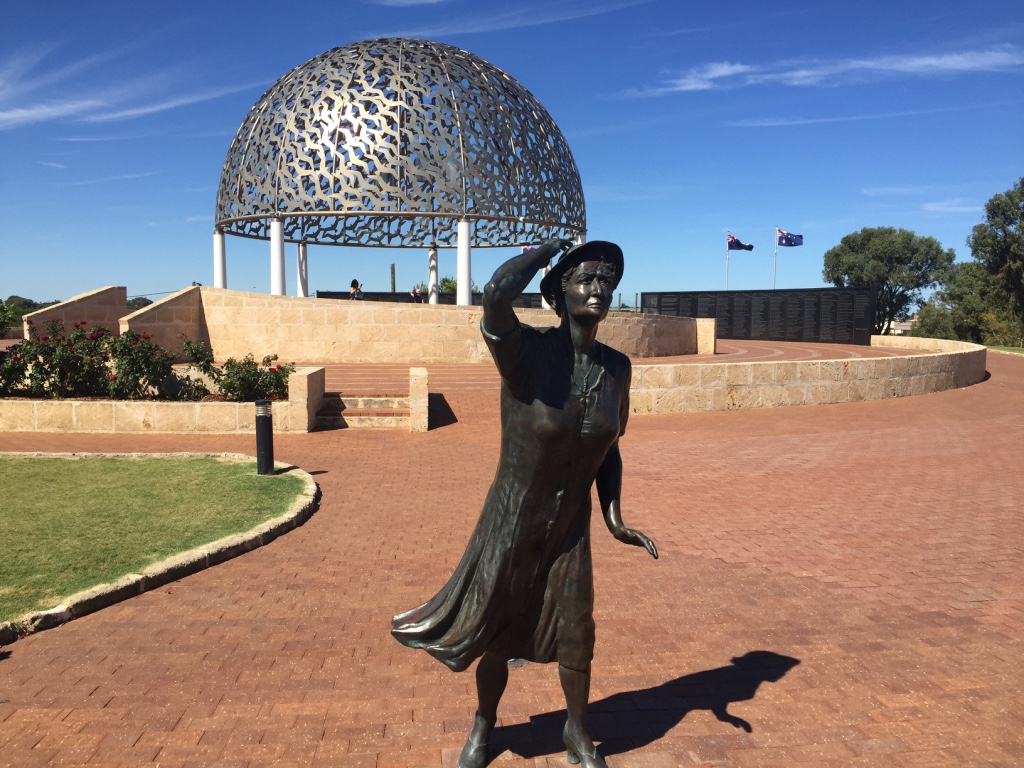
We packed camp and headed out of Sandy Point along the road we took a 4×4 track turn off to get to the Stock Yard Gully caves – the track proved a good little tester for the trailer and a bit more than expected but a nice track with many flowering Banksia along the way. We put on our head torches…yes we all have one and headed for the caves.


In the cave where the stockman kept cool – as it floods in wet months this would have water flowing thru
The Stockyard Gully Caves were a little valley, lined with larger gums trees, and surrounded with green pastures and at the end was a cave. The cave cuts through a limestone hill and apparently the cave was used by old time farming drovers to rest their cattle and provide a cool dry shelter for the drovers. The cave was 250-300m in length with a bend in the middle and with torches out was very dark. We walked thru it was very dark but lovely and cool compared to the heat outside and we could imagine it was a good spot for a rest for the stockmen of yesteryear. We had a spot of lunch after before driving onto Geraldton. Note the sign that got Andrew excited although the road was less difficult than the shortcut we used to get onto the road leading to the caves.
We also spotted this stubby lizard along the way…very cool customer.
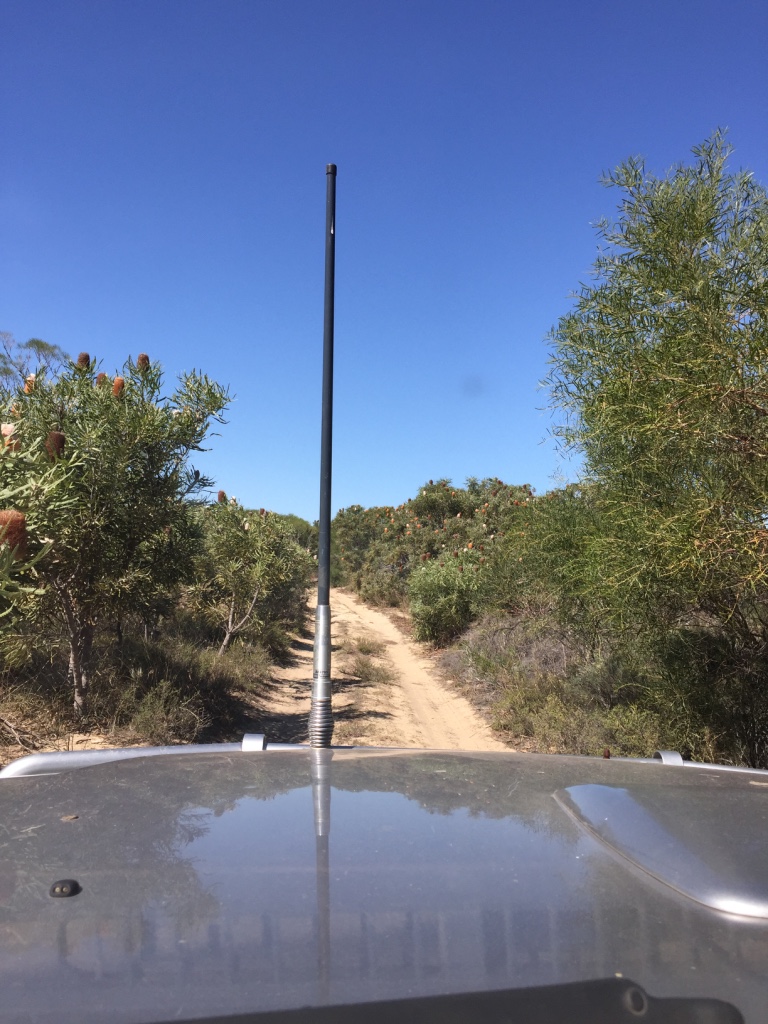


The beautiful shady gully leading into the cave lined with some big tall gum trees.
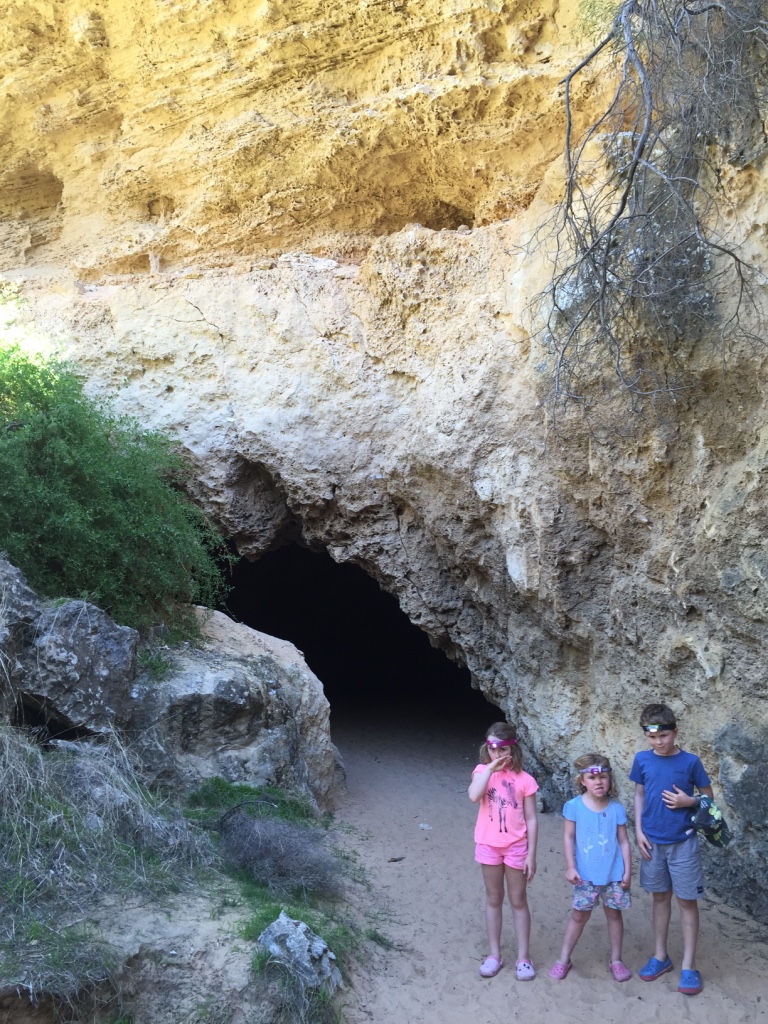 We were expecting to fly through Geraldton, food shopping and laundry and move but found Geraldton a surprising little town. Set on the gorgeous coast has some really beautiful beaches two block from town centre. We didn’t get a chance to swim at the beach but we visited the HMAS Sydney II memorial which is a recently erected memorial to the 645 Australian Navy men who lost their lives in a battle off the coast of Geraldton on November 19 1941. The beautiful memorial has a brass dome with 645 seagulls touching wings symbolizing the sailors that died and a wall of marble with all their names engraved.

HMAS Sydney II Memorial from a distance is a real beacon over Geraldton and beautiful from every angle.

Listening to the free guided tour – volunteer run – amazing very informative.
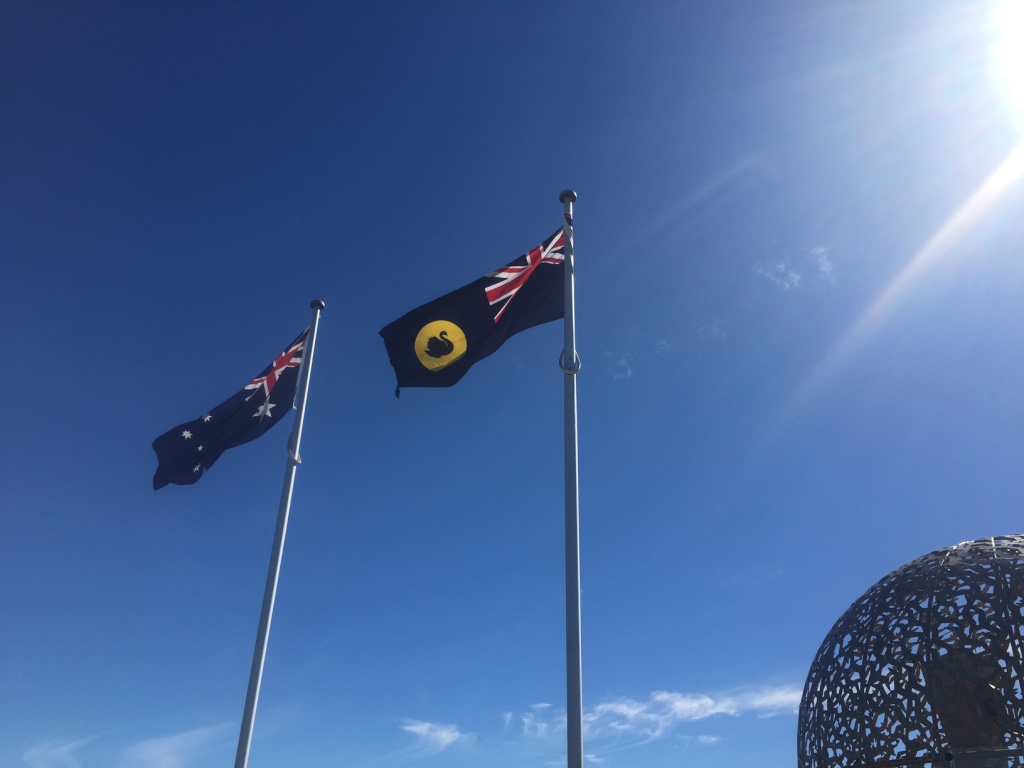
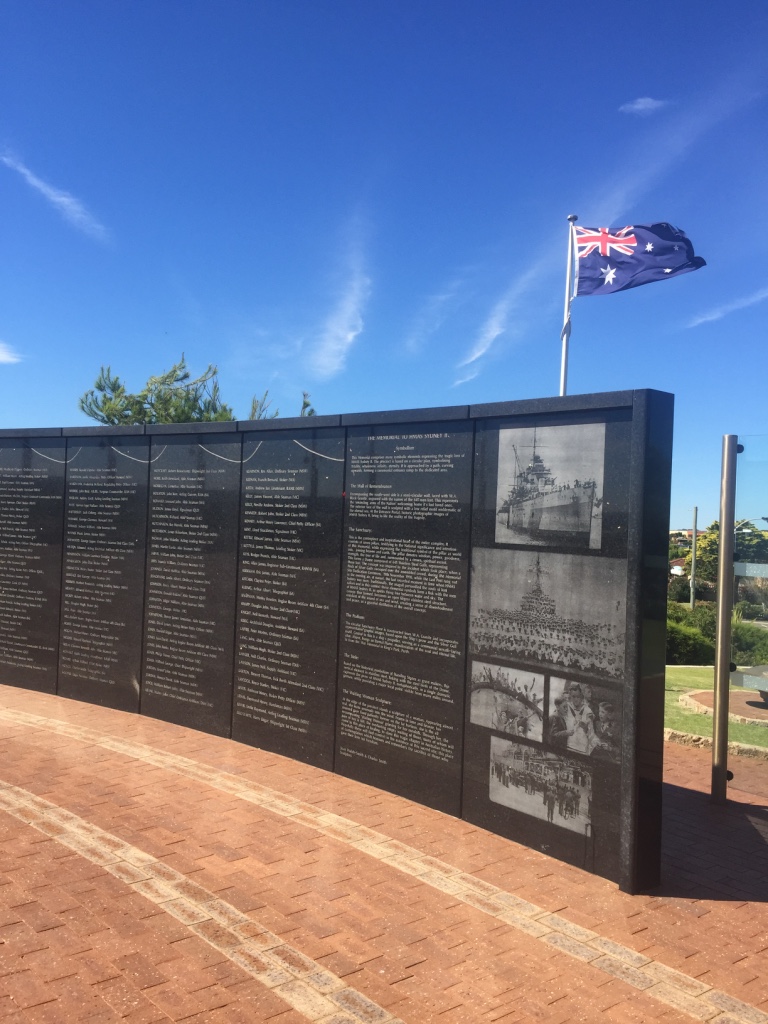
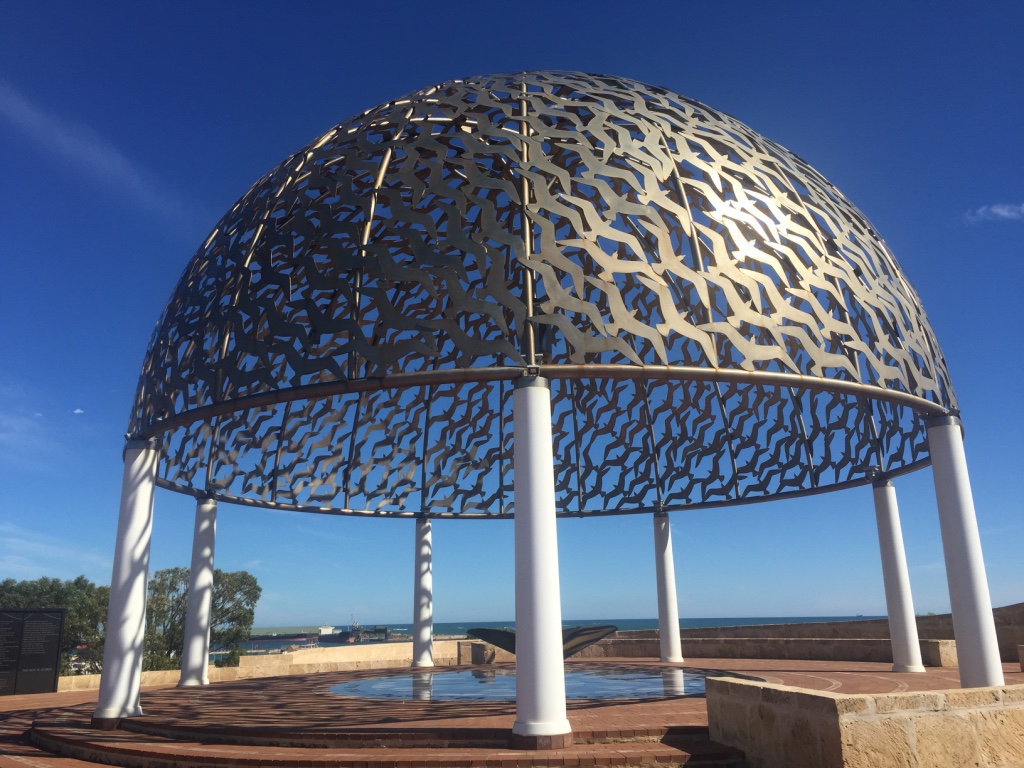
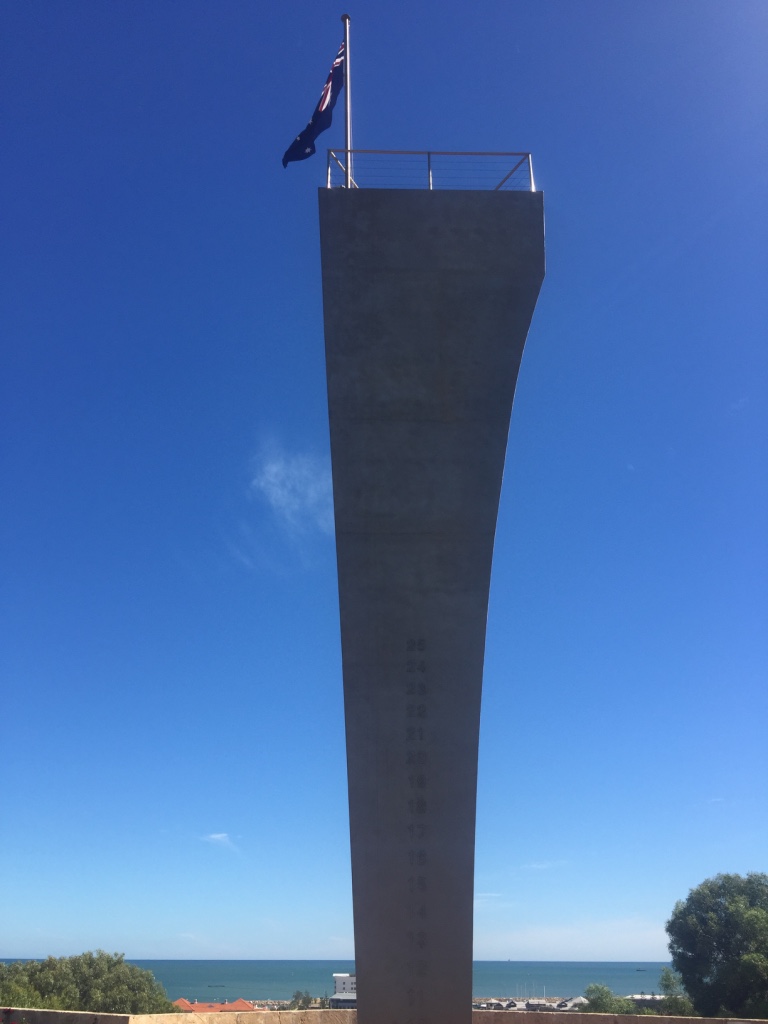


a pool of water showing the coast where HMAS Sydney II is now at rest and the GPS co-ordinates.

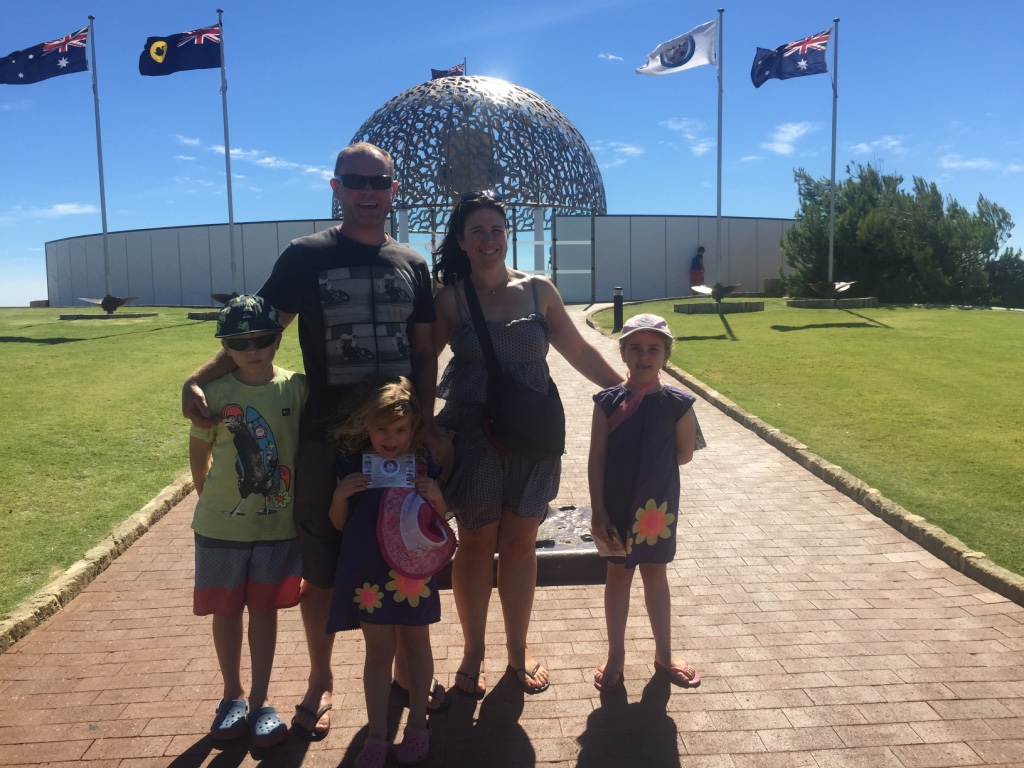
And again.
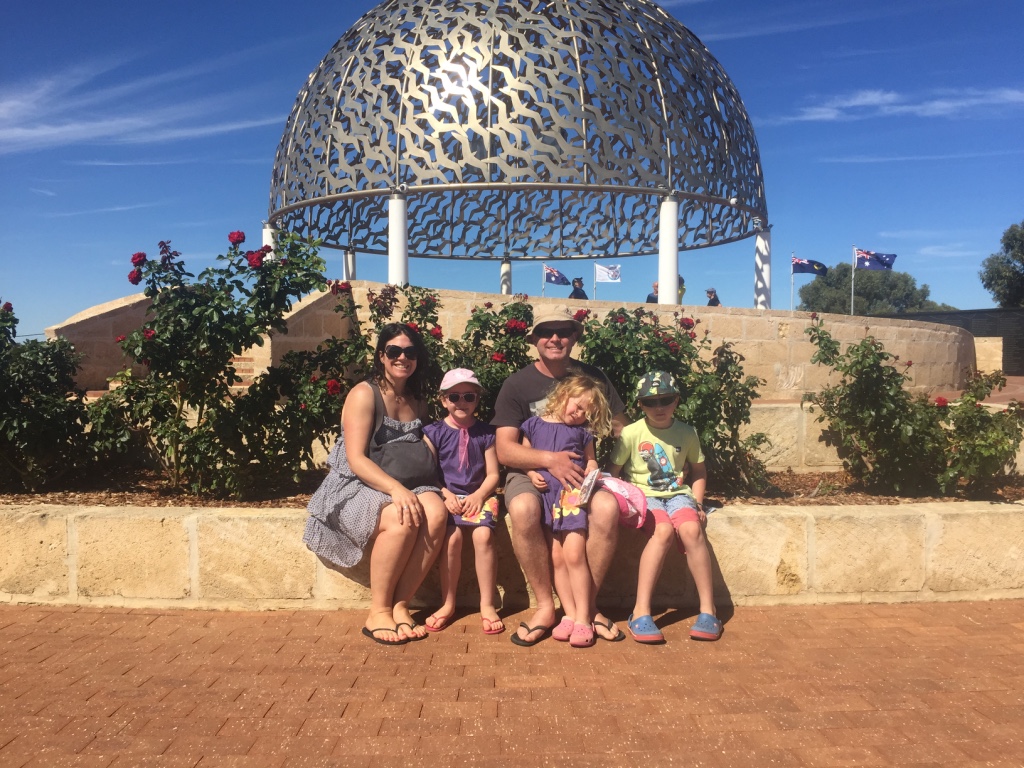
The volunteer guide offered to be photographer too great service!


HMAS Sydney II Memorial


The wall at the HMAS Sydney II memorial

Sunset at Geraldton note the big tankers across the horizon

There are also a bronze statue of a Waiting Woman in 1941 era clothing to show the women that were left looking to sea hoping their loved ones would return and a replica of the bough of the Sydney II to represent the scale and strength of the large ship that sunk. Eerily the memorial was installed in 2001 to mark the 60th anniversary before the wreck of the Sydney II was found. The improvement in sonar technology and diving machinery they did not locate the wreck until 2006 and when they did it showed that a piece of the ship was broken off during the battle with the Germans which was remarkably similar to the memorial piece installed and even more eerie the Waiting Woman statue was set facing almost exactly where the wreck lay at a depth of 2400metres off the coast of Steep Point.

The lady waiting – dressed in the 1940’s period clothing

The lady looking to see – ironically directly to the location of the wreck of HMAS Sydney II – the wreck was discovered after this statue was placed.
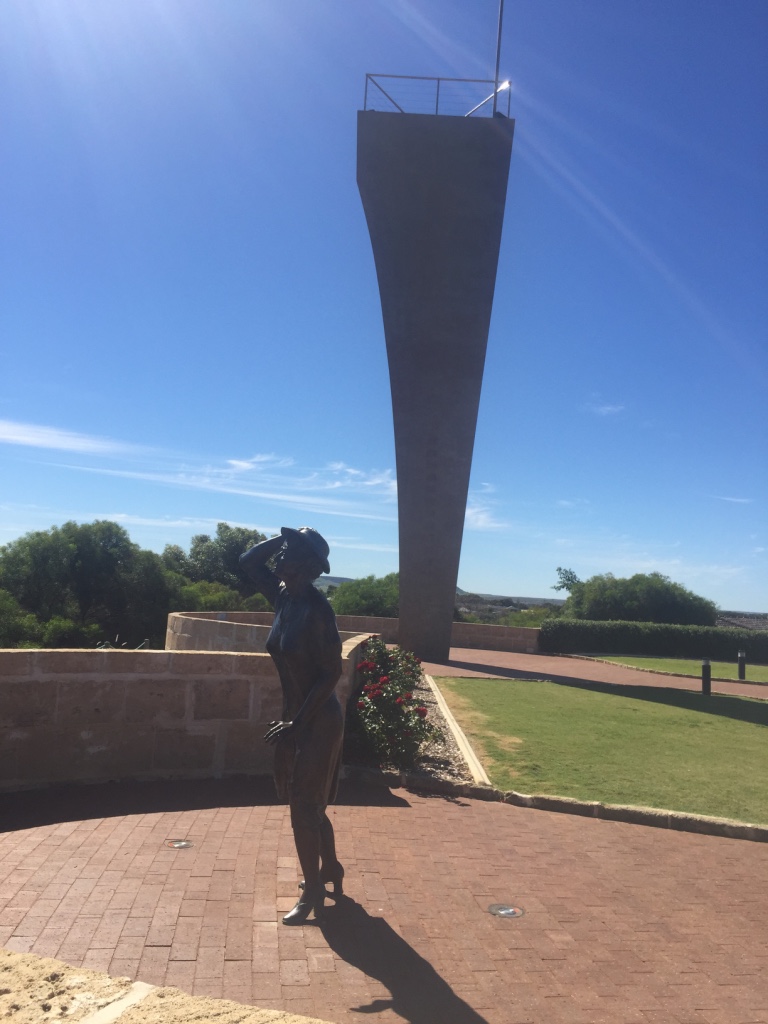
This memorial was of particular interest to me as my maternal grandfather had served on Sydney II prior to the ship being sunk and was luckily for him on a period of leave at Freemantle when the ship was sunk. He never really recovered from the loss of so many friends and shipmates – although our family would not have been here if he had been on board that fateful day in November. The memorial is a beautiful tribute to those men and a reminder of a sad piece of Australian History. The memorial was the idea of the local Rotary Club which worked to get the project funded and established -wonderful for the town.

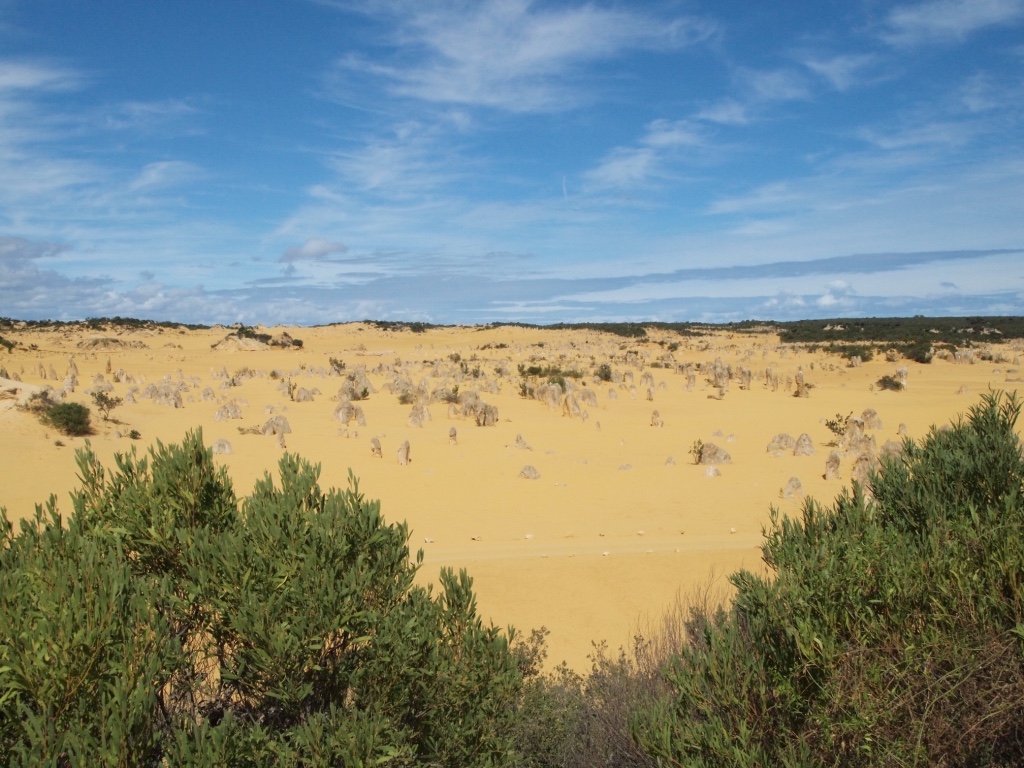
The desert dotted with the pinnacles

Amazing big foramations


Peep hole Bianca
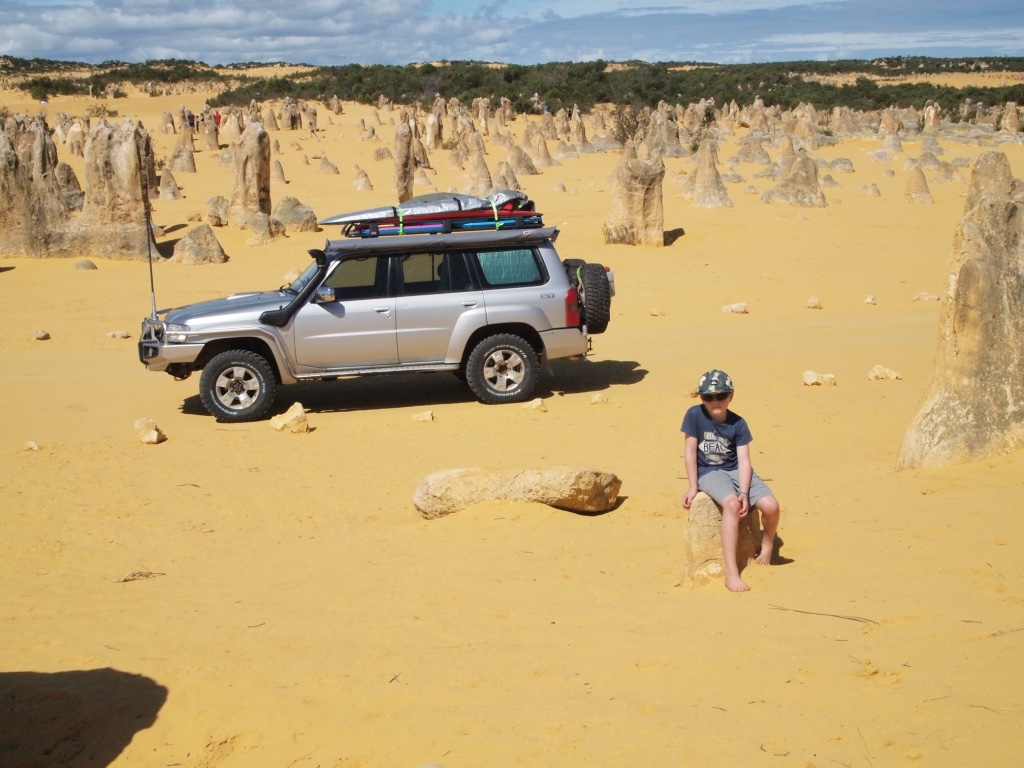

In the shade of a big one


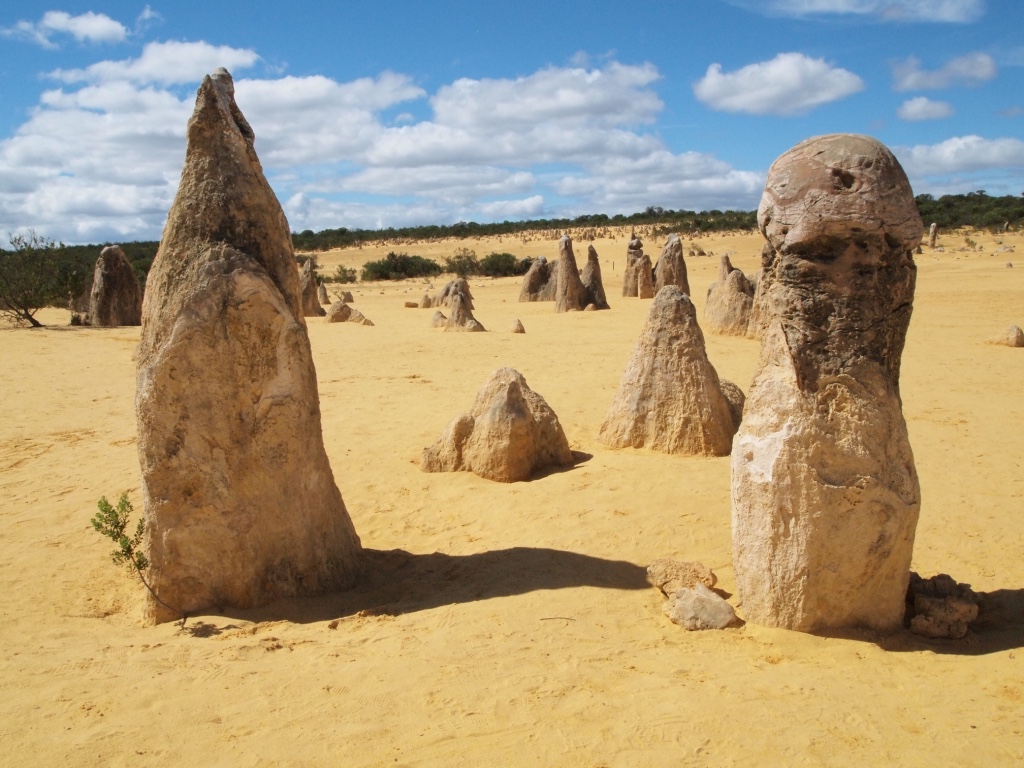

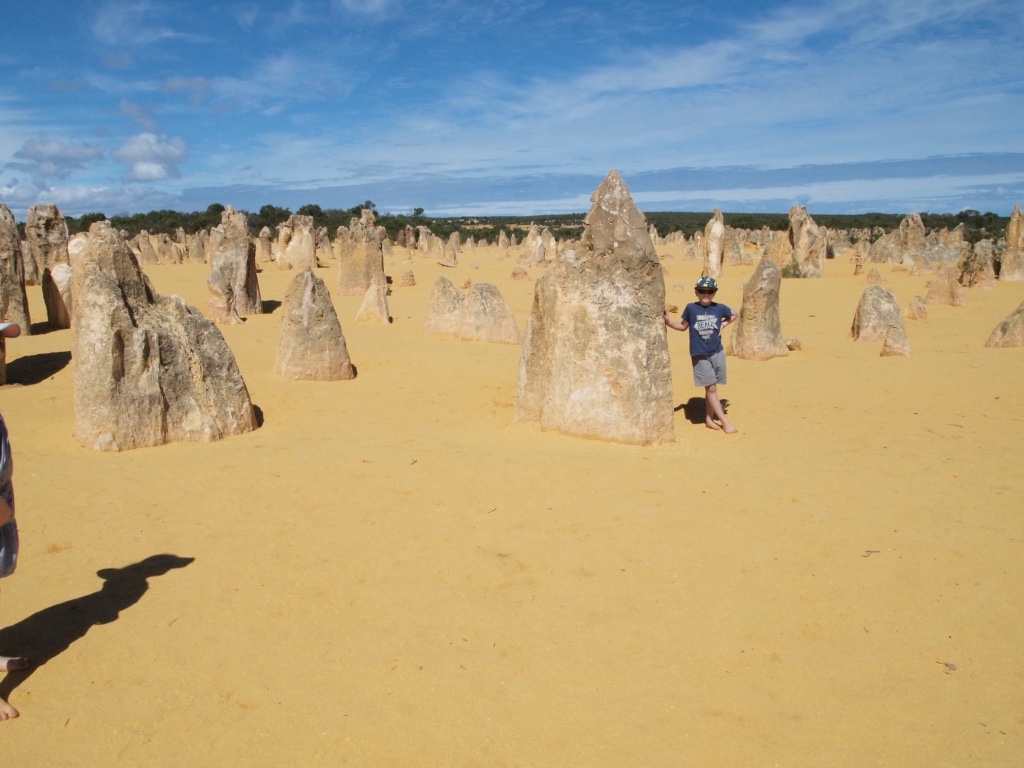


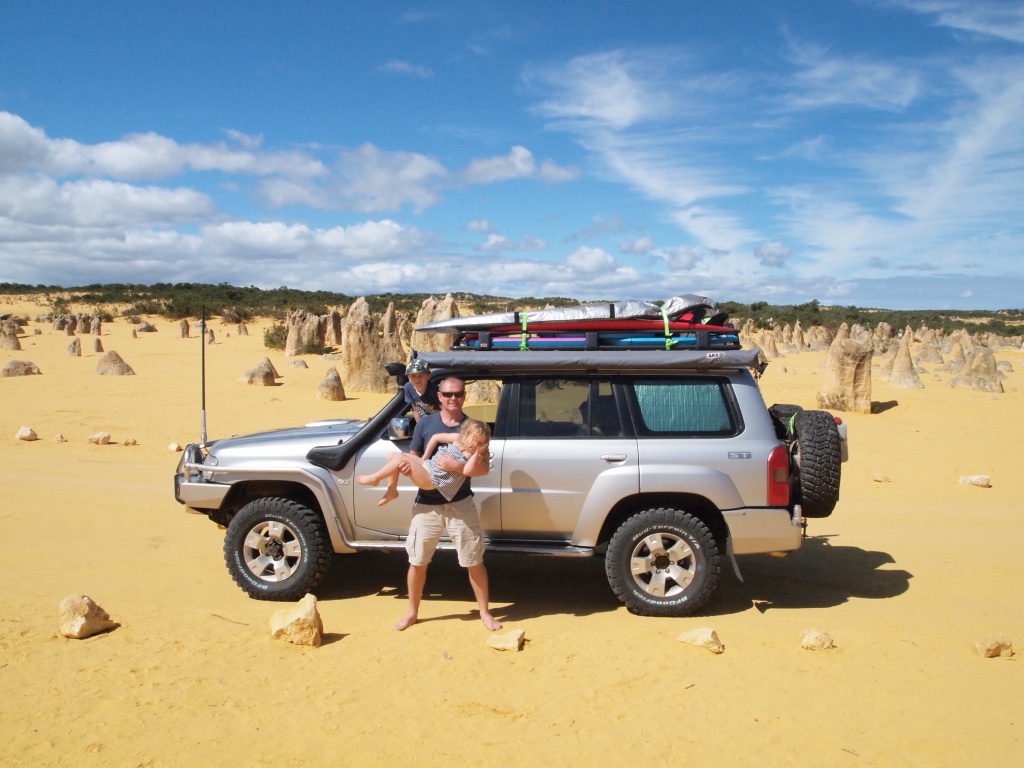


Sandy Point (close to Jurien Bay) is a good base for the Pinnacles just down the road and so the next day we headed out to visit this unusual amazing and beautiful Pinnacles. The Pinnacles are geological rock formations in the desert we spent a few hours looking at the beautiful puzzling formations. They are relatively young in geographical sense and there are two theories as to how they formed one being that they were sand between tree roots and the other is that the rock was trees. I think the first theory is more plausible given the rock is sandstone. Either way they were beautiful and usual site not like any other place I have seen. We all enjoyed them and played hide and seek.
After the Pinnacles we visited the Thetis Lake where we viewed some Stromatalites which are an ancient ‘bacteria’ that grow in a rock looking formation – very interesting but the flies at the lake were insane! So after quick view we headed back to camp.
The next day we hung out at Sandy point and climbed up some sand dunes with the kids boogie boards for some sand sledding which was enjoyed by everyone. We also checked out the sea cave at the end of the beach and some swimming in the afternoon.

Stromatalites at Lake Thetis


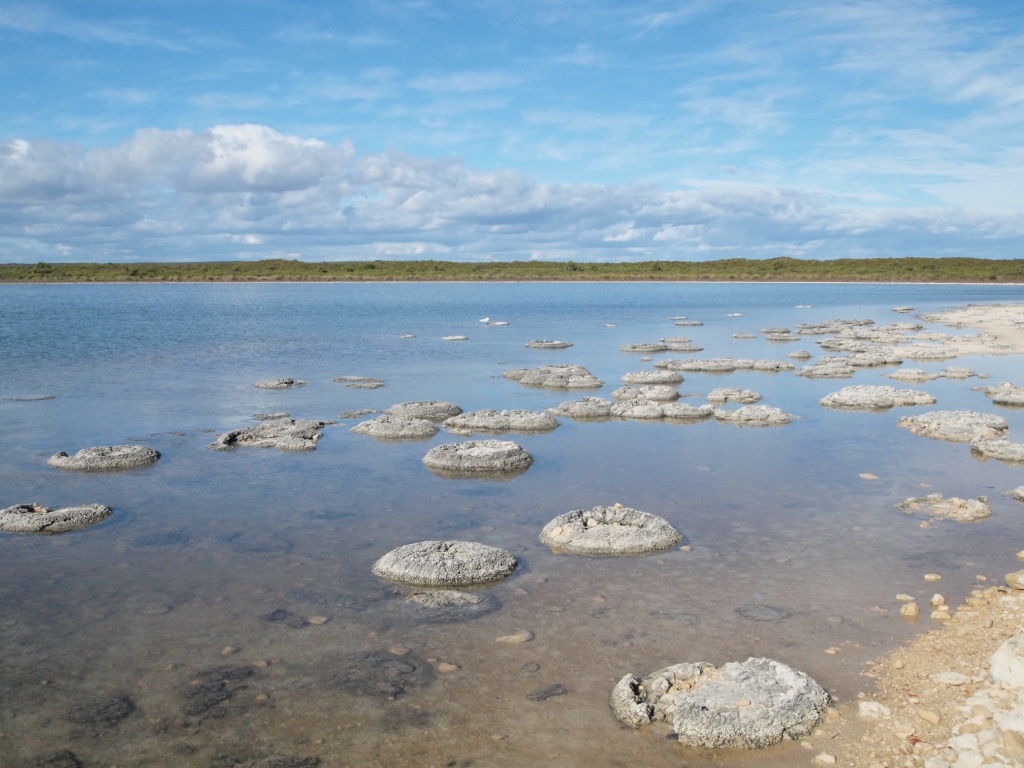
Stromatolites are thought to be one of the oldest forms of life on earth!
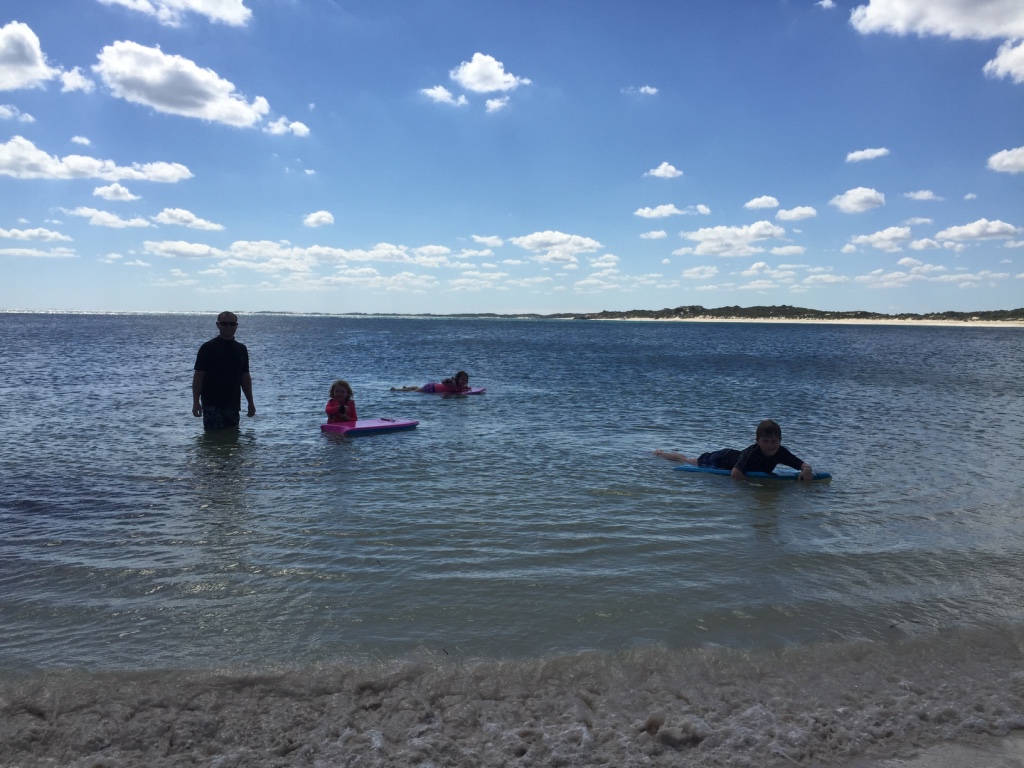
swimming at Sandy Point

Holly rides the dune with Mum

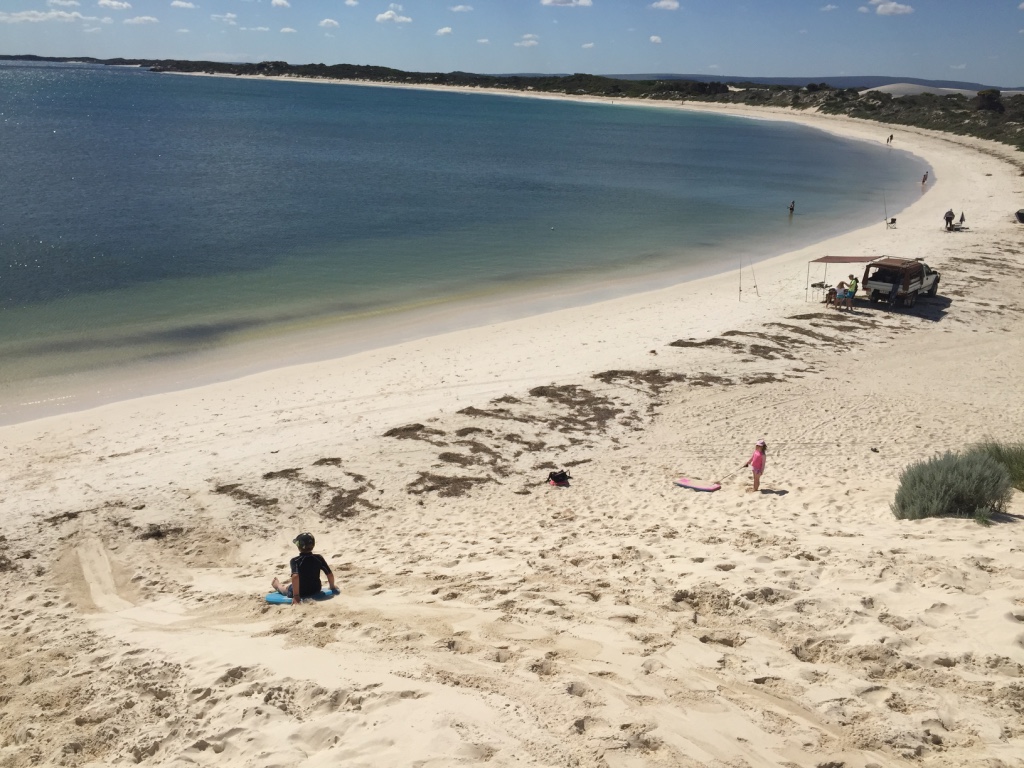
Sandy Point beach
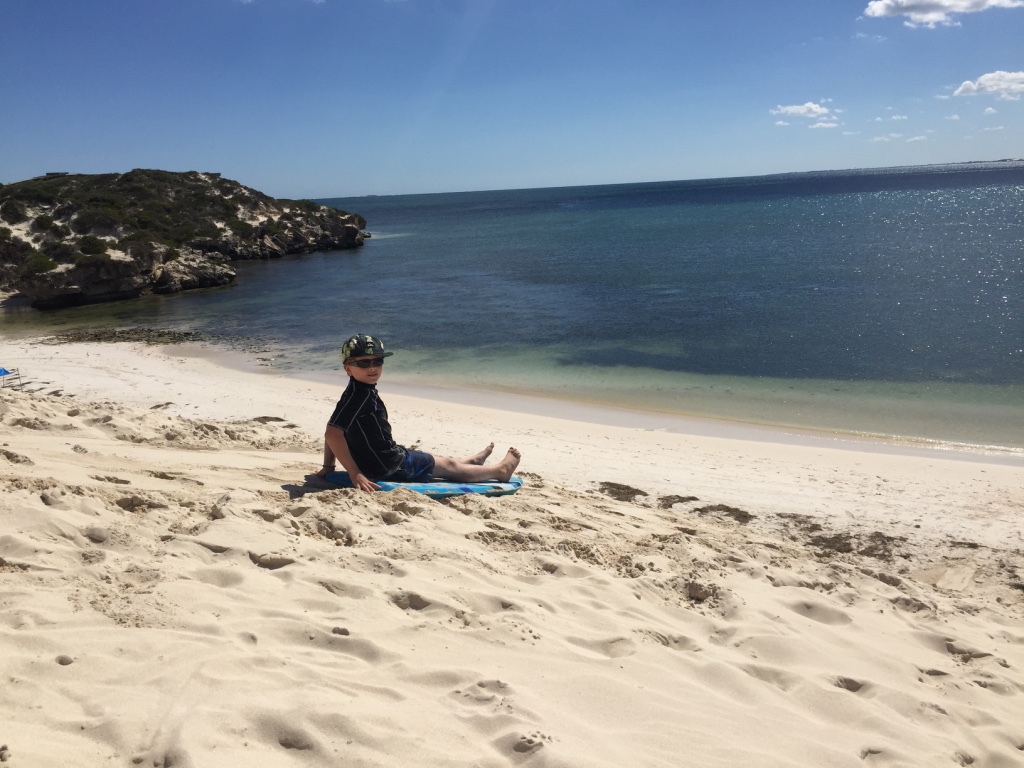

boogie boards handy for dune riding
These dues were steep and we rode them down almost into the ocean. Sandy Point was a great spot many people were also fishing off the beach and catching some good ones. We didn’t try our luck but will get the rod out at the next camp.

sand dunes at Sandy Point
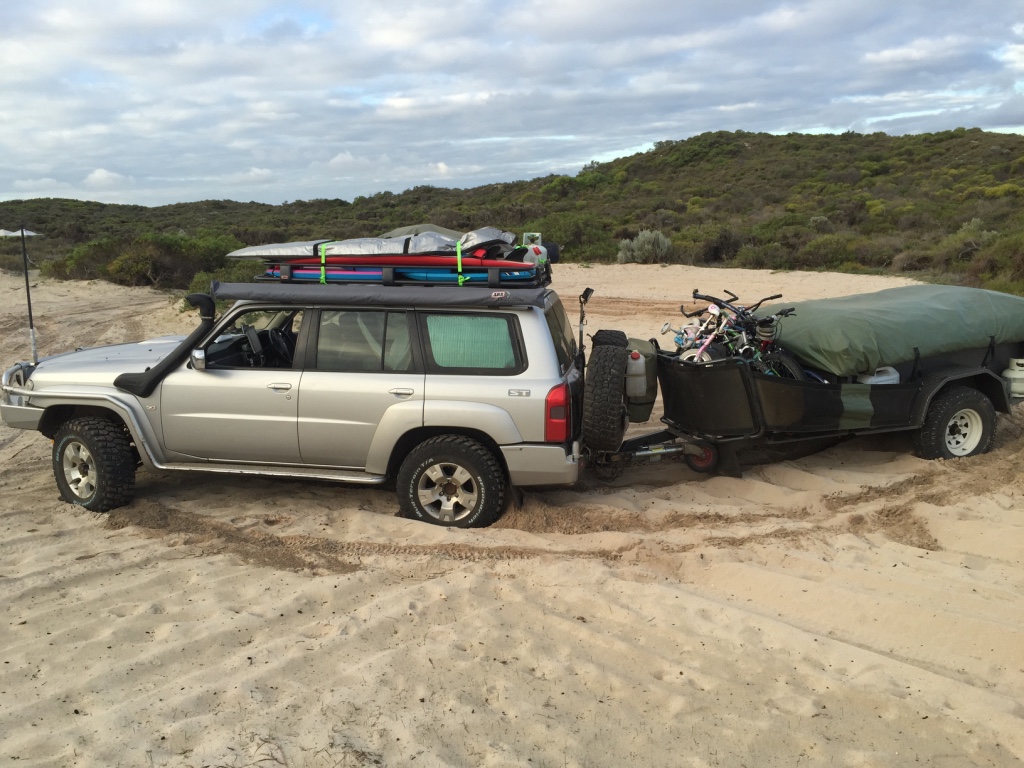
We headed out of Perth and along the Sunset Coast tourist drive and it was easy to see why so many people come to Perth and never leave. The sunsets and coast are so beautiful and this drive was a lovely stretch of coast. We headed to a little spot up the road just past Jurien Bay called Sandy Point and got a protected beach camp – where Andrew promptly got the car and trailer bogged in some deep soft sand – but we dropped the tyre pressure and were soon able to move again.

Bogged at first camp!
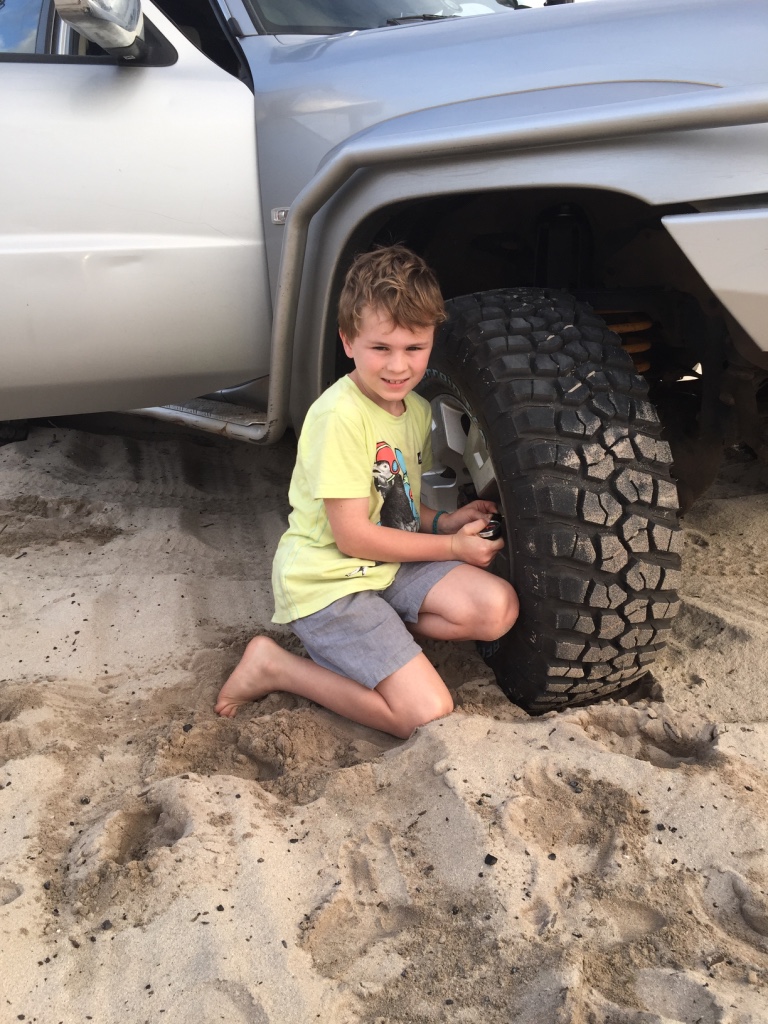
Aaron letting down the tyres


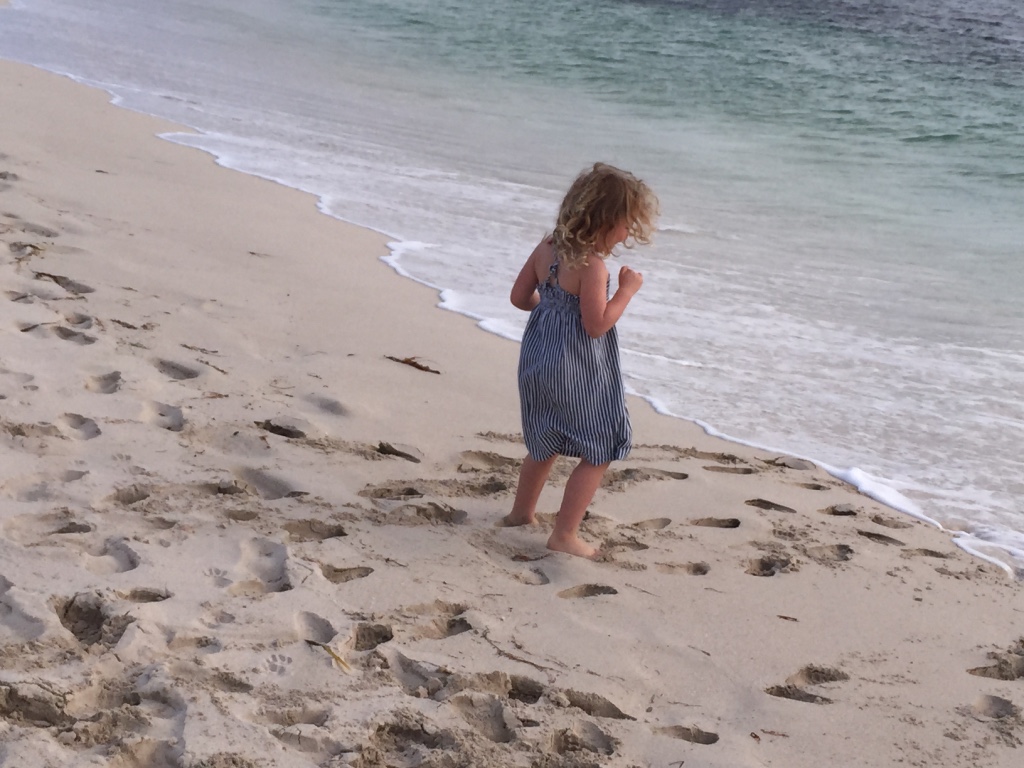
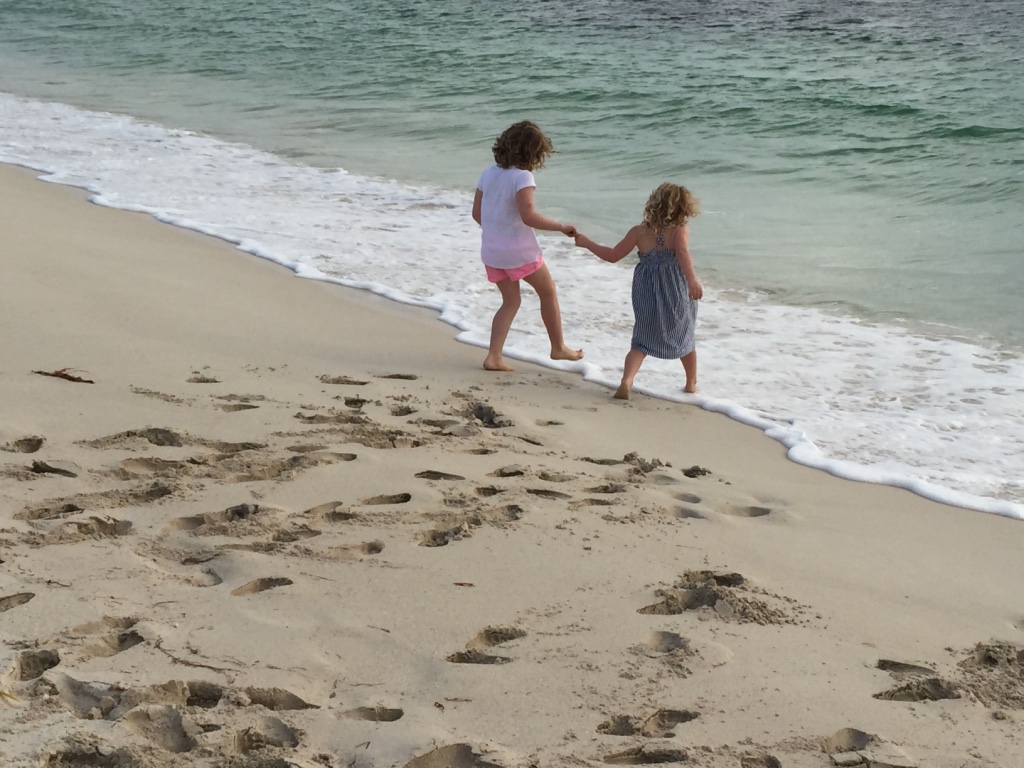




The kids madly raced to try their new wet suits at the beach and they proved a worthwhile investment. Sandy Point is a council owned camp site with cheap fees and toilet facilities provided.
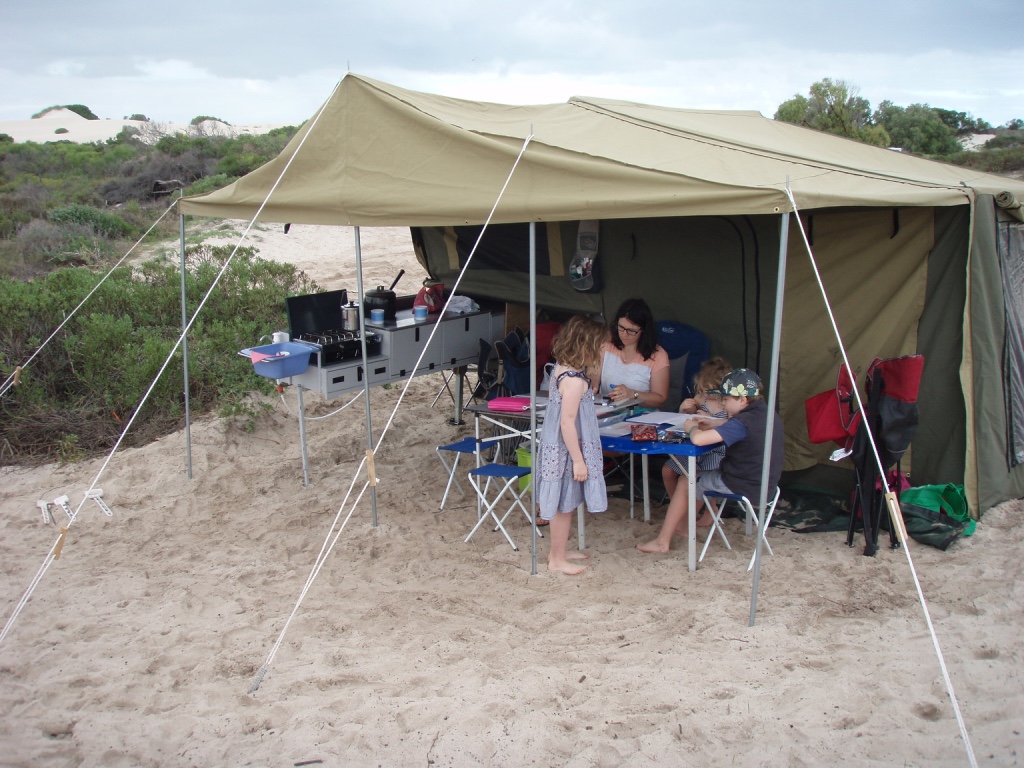
Sandy Point was the start of week three on the road and school was back in Melbourne so school of the road started too.
The first sunset over the west did not disappoint us.

Looking good in our new wet suits


First Sunset in the west.

Sunset view of our camp and the dunes in the back ground.
First Sunset in the west.

Note a different animal on the signs.

We arrived in Perth to a welcome of rain and the comfort of my sister and brother in laws home in Cottesloe – it rained all night and we were really glad to be in bed with a solid roof over our heads. The children were ecstatic to see their cousins and went to bed very late amongst much giggles and fun.
The next day we woke early, loaded the 9 bicycles and a trailer bike into our cars plus the four adults and six children – being our family and my sisters family of five. We decided to catch the 930am ferry across to Rott Nest Island to make the most of our overnight stay. On the ferry we were most impressed with the distance that Anna, Tim and their team had swum in the Fremantle to Rott Nest swim. It is a long way to swim in the ocean and they did well to get as far as they did in swell and poor conditions. Luckily for us the ferry ride was smooth despite the rain and nobody got sea sick.
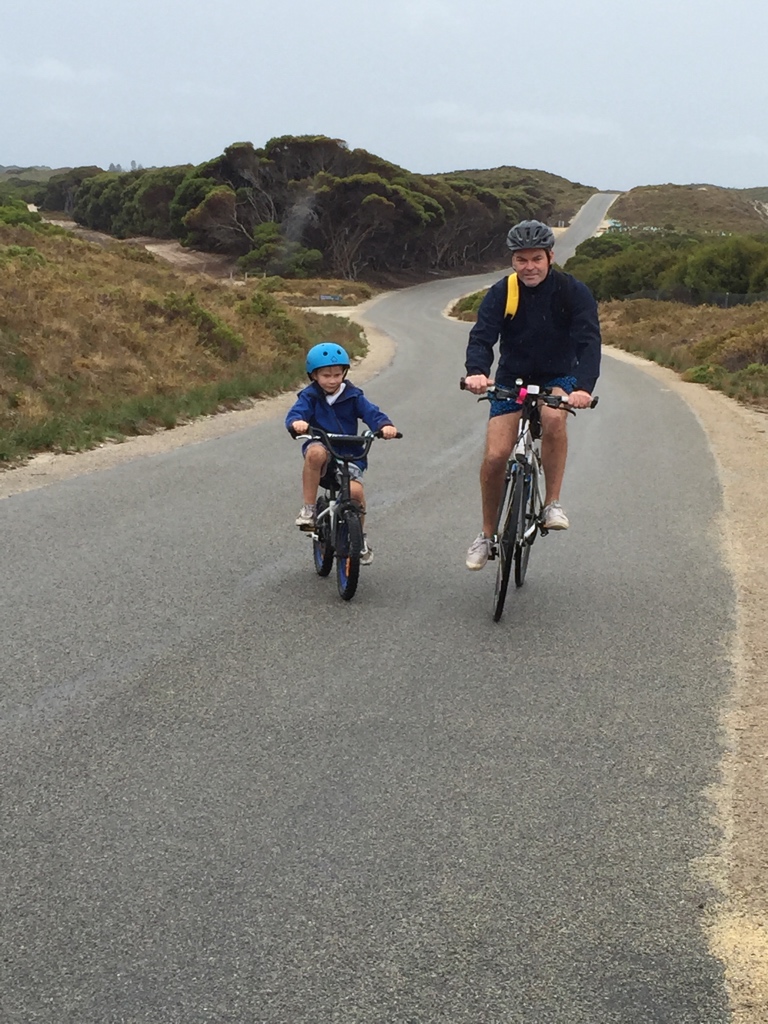
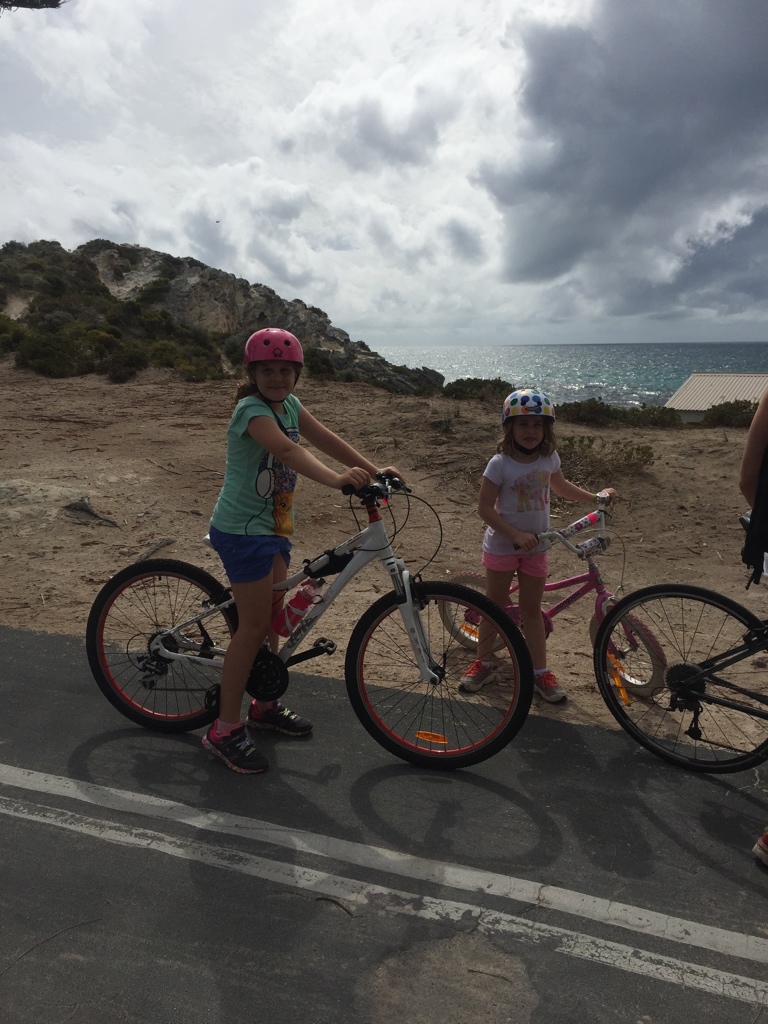
Once on the island we sorted the bikes and slowly rode around the east side of island and enjoyed the water views and lunch at a café. Aaron Holly and Bianca were excited to have their first quokka encounter. They are very tame sweet looking little mammals which happily let the children pat them although I suspect they are looking for food. The cousins were less enchanted with the quokkas as they have an annual family holiday to Rott Nest.


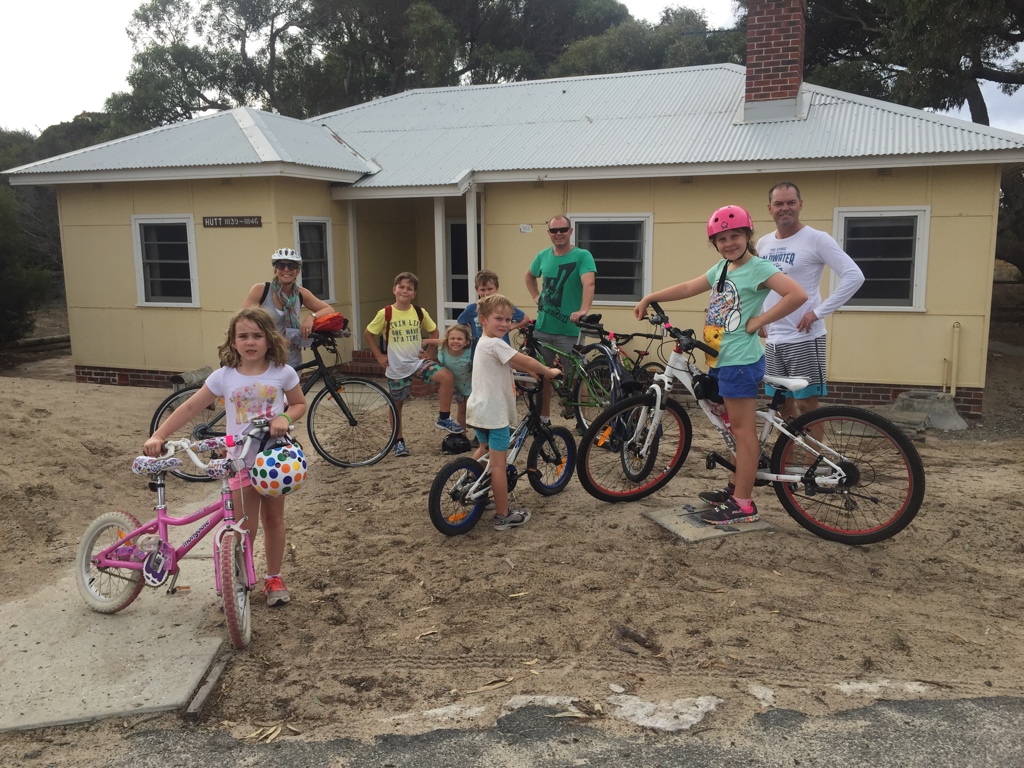

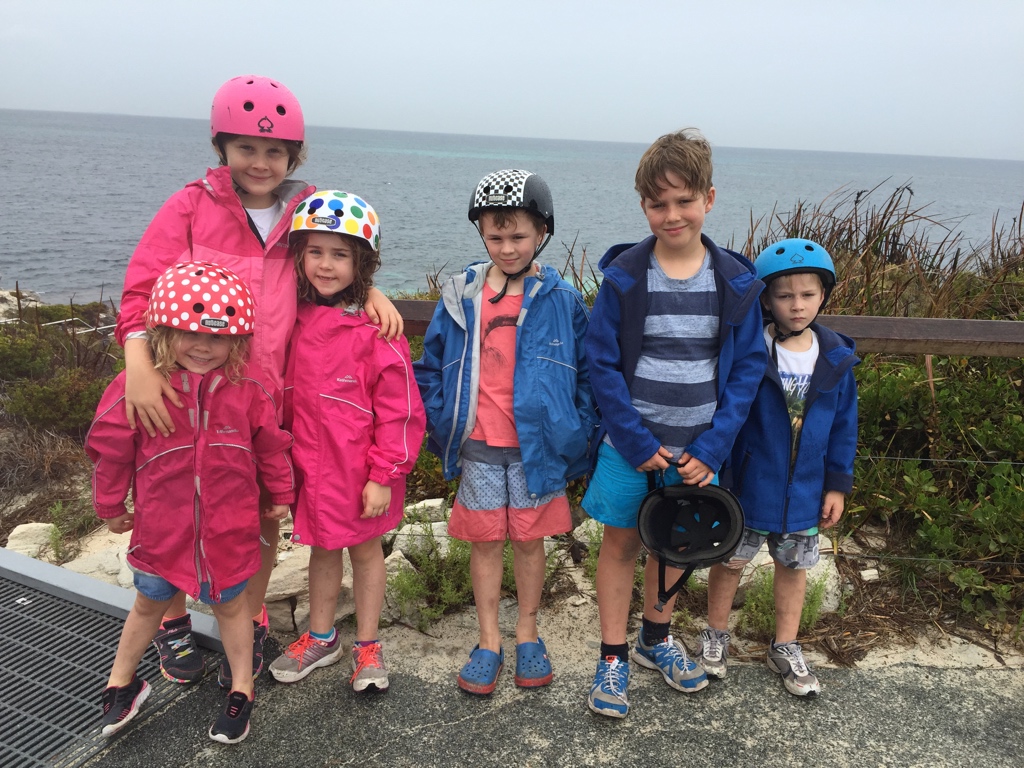

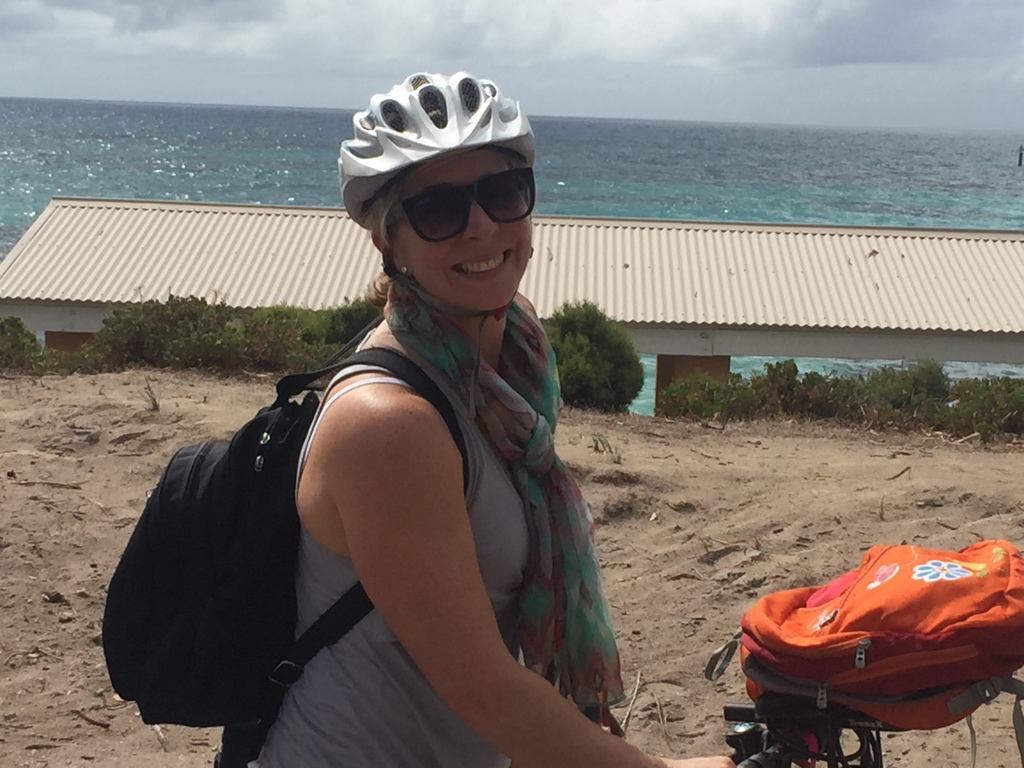

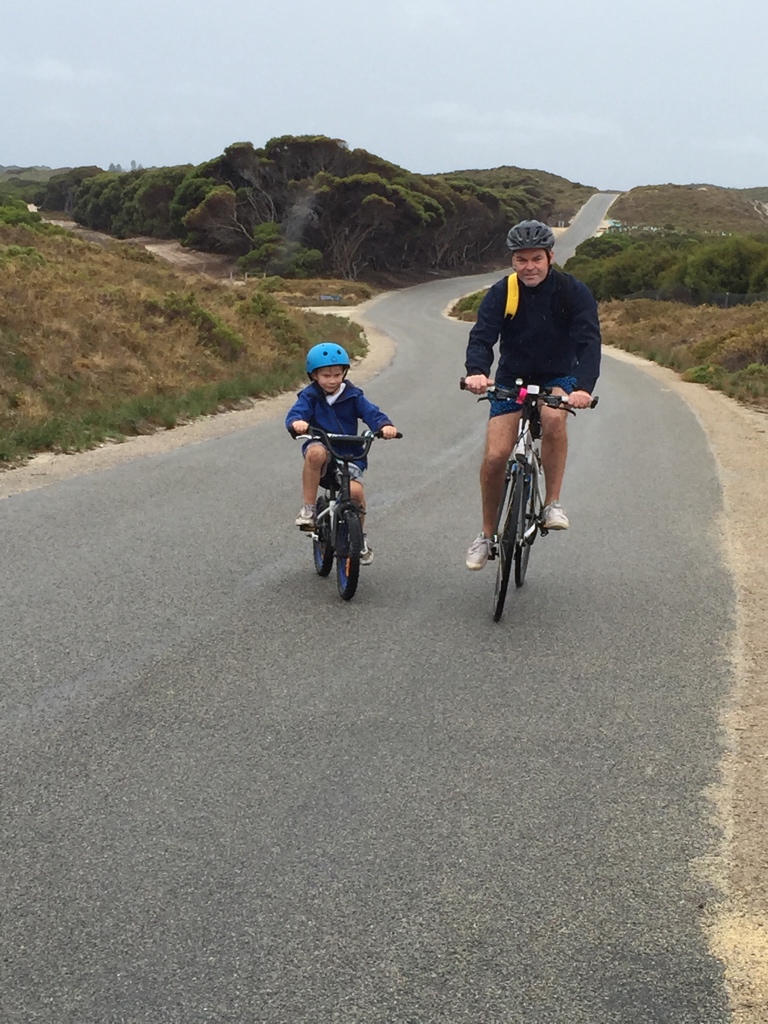

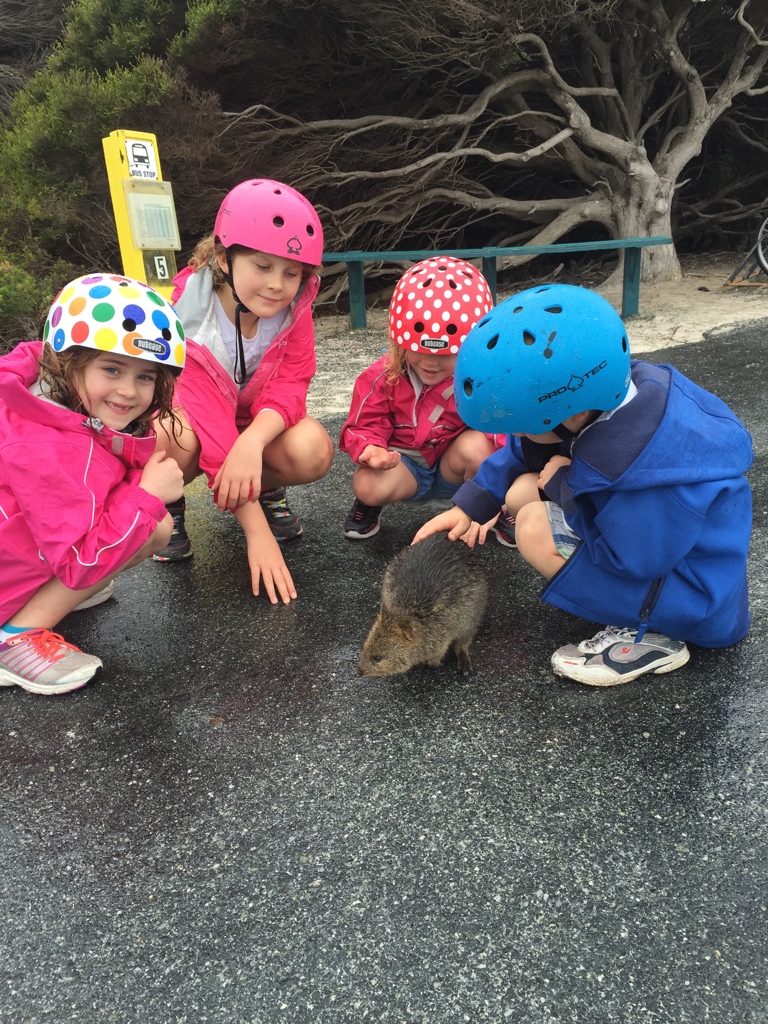

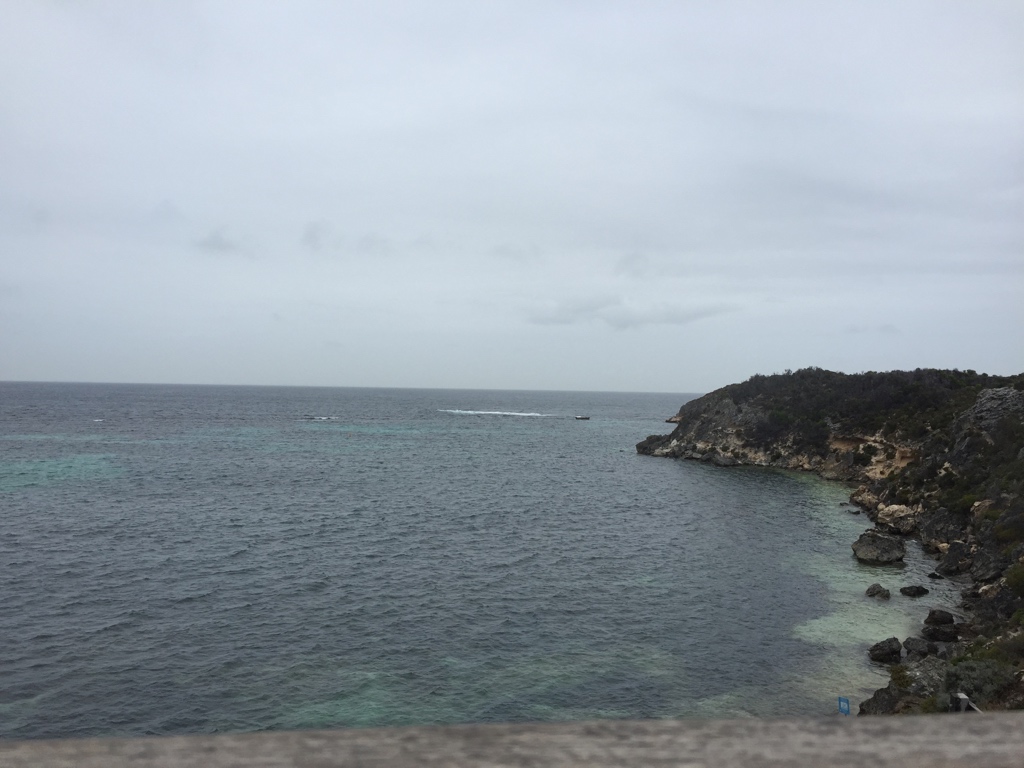


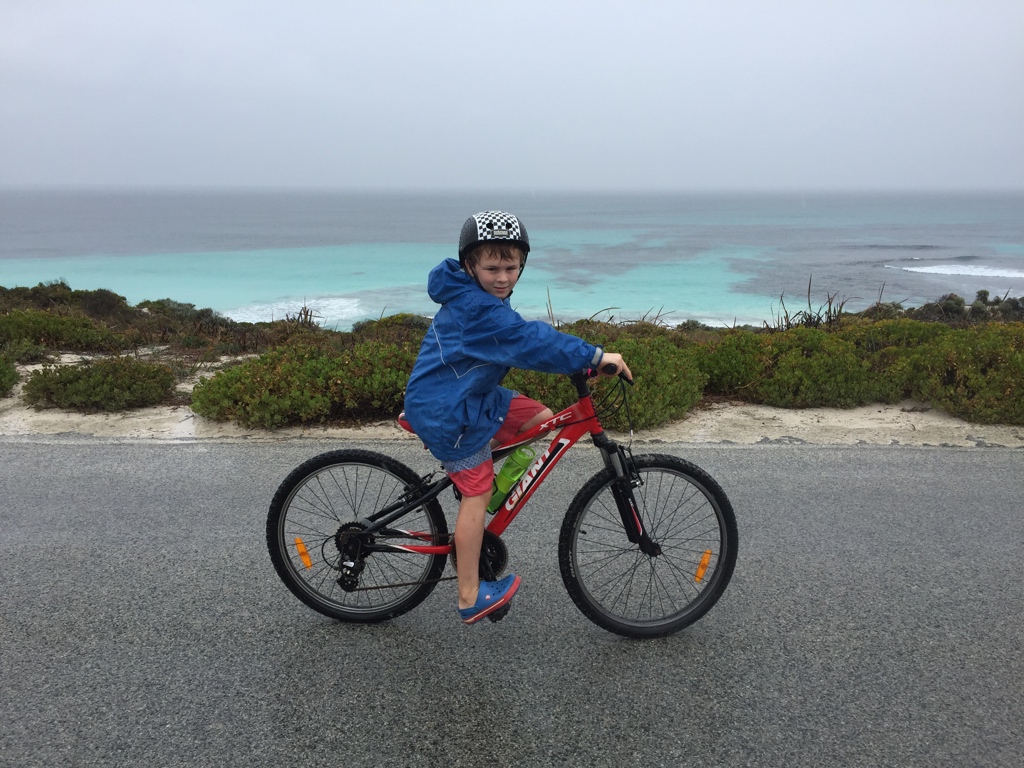
In the afternoon we checked into our accommodation at the ‘governor’s quarters’ which we all thought sounded rather impressive…when we arrived the house of bunks was not quite up to our expectations – clean but basic. The kids loved it.
We went for a swim on the beach just a sand dune away from our house and the water was warm despite being a little cool and overcast.
We went out for dinner and back to the house. It was time for bed. There was a boys bunk room and a girls bunk room but the two adult couples drew straws for the room with mattresses on the floor or the lounge with mattresses on the floor. Andrew and I got the lounge room and as we closed our eyes I said to Andrew I was a little worried about being at floor level. My worst fears were realized when I awoke to little mice munching sounds from the kitchen. Luckily only for one night.
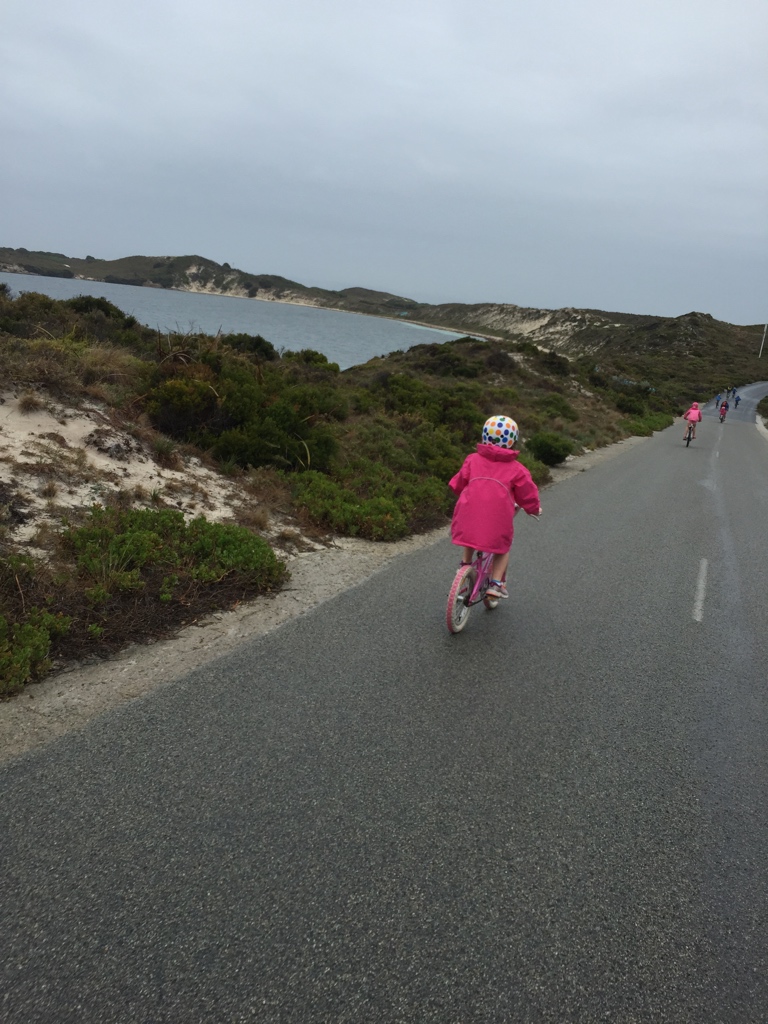
We all packed and headed out early on the bikes wearing our rain coats. We planned a large loop around the south west side of the Island but cut it short as we were riding in light intermittent showers that developed into full on rain.
The kids were all great and showed real spirit finishing the ride with the promise of hot chocolate and cooked breakfast before the ferry ride home.
After breakfast we went to the museum and Rott Nest is a beautiful Island holiday destination now however it has a sad history of convict and aboriginal incarceration that resulted in poor treatment of many indigenous Australians as well as other poor convicts. The convicts were used to build much of the old infrastructure buildings and roads on the island.
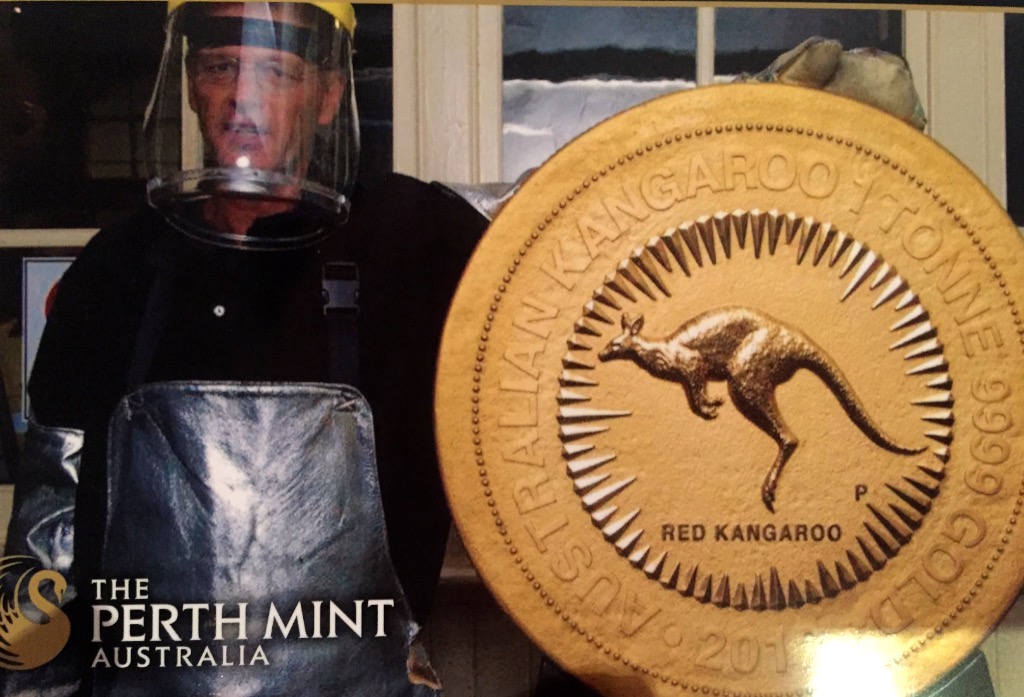
Back in Perth we did some local sight seeing and the highlight was the Perth Mint. Australia has three mints which have made the coins and other currency used across the nation – these are located at Perth, Melbourne and Canberra. We were really impressed with the Perth Mint and would recommend it for a visit with a 1 tonne 99.99% pure gold Kangaroo coin on display – the BIGGEST coin in the world currently worth approx. $56M AUD although legal tender value of $1M. – No photos allowed (see post cards) the coin was made as a bit of a competition with a Canadian Mint that tried to make a big gold coin and had it crack in the final stage of production. The Mint had some other fun and interesting sights including a operational old fashioned gold smelter which they used demon straight pouring a gold bar. The kids also loved attempting to lift a gold bar and a scale which measured their weight in gold! Aaron was worth $1.69M at todays gold price – I was worth over $4M but I would be far happier if I was worth a lot little less.

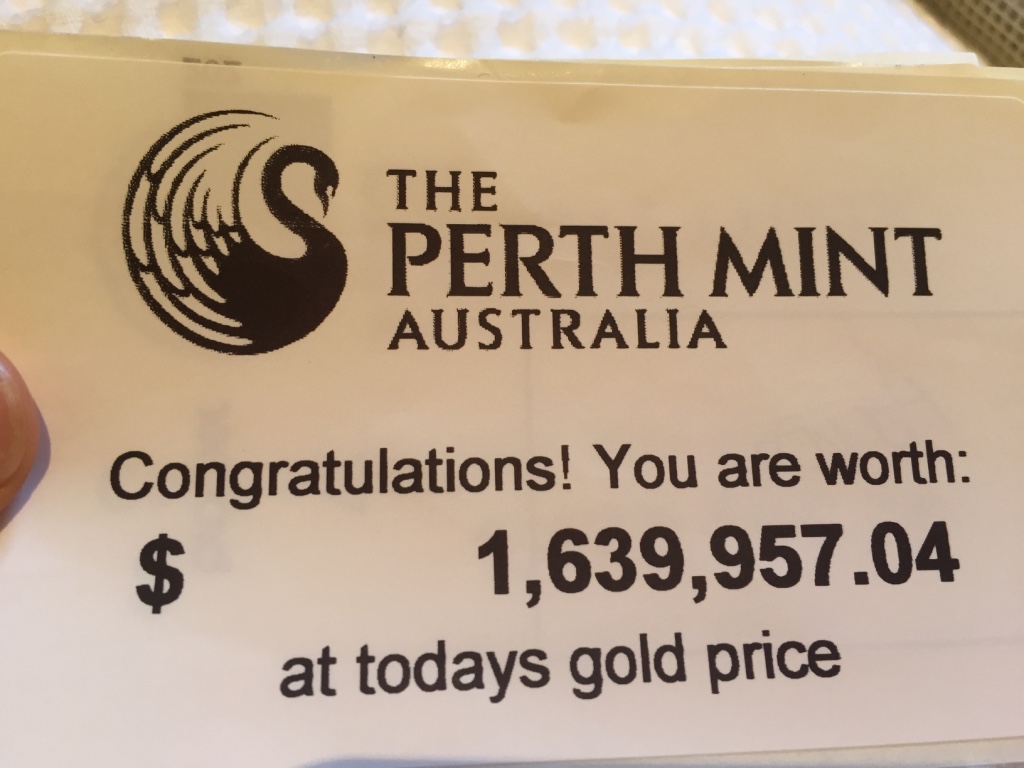
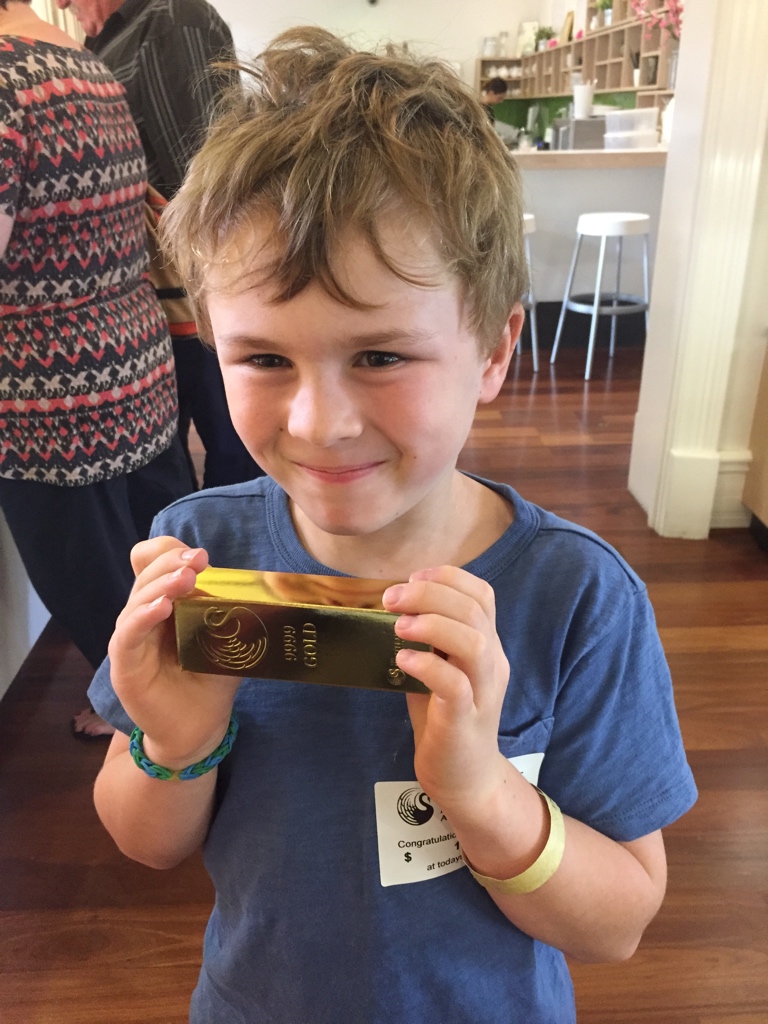 Aaron held a gold bar unfortunately no photos allowed in the mint so we can’t show the bar we actually tried to hold – it was heavy. The mint was well worth the visit and lost of fun.
Here are postcards of the worlds biggest gold coin 1 Tonne and a big gold nugget that is on display.

We visited Freemantle and the ‘Little Creatures Brewery’ for lunch and the Round house at Freemantle where criminals and convicts were held in the late 1800s. We also saw a statue of the rock and roll legend Bon Scott from AC/DC the legendary Australian Rock and Roll band – it turns out he migrated from Scotland to Australia as a teenager before finding fame as a rock and roll star.


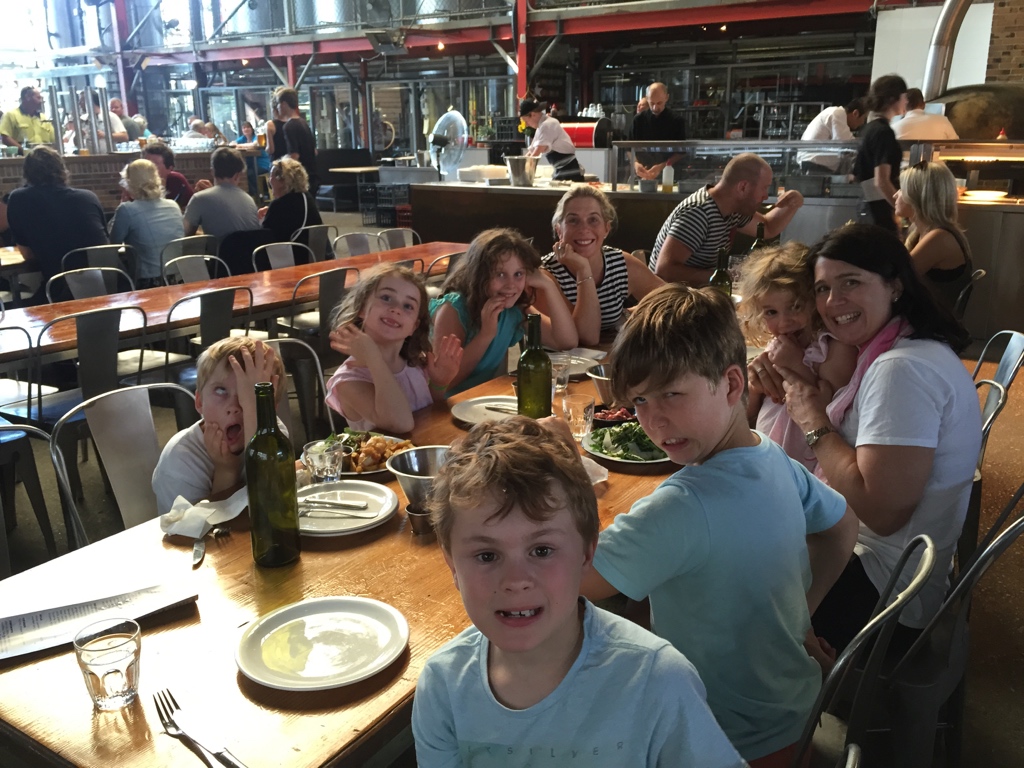
Lunch at Little Creatures
The sunshine started to break through just in time to get all our washing done, buy some last minute items, pack the car and head onto the next part of our adventure. The children were all sad to say goodbye to their cousins until next time.

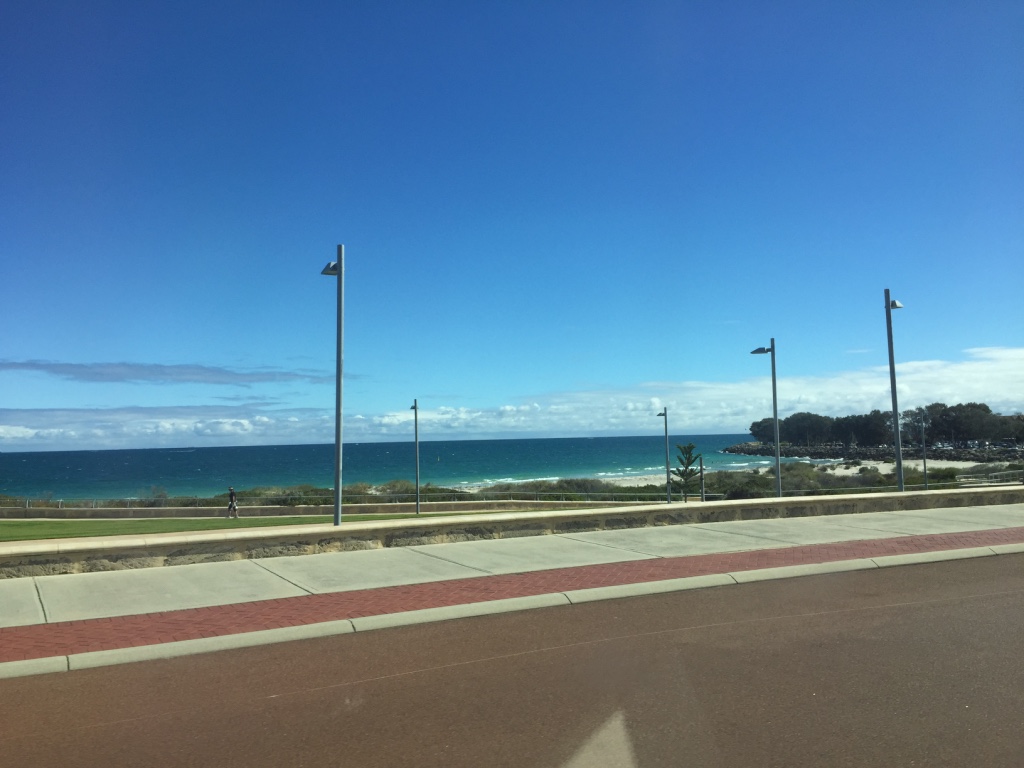
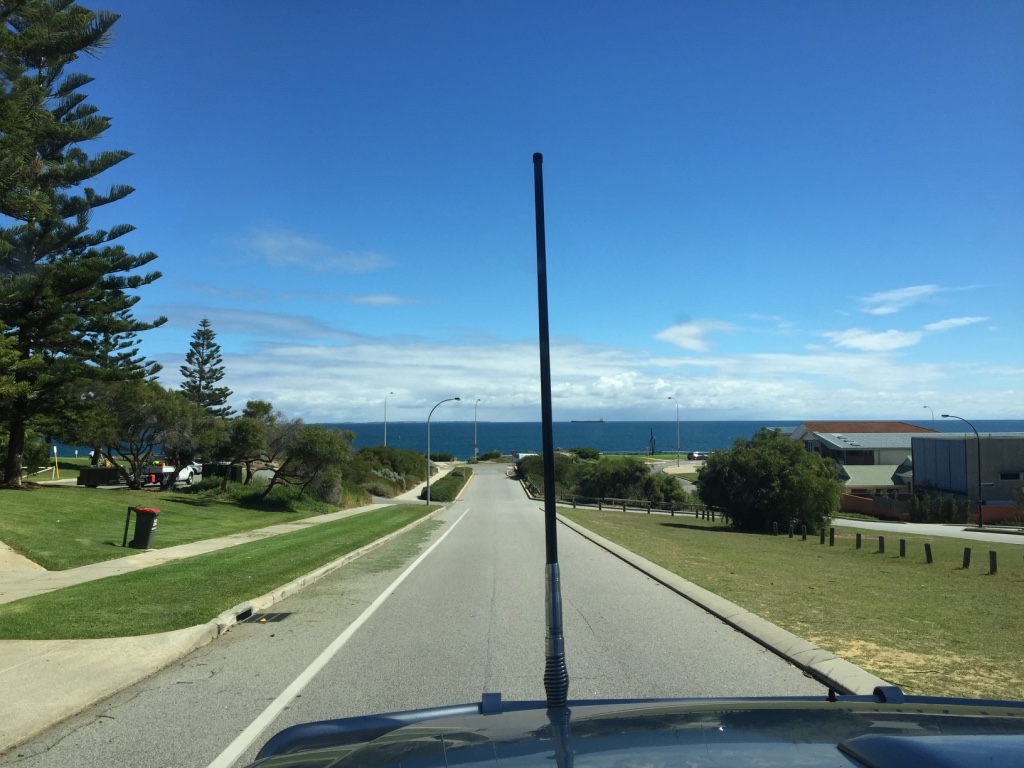
Leaving lovely Cottesloe sunshine for our farewell
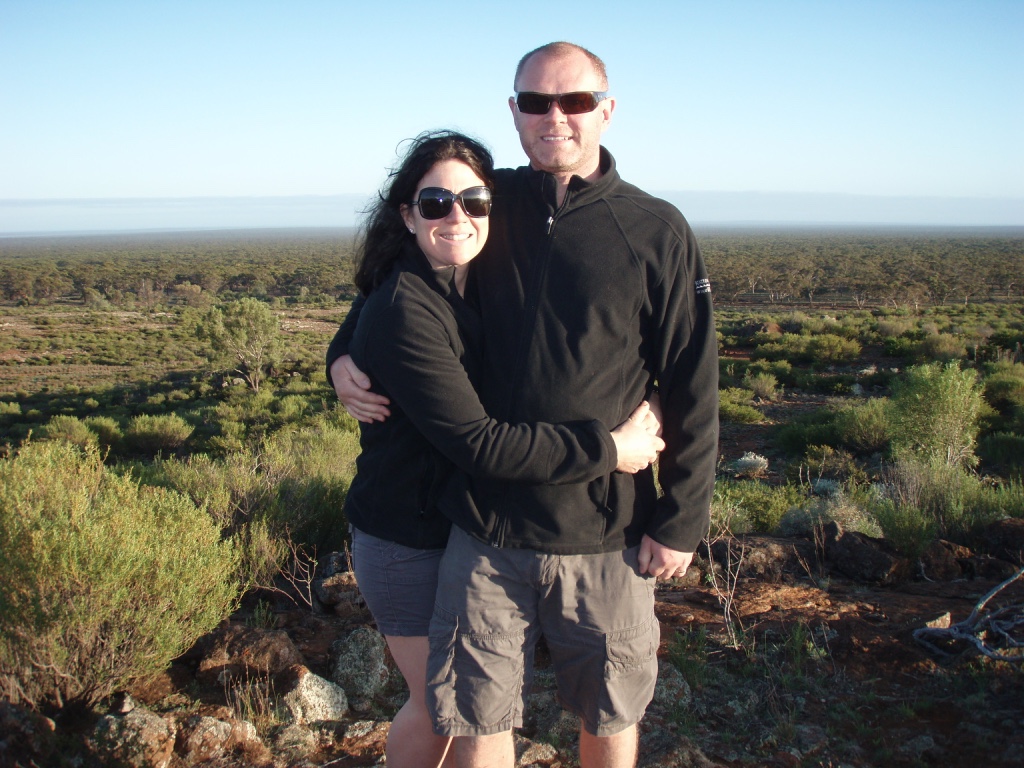
Fraser Range Station camp was on a old sheep station and had okay camping in a beautiful area – unlike the rest of the Nullarbor the area is covered in dense bushland eucalyptus forest. The station was founded in the 1870s and has a long history of Australian farming pioneers. The dense bushland that stretched across and out to sea is really beautiful- in the morning before we left for our drive to Kalgoorlie we went for a short hike to the water tank (highest point closest to the farm) and it was a truly magnificent sight – photos do not quite do it justice. We didn’t have time to drive the 4×4 and the station has more on offer than we could see although the original historic wool shearing shed has unfortunately fallen down and been removed. Bianca found a large pot in the Fraser Range camp kitchen and thought it was hilarious that she could fit into the pot!

Fraser Range Camp at sunset

Bianca in the pot!

We headed off from Fraser Range and headed straight for Kalgoorlie. Here we stayed in a caravan park and we were lucky to book a tour of the Super Pit whilst driving so we arrived set up camp and went straight to a tour of the Super Pit – Karlgoorlie’s big open cut mine for gold!
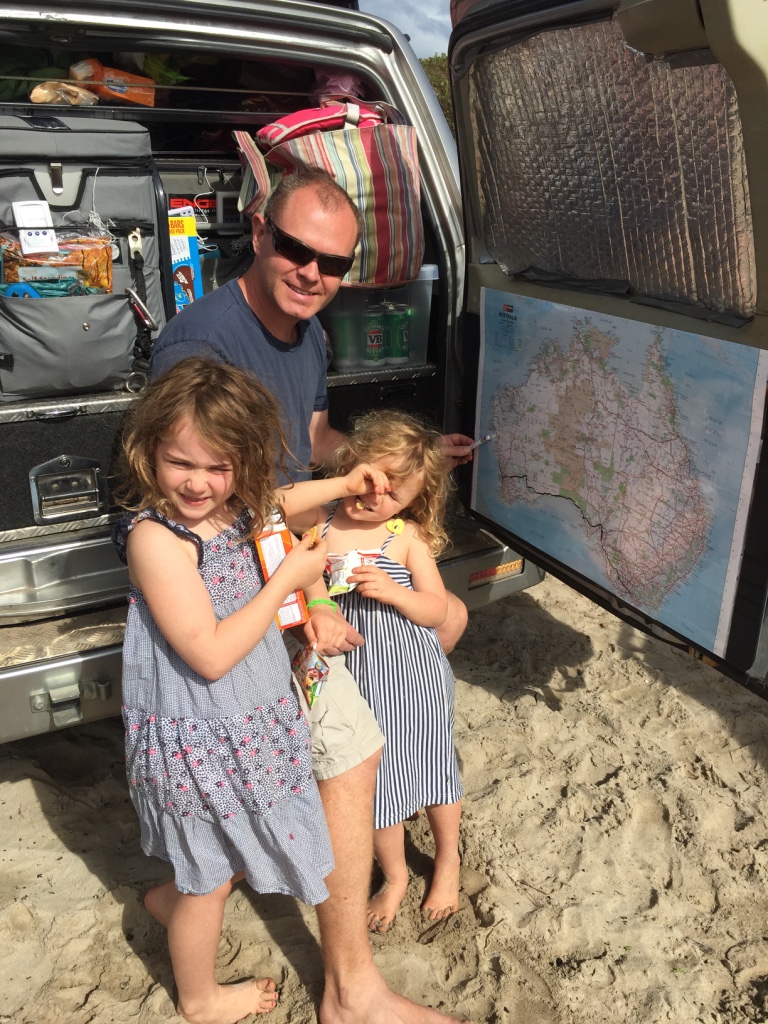
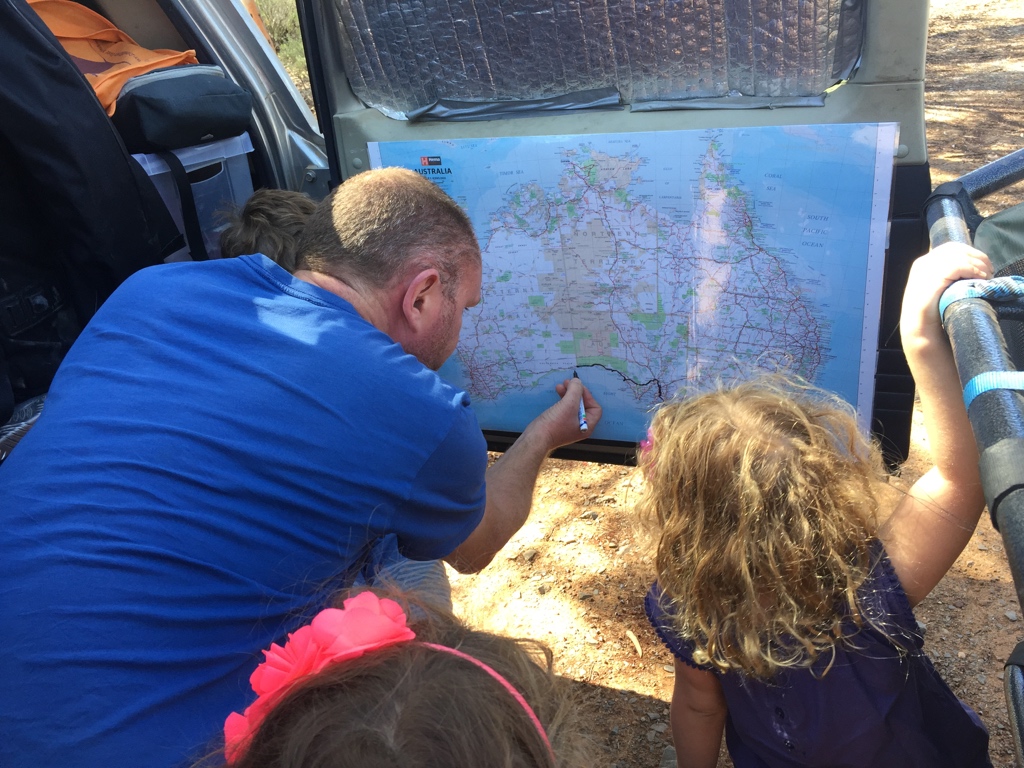
On the road to Kalgoorlie we stopped for morning tea and this was a chance to update the map on where we have traveled so far on our trip around Australia. Andrew loves the map and showing the children just how far we have travelled. Geography lessons on the road.
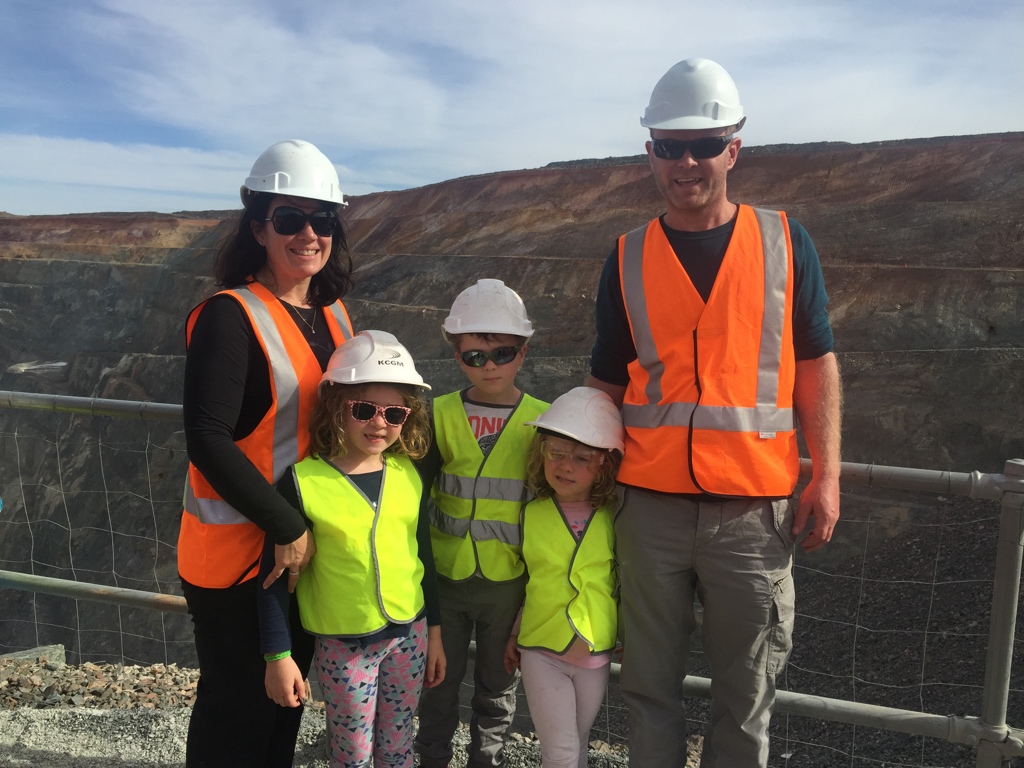
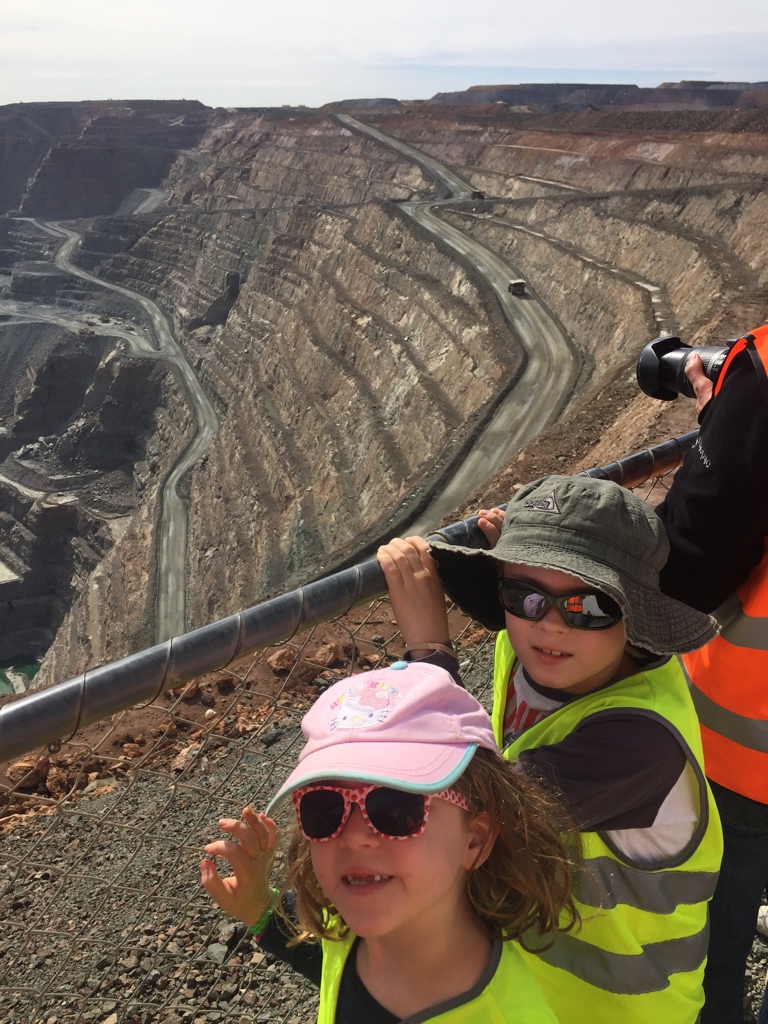
We jumped on a bus tour of the Super Pit and we were all amazed at the scale and depth of the pit. They literally extract tons of dirt from the mine to extract gold and the guide said that for every super big tip truck full of rock processed they get approximately a golf ball sized amount of gold – it hardly seems worth it but it is big business in every way.
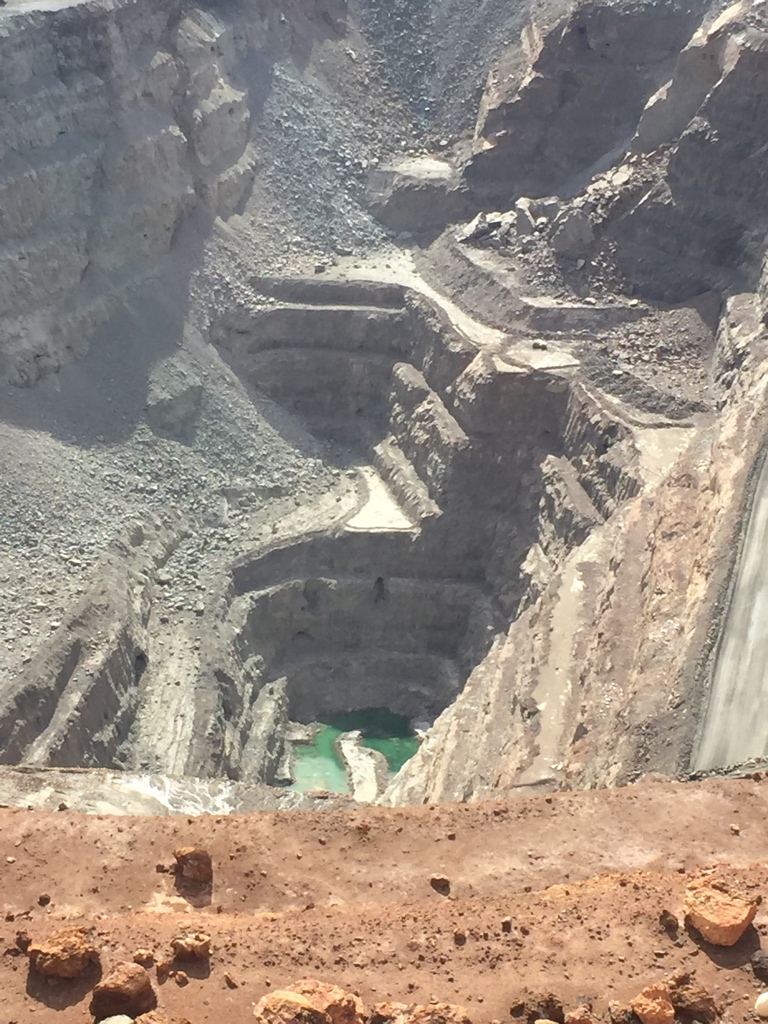
The Kalgoorlie Consolidated Gold Mines P/L (KGCM) is a joint venture between an American and Canadian companies – it is officially names The Fimiston Open Pit and is Australia’s largest open cut mine. It is one of only four mines in the world to have produced more than 50million ounces of gold producing on average 700,000 ounces per year. Close to 3.6km long, 1.6 km wide and a depth of more than 600 metres…that is below sea level hence the water that collects in the bottom and the guide said it is as deep as Uluru (Ayers Rock) is High with similar circumference.


 The truck below was a ute that was used in a safety demonstration to show what will happen to a car that get in the way of a mine dump truck – the engine had been removed but it doesn’t leave much to the imagination. I think a good reminder on the way to work.

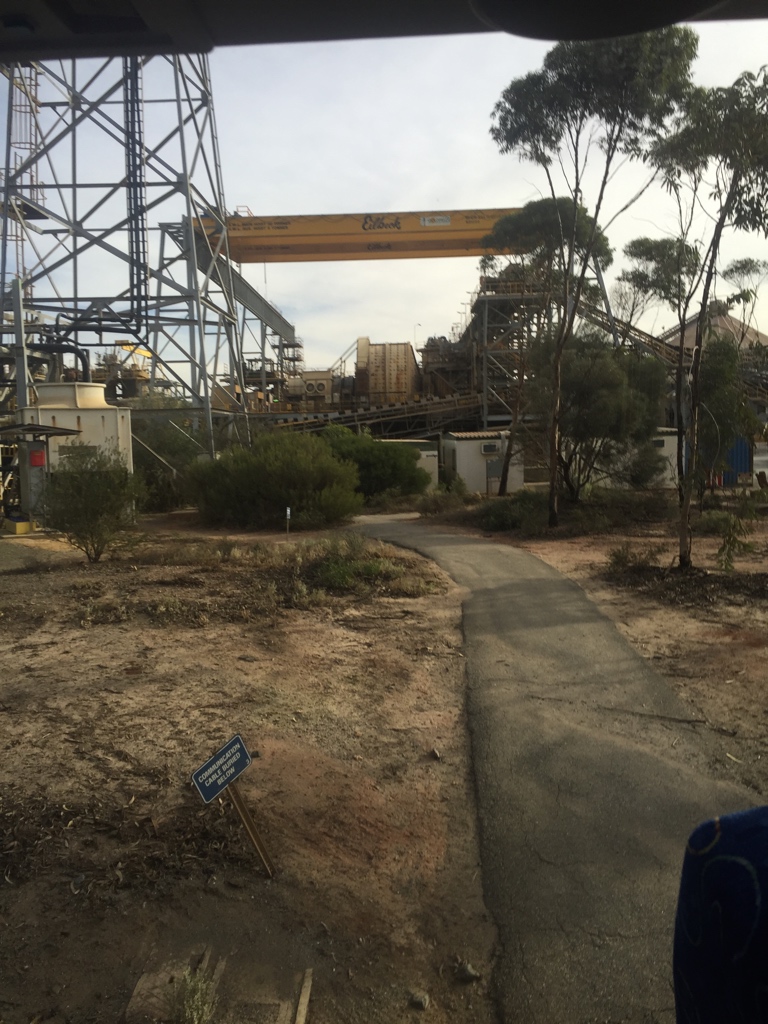

The Super Pit was very BIG and impressive – the 166 tonne trucks and 680 tonne shovel loaders working below looked like toys. Currently the production is not very good quality making processing costly with greater throughput required to to get the same amount of gold and the mine will possibly only be operational for another 6 years. The area has a rich history of early gold mining and settlement in Australia.


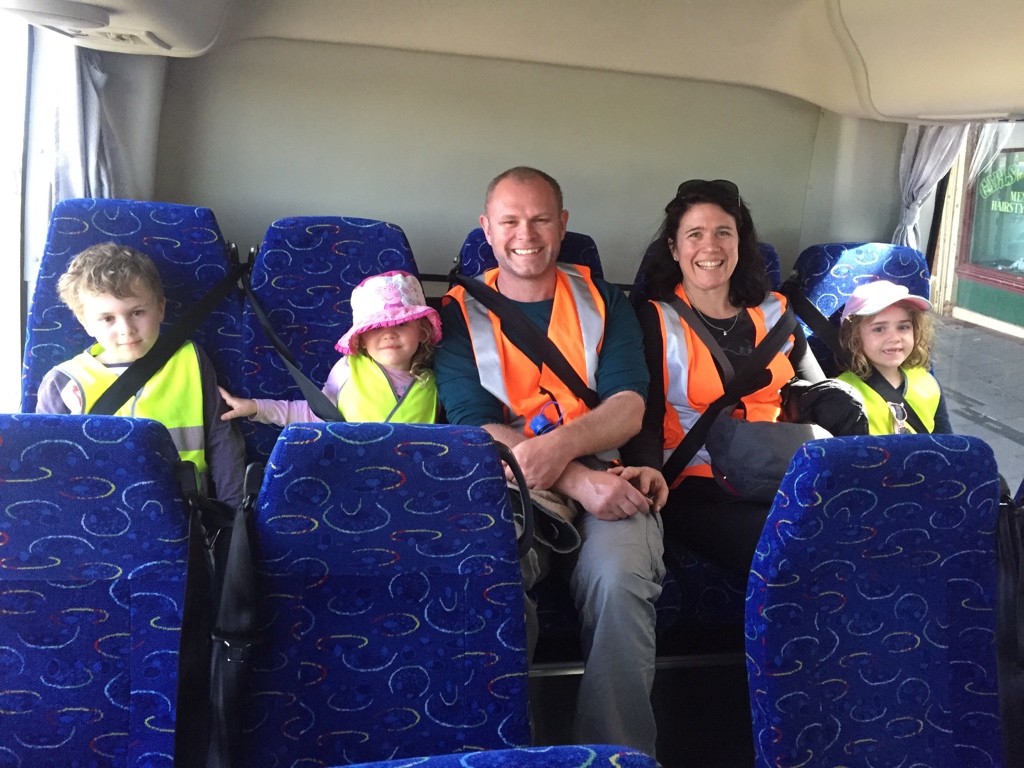
Ironically our youngest Bianca crossed the Nullarbor without a nap but on the Super Pit tour (which cost a small fortune) she fell asleep in minutes! We had jumped onto the tour bus which we thought was a 1.5 hour tour and ended up being a 2.5hour tour and the kids were well behaved but keen to get off the hot bus. We stayed in a caravan park in boulder which was near the air strip and we were a bit worried when we had 3 flights overhead between 630 and 8pm but thankfully it all went quiet after 8pm.
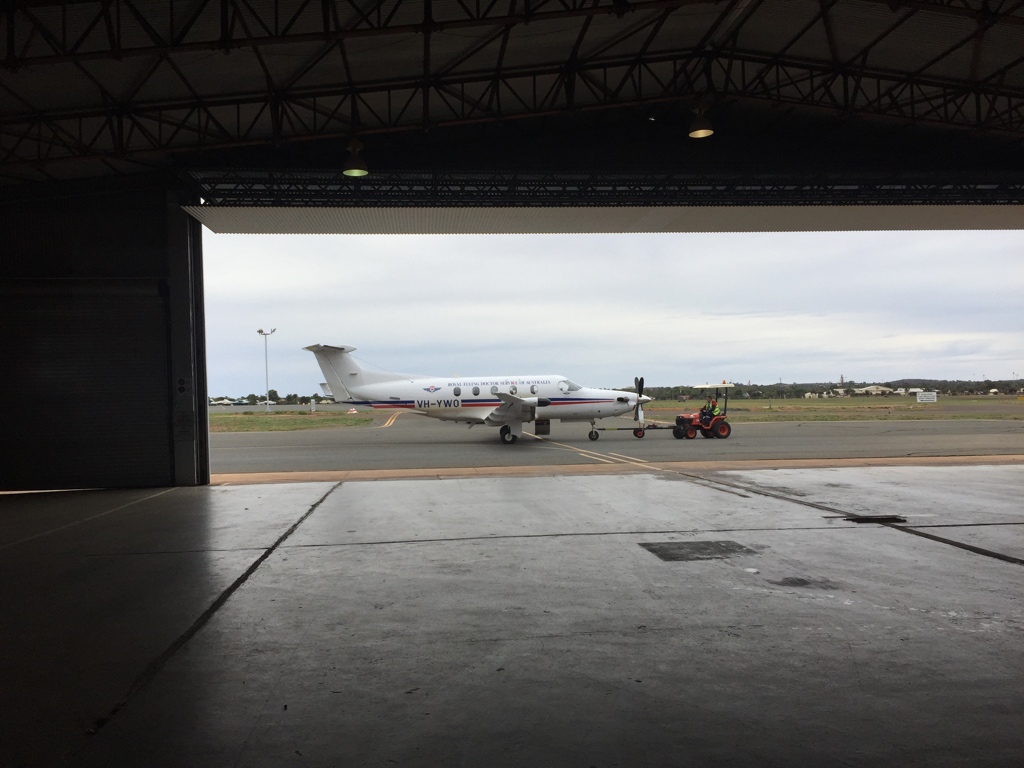
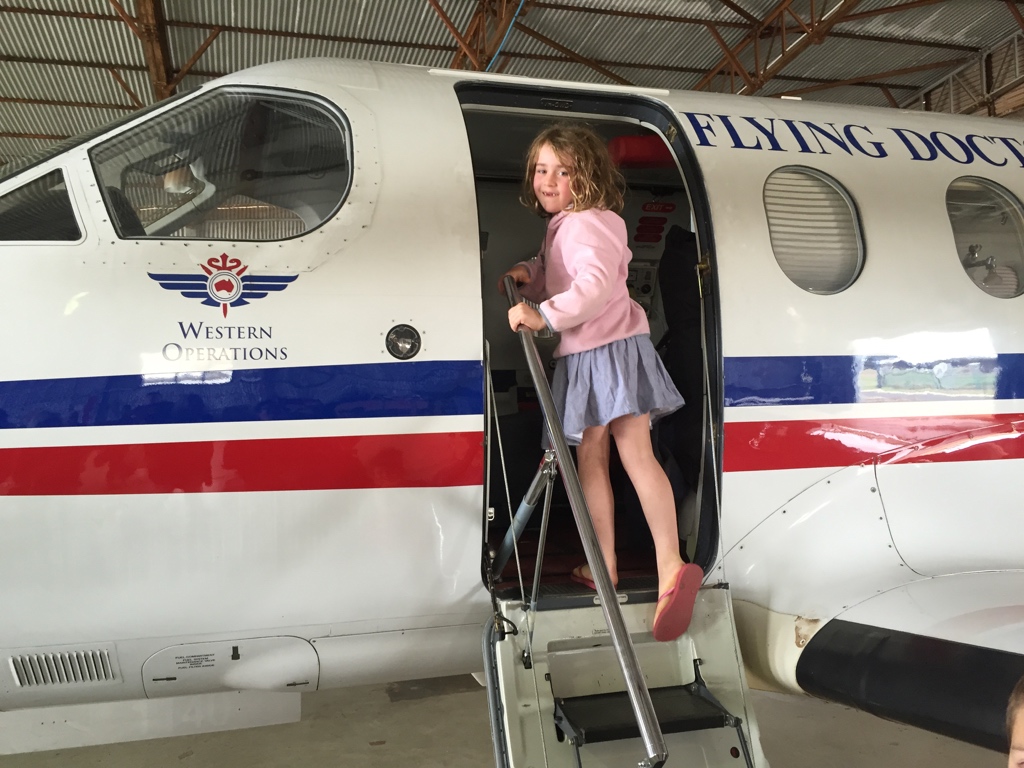
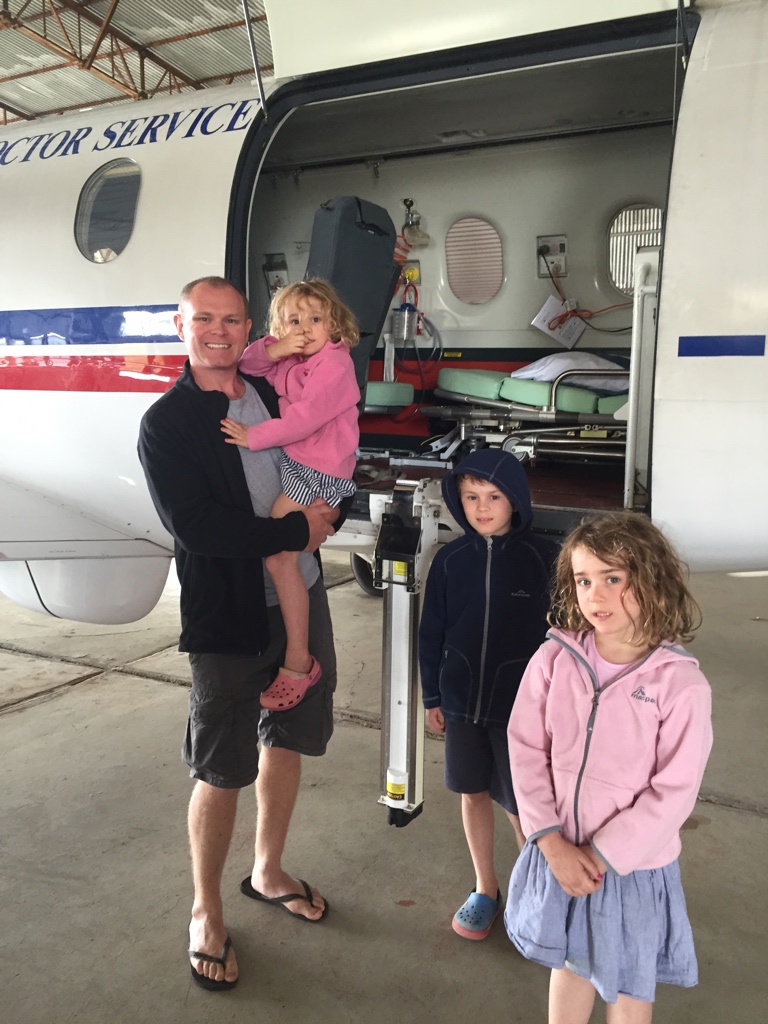
The next day we visited the Royal Flying Doctors Air Base at Kalgoorlie. We got the history of the RFDS in WA and Australia, tour of the aircraft hanger and a look inside the specially modified ‘flying hospital’ in aircraft the PC-12 Pilatus used by the RFDS. These little planes are literally equipped for almost anything to help the remote land dwellers of our wide brown country and the many travellers that are on the roads. The RFDS is the third largest airline in Australia – although you can’t but tickets. The have a flight every hour somewhere across Australia for emergencies and the ongoing primary healthcare services that are provided to thousand of Australians living in remote parts of the country. The RFDS always get a donation from us – we travel into the outback and I have always been comforted by their presence when taking my small children into the outback. Thankfully we have never needed to call on them for help – I am hoping that we don’t see them again on our travels. Whilst we were there one of the planes was being prepared for a flight. 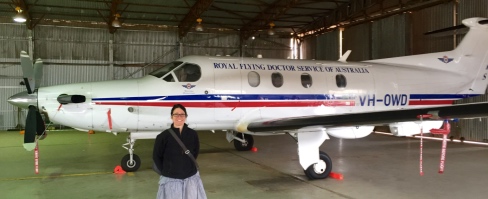

After the morning at the RFDS we were on a direct route to Perth to see the cousins and over the last week each day the children have woken up and said “Will we get to Perth today?”…well today is the day. We have previously covered the Margaret River and the South West of WA and so we are skipping this portion of the coast on this trip.

Driving along the somewhat beautiful baron Nullarbor we had a lunch break at Head of Bight and visited an old abandoned Station Homestead ruin called Koonalda this old station homestead was built from recycled railway sleepers and windows from the old telegraph station at Eucla. In years gone by Koonalda was a welcome respite/fuel stop on the original Eyre Highway and became the final resting place for many a vehicle for which the old unsealed highway crossing was simply too much. The historic car graveyard made for a good stop to stretch the legs and look around.

The old Homestead at Koonalda

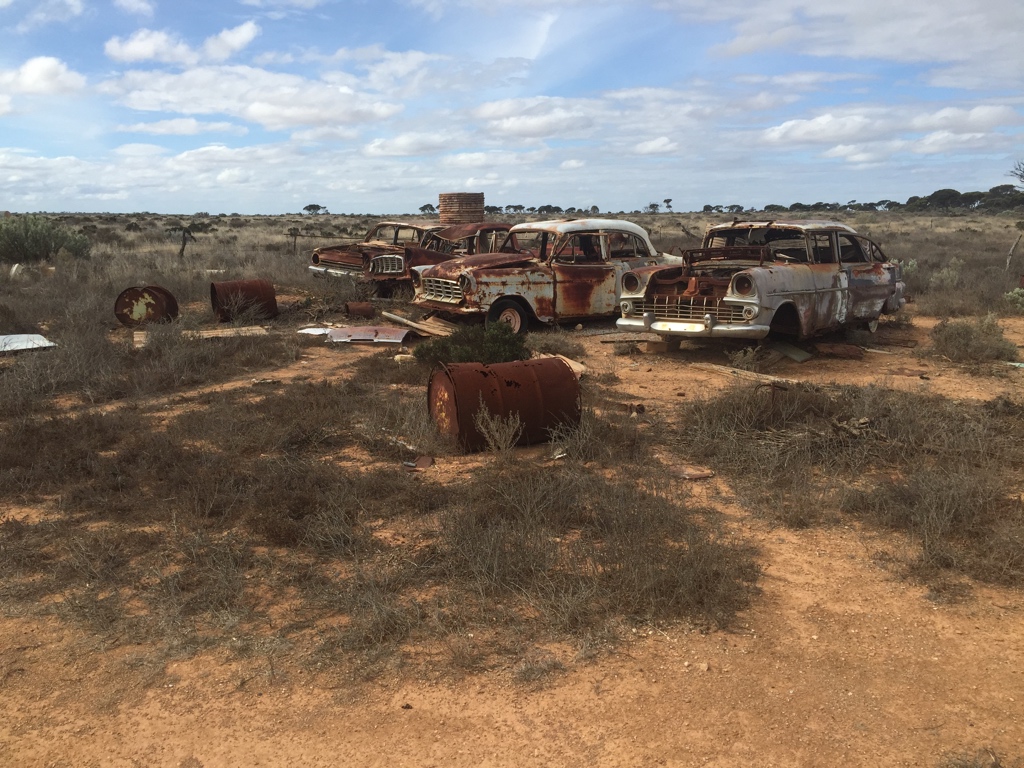
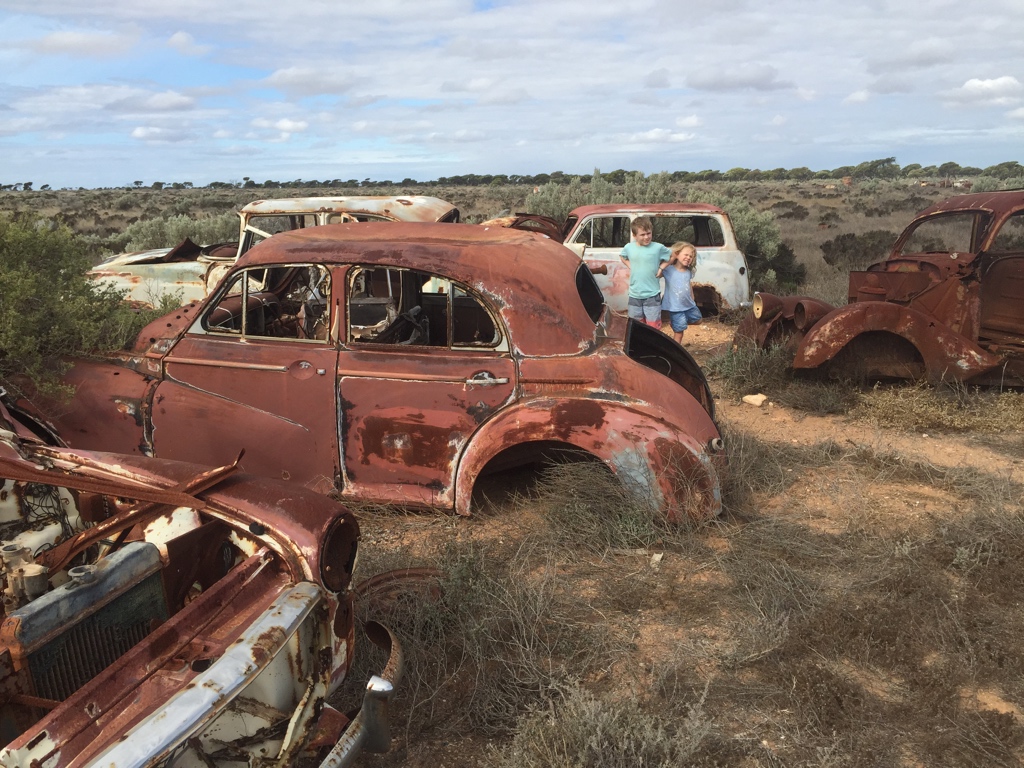
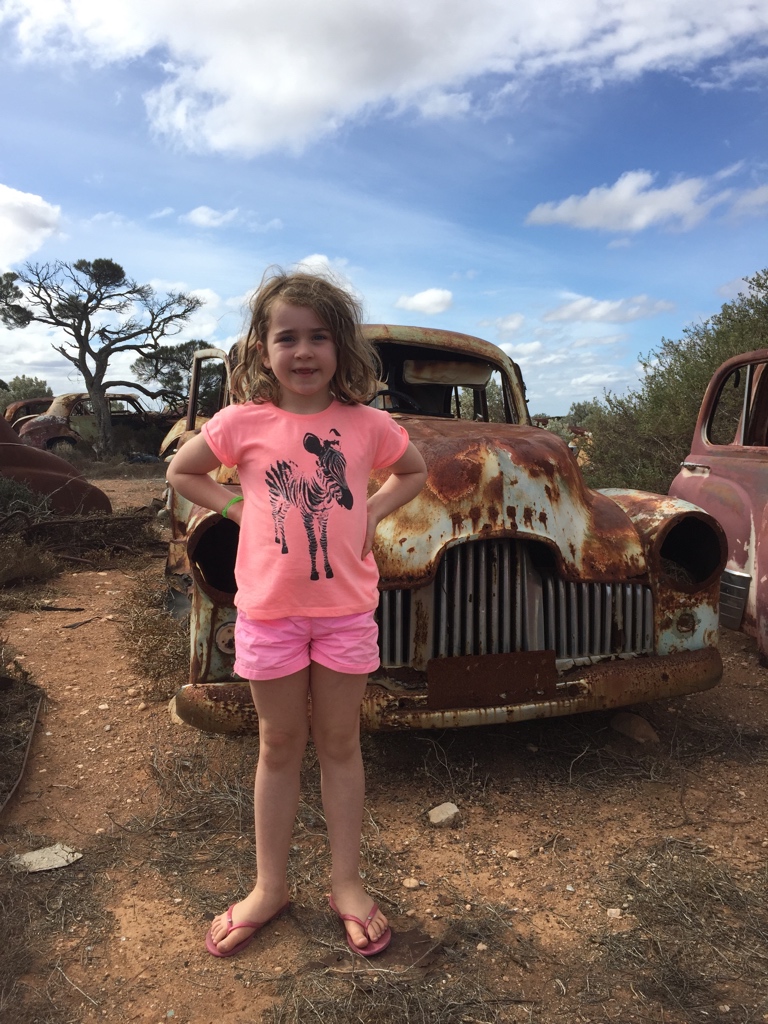
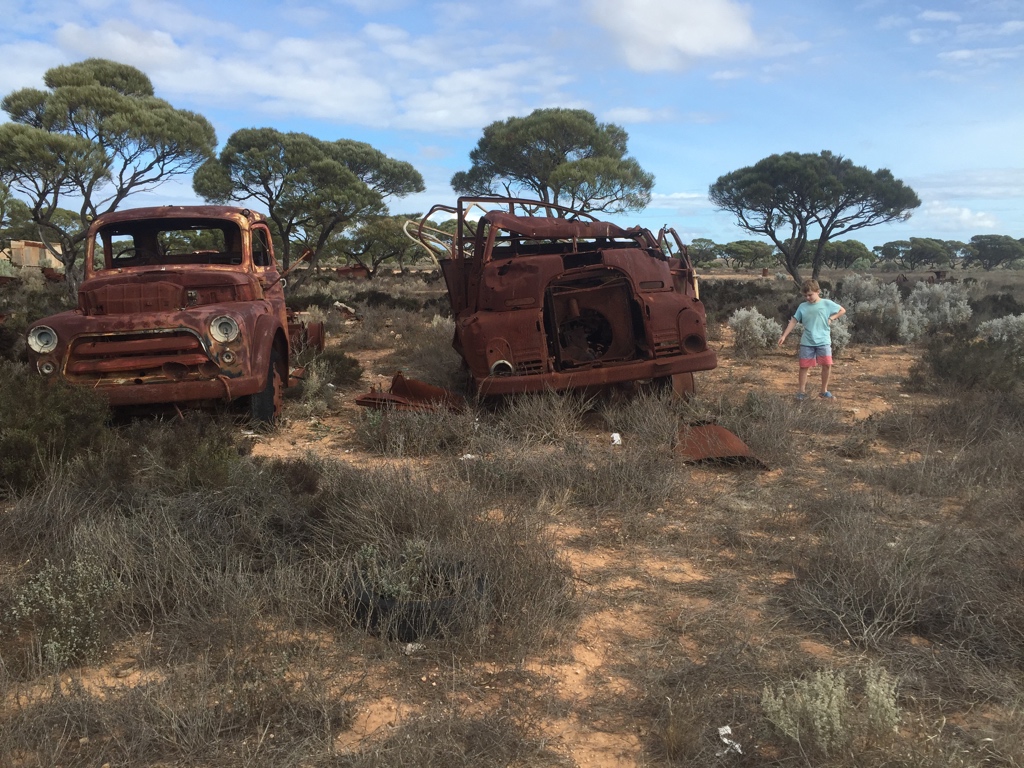
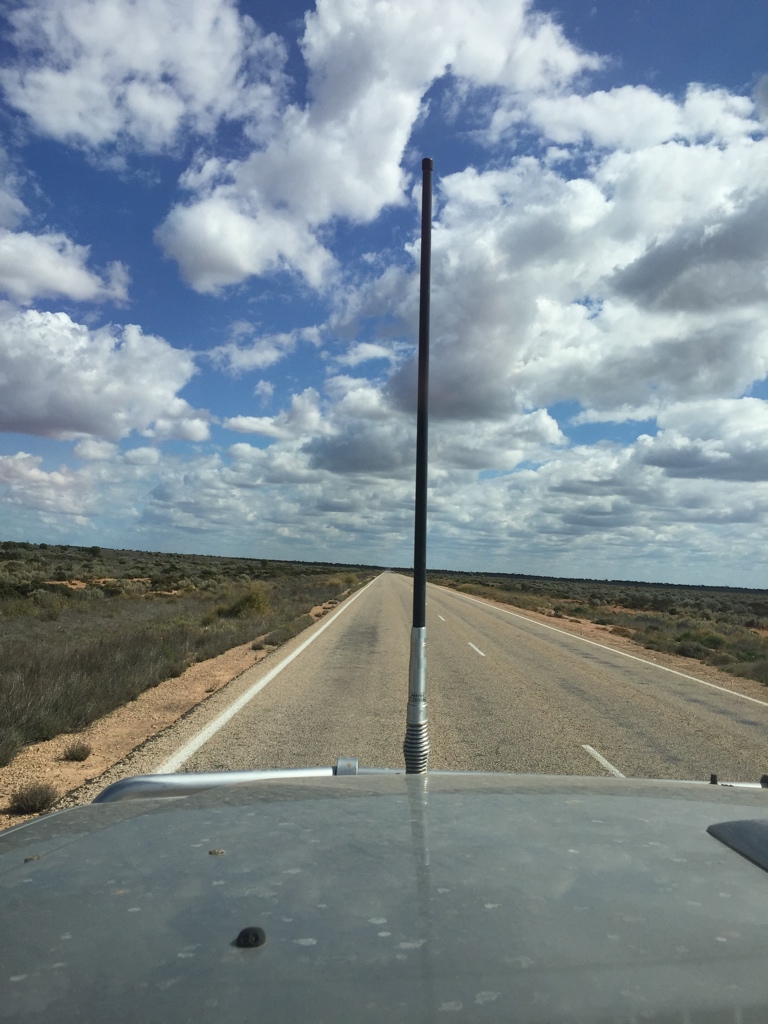
On the Nullarbor- view from the dashboard for many hours

Watch out for the wild life on the road – although we didn’t see any!

Not a bad spot to camp – million dollar views

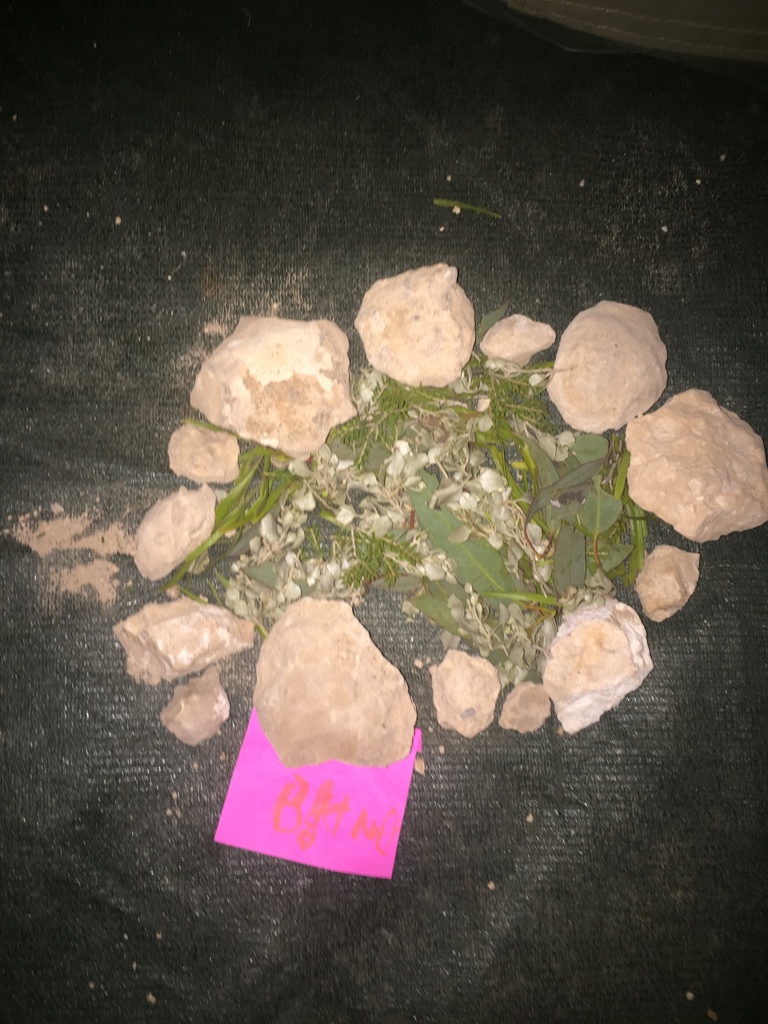
Our next stop on the Nullarbor was just prior to crossing the border into WA only 10km before Eucla. This is a no fruit or vegetable crossing so we chose to stay the night in SA and finish our fruit. It was also Easter Sunday the next morning so we were keen to get everyone into bed early for the Easter Bunny. When camping at Easter (most years) we get the children to make a nest for the bunny to leave some eggs.

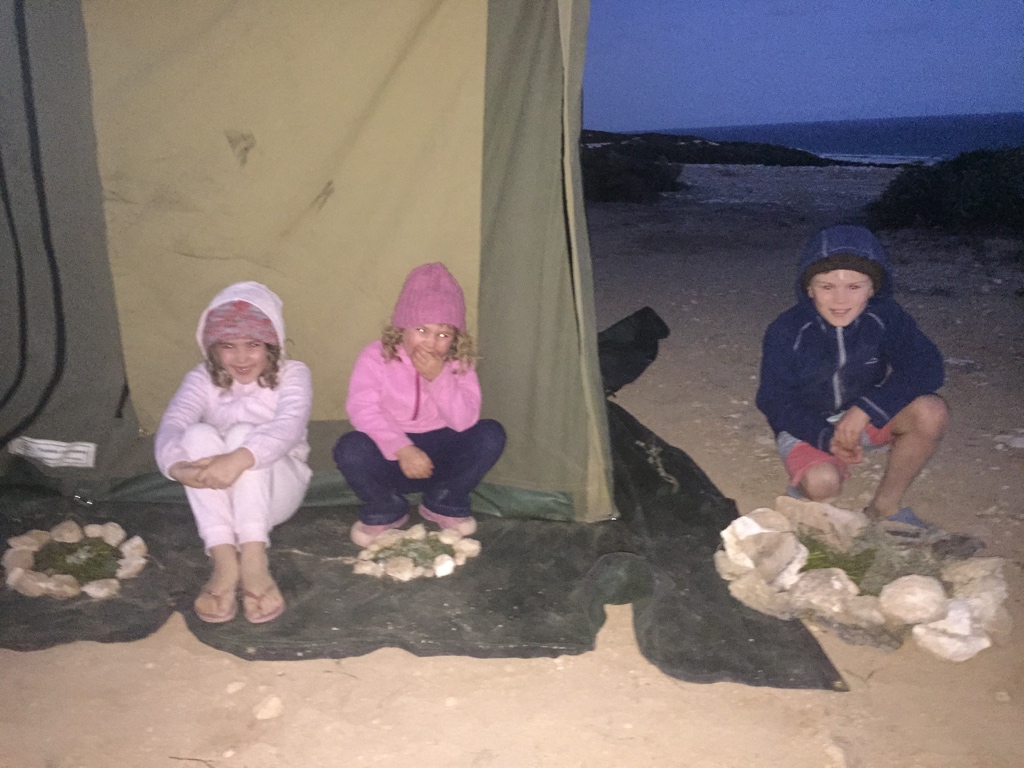
Easter Bunny nests in hope for some eggs.
Three excited Children awoke at 5am Melbourne time which equated to 3am Perth WA time and the Easter egg hunt commenced with the sunrise under torch light.

Ready to see if the Easter bunny found us!
All good he found us all the way out here!
After a chocolate egg and toast breakfast we hit the road and saw the Big Whale at Eucla and just across the boarder we saw the Big Roo. We were stopped at the boarder and had the car fully inspected for any fresh fruit, vegetables or honey. We had some onions and potatoes that we thought were okay but apparently not.

The BIG whale at Ecula

The BIG Roo before the border of WA at Border Village.

Aaron with a sign that tells us we are a long way from anywhere!
Then we hit the 146km of straight road – claimed to be Australia’s longest stretch of straight road. Andrew pretended to close his eyes but the kids were pretty sure he kept them open! I had a nap and woke up whilst we were still on the straight…it sure is a long stretch with not much to see. We had a couple of stops to view the beautiful coastal cliffs along the way – so many coastal views but they are all so beautiful.
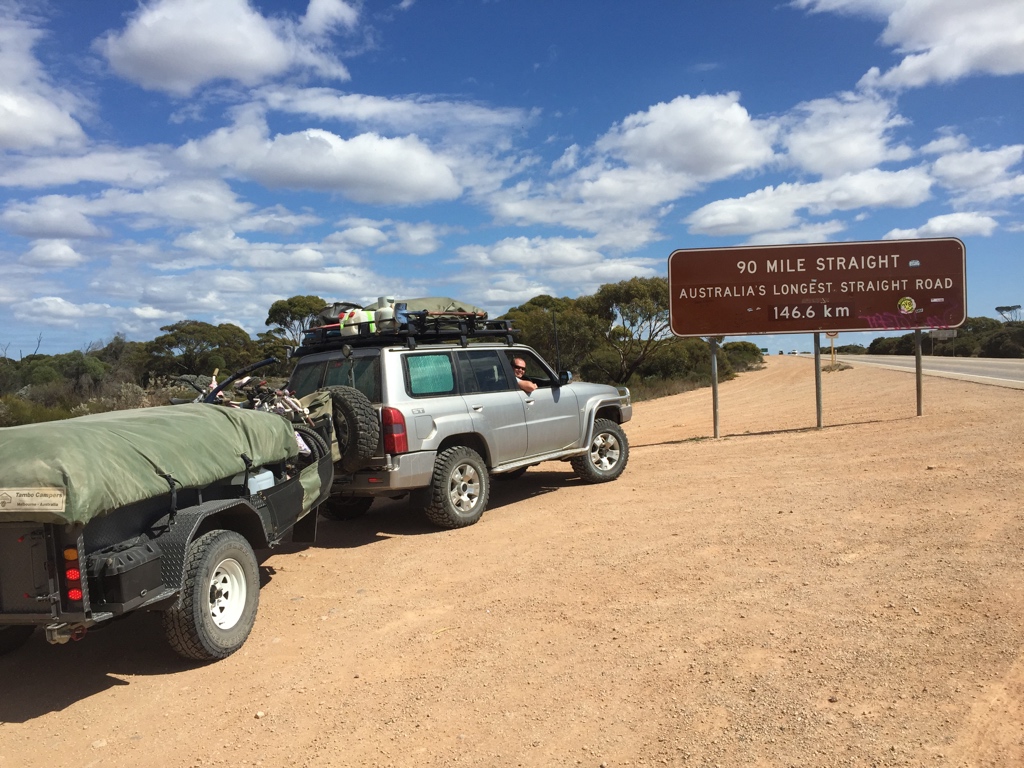

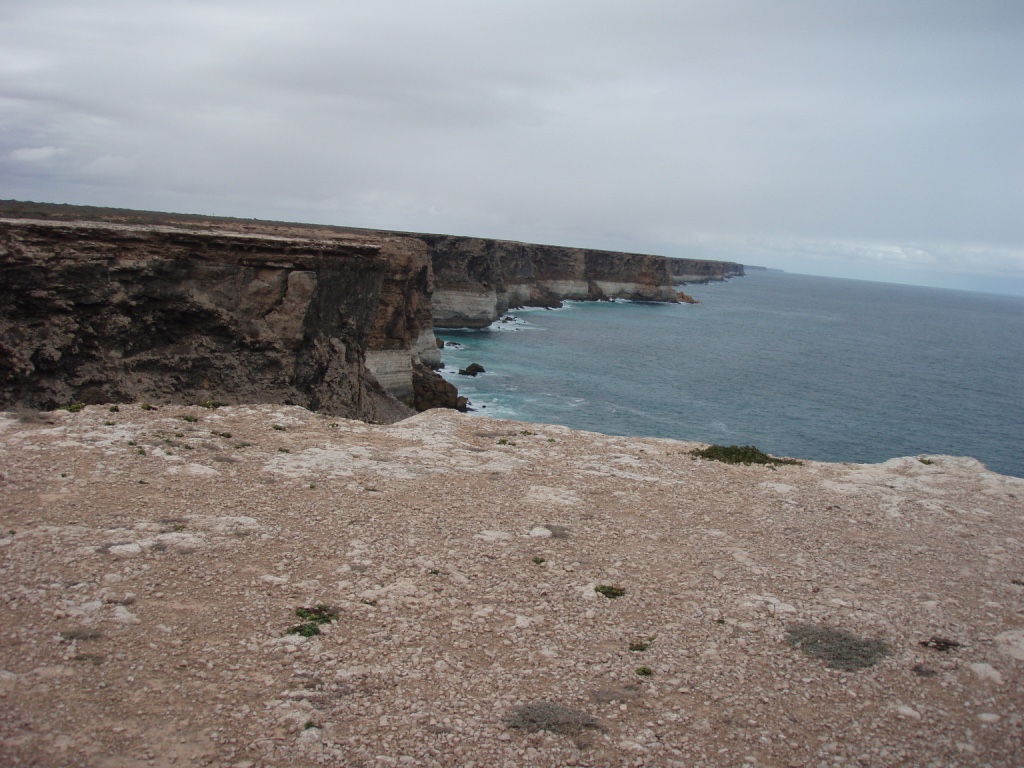
Then we went inland to camp at Fraser Range Station, once a large wool producer that had 7000 head of sheep in its heyday, but now is a tourist stop for the Nomads crossing the Nullarbor and it had our first hot shower in 5 days!

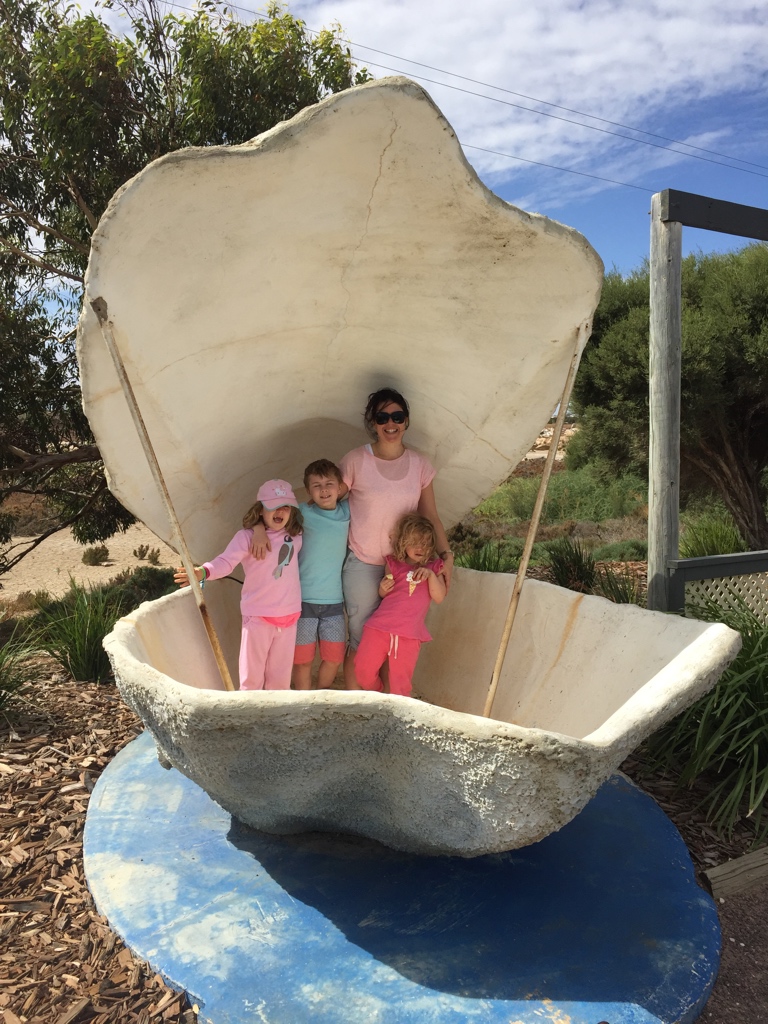
The BIG Oyster
We left Tractor Beach and on the road through Ceduna we spotted the BIG oyster and stopped for a quick photo and play at the park. It was good Friday and the little town was mostly closed. We were on a fast track to a little beach that is well known by South Australian Surfers – Cactus Beach. The beach is on a magnificent piece of coast line with three distinct surf breaks – Cactus with beginner waves almost guaranteed and then Castles a central break on the beach and to the right a wave called Caves by the locals (we were told). the foreshore of Cactus Beach is privately owned and Ron the land owner has established one of the most well planned, clean and spaced out camp grounds we have ever visited –with flushing toilets, shelters and fires with wood delivered nightly included in the cost of the visit.
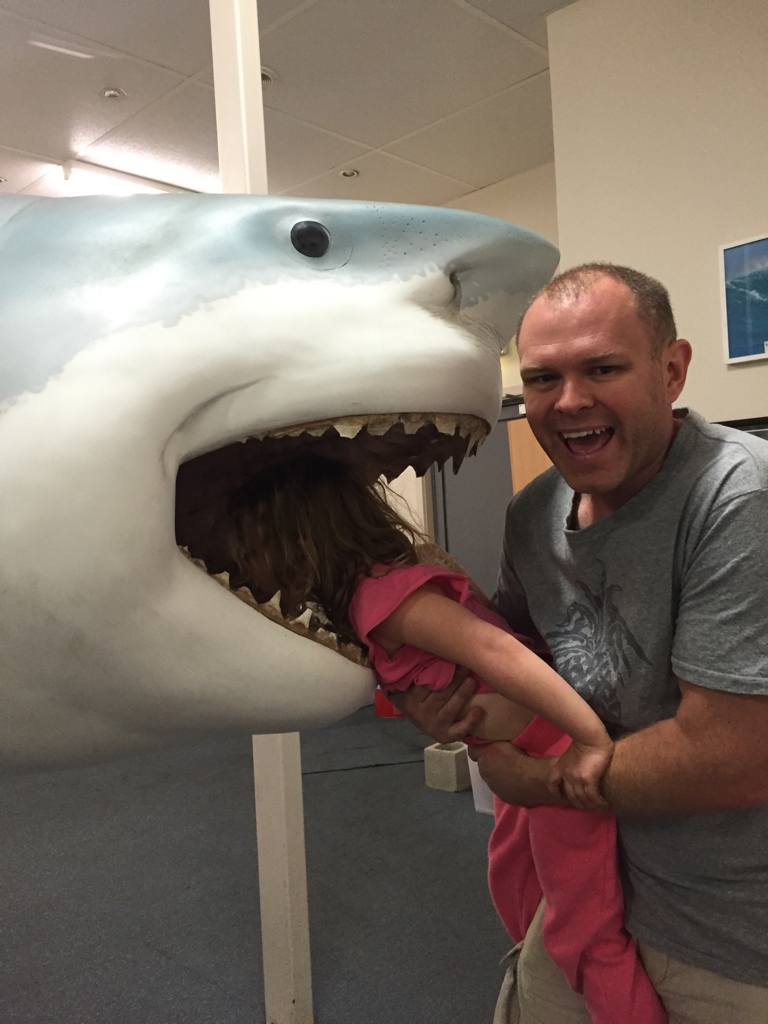
Feeding the Sharks

The replica of one big catch.

Our camp at Catcus Beach – we found Heaven

Cactus Beach
Aaron and Andrew got out on the surf board and caught a few waves on cactus which was a high light for them both.

Aaron Catching his first wave at Cactus

Great Balance – Dad was super proud of this and had a grin bigger than the Beach.

We were not sure what to expect as we had been warned that there were a lot of field mice in the Cactus camps and this was true however they were a minor pest and fine if you had your food stored away!
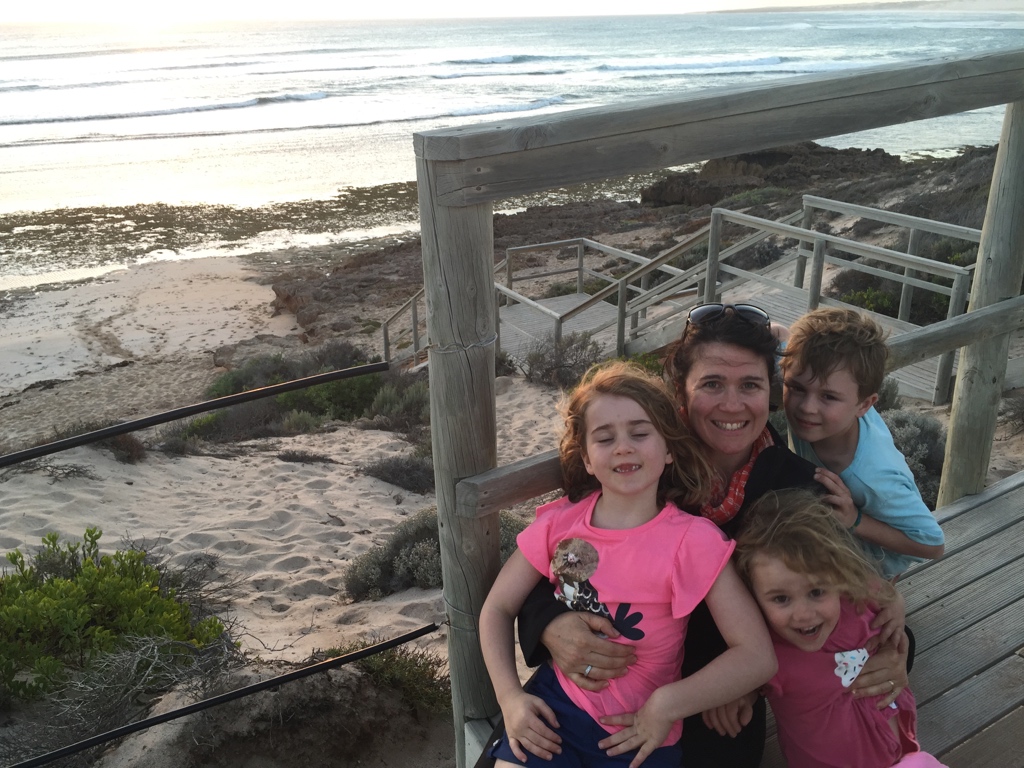
Sunset viewing of the Beach
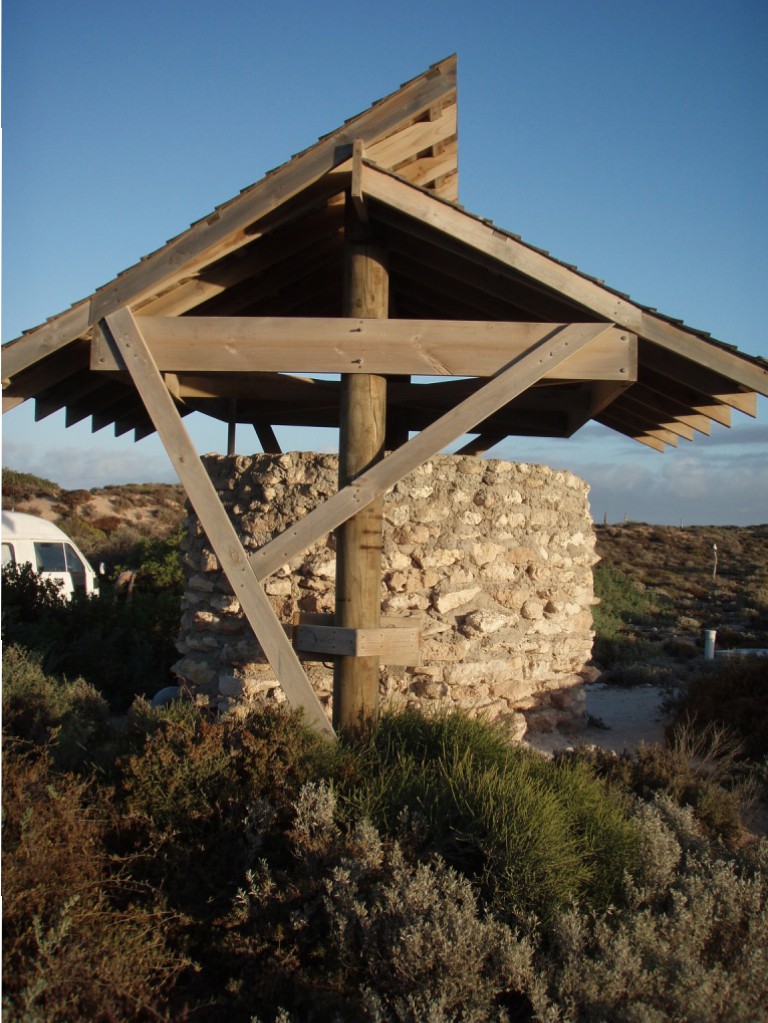
The toilet blocks at Cactus impressive enough for a photo!
Cactus Beach is a piece of paradise for any surfer and just amazing scenery for the less adventurous – we were only able to stay one night but this is on the ‘must return another day’ list as it had a great vibe and beautiful scenery. But shhh don’t tell everyone as sites are limited.

Sunset over Cactus Beach
 fiveinafourwheeldrive